Fazaile Quran Online

quran

Six Kalimas in Islam
islam, Islamic Article, Kalimas, muslims, online quran classes

Six Kalimas of Islam – Meaning, Arabic Text, Transliteration, Explanation & Benefits

The Six Kalimas hold a special place in Islamic tradition. For generations, Muslims have learned them as foundational expressions of belief. These Kalimas strengthen faith, purify the heart, and remind believers of the essence of Islam – Tawheed, praise, testimony, repentance, and rejecting disbelief. Every Muslim child grows up hearing, reciting, and memorizing these Kalimas at home, in madrassahs, and in Islamic study circles around the world. This complete guide explains all Six Kalimas with meaning, Kalimas explanation, Kalimas transliteration, and essential details, making it easy for beginners, students, and families to learn them properly. Why the Six Kalimas Are Important in Islam The Six Kalimas in islam are not only recitations – they are powerful statements that reflect a Muslim’s belief system. Each Kalima serves a unique purpose: Affirming Tawheed Recognizing Prophethood Praising Allah Declaring complete dependence on Him Seeking forgiveness Rejecting disbelief and shirk Reciting, understanding, and teaching them keeps Islamic values alive across generations. This is why Muslims worldwide use the Kalimas to teach children the basics of faith. In today’s age, online learning platforms such as Fazaile Quran Online help students learn them with accurate pronunciation, meaning, and explanation – keeping tradition alive with modern convenience. 1. Kalima Tayyibah (Declaration of Faith) Arabic: لَا إِلٰهَ إِلَّا اللّٰهُ مُحَمَّدٌ رَسُوْلُ اللّٰهِ Translation: There is no god but Allah; Muhammad is the Messenger of Allah. This Kalima is the central pillar of Islamic belief. Understanding it strengthens a Muslim’s identity and purifies their heart from hesitation or doubt. 2. Kalima Shahadah (Testimony of Faith) Arabic: أَشْهَدُ أَنْ لَا إِلٰهَ إِلَّا اللّٰهُ وَحْدَهُ لَا شَرِيْكَ لَهُ وَأَشْهَدُ أَنَّ مُحَمَّدًا عَبْدُهُ وَرَسُوْلُهُ Translation: I bear witness that there is no god but Allah, He is One and has no partner.And I bear witness that Muhammad is His servant and Messenger. This Kalima emphasizes conscious acceptance of Islam. 3. Kalima Tamjeed (Glorification of Allah) Arabic: سُبْحَانَ اللّٰهِ، وَالْحَمْدُ لِلّٰهِ، وَلَا إِلٰهَ إِلَّا اللّٰهُ، وَاللّٰهُ أَكْبَرُ وَلَا حَوْلَ وَلَا قُوَّةَ إِلَّا بِاللّٰهِ الْعَلِيِّ الْعَظِيمِ Translation: Glory be to Allah, all praise is for Allah, there is no god but Allah, and Allah is the Greatest. There is no power and no strength except with Allah, the Most High, the Most Great. A complete form of dhikr, recited for peace and spiritual elevation. 4. Kalima Tawheed (Oneness of Allah) Arabic: لَا إِلٰهَ إِلَّا اللّٰهُ وَحْدَهُ لَا شَرِيْكَ لَهُ، لَهُ الْمُلْكُ وَلَهُ الْحَمْدُ يُحْيِي وَيُمِيتُ وَهُوَ حَيٌّ لَا يَمُوْتُ أَبَدًا أَبَدًا ذُو الْجَلَالِ وَالْإِكْرَامِ، بِيَدِهِ الْخَيْرُ، وَهُوَ عَلٰى كُلِّ شَيْءٍ قَدِيرٌ Translation: There is no god but Allah. He is One and has no partner. His is the kingdom and all praise belongs to Him. He gives life and causes death, and He is Ever-Living and never dies. He is the Owner of Majesty and Honor. In His hand is all good, and He has power over all things. This Kalima protects a believer from any form of shirk. 5. Kalima Istighfar (Seeking Forgiveness) Arabic: أَسْتَغْفِرُ اللّٰهَ رَبِّي مِنْ كُلِّ ذَنْبٍ أَذْنَبْتُهُ عَمْدًا أَوْ خَطَأً سِرًّا أَوْ عَلَانِيَةً وَأَتُوبُ إِلَيْهِ مِنَ الذَّنْبِ الَّذِي أَعْلَمُ وَمِنَ الذَّنْبِ الَّذِي لَا أَعْلَمُ إِنَّكَ أَنْتَ عَلَّامُ الْغُيُوبِ، وَسَتَّارُ الْعُيُوبِ، وَغَفَّارُ الذُّنُوبِ وَلَا حَوْلَ وَلَا قُوَّةَ إِلَّا بِاللّٰهِ الْعَلِيِّ الْعَظِيمِ Translation: I seek forgiveness from Allah, my Lord, for every sin I committed knowingly or unknowingly, in secret or in public. I repent from the sins I know and those I do not know. Indeed, You are the Knower of the unseen, the Concealer of faults, and the Forgiver of sins. There is no power and no strength except with Allah, the Most High, the Most Great. Reciting it often purifies the heart and brings divine mercy. 6. Kalima Radd-ul-Kufr (Rejecting Disbelief) Arabic: اللّٰهُمَّ إِنِّي أَعُوذُ بِكَ مِنْ أَنْ أُشْرِكَ بِكَ شَيْئًا وَأَنَا أَعْلَمُ بِهِ وَأَسْتَغْفِرُكَ لِمَا لَا أَعْلَمُ بِهِ تُبْتُ عَنْهُ وَتَبَرَّأْتُ مِنَ الْكُفْرِ وَالشِّرْكِ وَالْكِذْبِ وَالْغِيبَةِ وَالْبِدْعَةِ وَالنَّمِيمَةِ وَالْفَوَاحِشِ وَالْبُهْتَانِ وَالْمَعَاصِي كُلِّهَا وَأَسْلَمْتُ وَأَقُوْلُ لَا إِلٰهَ إِلَّا اللّٰهُ مُحَمَّدٌ رَسُوْلُ اللّٰهِ Translation: O Allah! I seek refuge in You from knowingly associating anything with You, and I seek Your forgiveness for what I do not know. I repent from it and declare myself free from disbelief, polytheism, lies, backbiting, innovation, slander, indecency, false accusation, and all sins. And i submit to Your will and declare: There is no god but Allah, Muhammad is the Messenger of Allah. This Kalima renews a Muslim’s commitment to pure belief. Benefits of Reciting and Learning the Six Kalimas 1. Builds Strong Islamic Foundation The Kalimas are essential in developing core Islamic understanding. 2. Helps With Daily Dhikr Short and meaningful – perfect for daily remembrance. 3. Strengthens Iman Understanding the meaning deepens spiritual connection. 4. Encourages Repentance The Kalimas remind the believer to return to Allah regularly. 5. Helps Children Start Their Islamic Learning Journey They learn belief, repentance, praise, and core Islamic values in a structured way. 6. Easy to Memorize for All Ages Adults and kids can learn them quickly through constant repetition. How to Learn the Kalimas Properly (With Meaning & Tajweed) For students of all ages who want to learn: Six Kalimas in islam Kalimas meaning Kalimas explanation Kalimas transliteration Tajweed Noorani Qaida Quran with proper pronunciation And many more courses Fazaile Quran Online is one of the reliable platforms offering 1-on-1 Islamic learning. They provide: Live classes Male & female instructors Kids-friendly teaching style Proper tajweed & meaning International timing flexibility Whether you’re from the USA, UK, Canada, EU, UAE, or anywhere in the world – you can learn easily from home. FAQs About Six Prayer in Islam Q1: What are the five daily prayers in Islam? The five daily prayers in Islam are Fajr, Dhuhr, Asr, Maghrib, and Isha. Each salah has its own timing and number of raka’at. Q2: How many raka’at are in each prayer? Fajr: 4 (2 Farz + 2 Sunnah) Dhuhr: 10 (4 Sunnah + 4 Farz + 2 Sunnah) Asr: 4 (4 Farz) Maghrib: 5 (3 Farz + 2 Sunnah) Isha: 9 (4 Farz + 2 Sunnah + 3
In Sha Allah Meaning in Islam
Education, islam, Islamic Article, online quran

In Sha Allah Meaning – What It Really Means & When to Say It in Islam

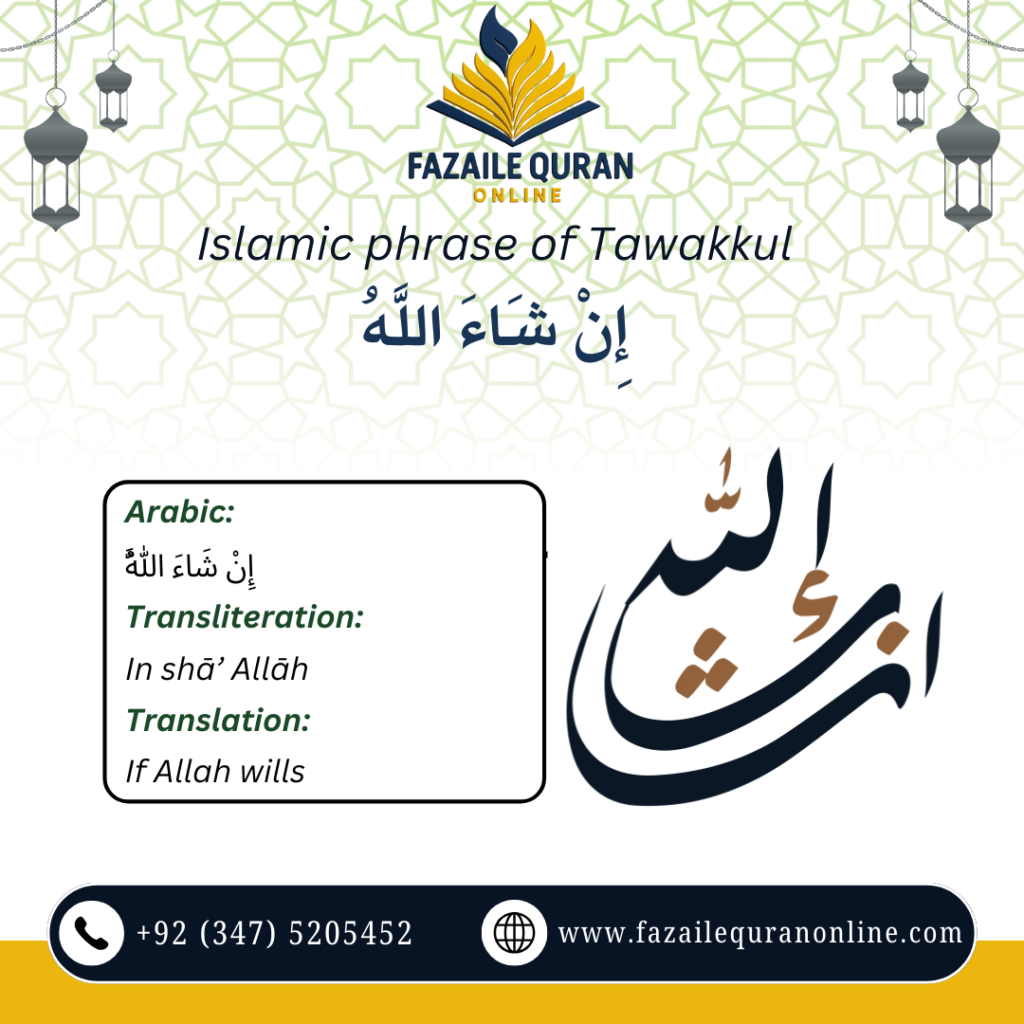
What Is the Meaning of In Sha Allah? In Sha Allah (إن شاء الله) is among the most frequently used and deeply spiritual phrases in the Muslim world. It simply translates to: If Allah wills or  God willing. This phrase reflects complete trust in Allah’s power and His decree. Whether a Muslim is planning something big or something small, saying InShaAllah shows humility and recognition that all future outcomes are under Allah’s control.   Arabic, Transliteration & Translation Arabic: إِنْ شَاءَ ٱللَّهُ Transliteration: In shaa’ Allah Meaning:If Allah wills. This phrase is rooted in both faith and etiquette – a reminder that every plan succeeds only with His permission. Why Saying In Sha Allah Is Important in Islam Using this phrase is more than cultural habit – it’s a Quranic command and a reflection of a believer’s heart. Quranic Reference Allah says in Surah Kahf (18:23–24): Do not say about anything: ‘I will do that tomorrow,’ except by adding the phrase InShaAllah. This shows the spiritual weight of this beautiful expression. Key Benefits of Saying In Sha Allah Saying InShaAllah brings blessings and protects our intentions. Here are its main benefits: 1. Shows Reliance on Allah’s Will It reminds the believer that Allah decides what will happen. 2. Brings Barakah (Blessings) to Future Plans Anything connected to Allah gains spiritual strength. 3. Prevents Arrogance It protects the heart from thinking we control everything. 4. Fulfills a Direct Quranic Guidance It aligns your speech with Islamic manners. 5. Strengthens Tawakkul (Trust in Allah) Every time you say it, you renew your trust in Allah’s plan. When Should You Say In Sha Allah? Use InShaAllah whenever mentioning something in the future, including: I will come tomorrow, In Sha Allah. We will start the project, In Sha Allah. I will finish my work tonight, In Sha Allah. We will meet next week, In Sha Allah. I will try my best to improve, In Sha Allah. This phrase beautifies speech and keeps your heart connected to Allah. Meaning of Inshallah in Arabic (Detailed Explanation) In Arabic, the phrase is built from three words: إنْ (In) – If شاءَ (Shaa’a) – Wills/Decides اللهُ (Allah) – Allah, The Almighty Put together, it becomes: If Allah wills it to happen. This structure carries a powerful message: Nothing moves without Allah’s permission, and nothing delays except by His wisdom. Common Misuse to Avoid While many use it sincerely, some say “Inshallah” casually – often meaning no or showing no intention behind it. This is not correct. Islam teaches that: The phrase should be said with honestyIt should express true intention, not avoidanceIt should reflect trust in Allah, not sarcasm or laziness Final Thoughts “InShaAllah” is more than an Islamic expression — it is a declaration of faith. It shows humility, trust, and surrender to Allah’s perfect decree. When used sincerely, it transforms ordinary speech into an act of worship. If you want to learn Arabic phrases, Islamic duas, Tajweed, Quran recitation, or join structured Quran classes online, visit: Fazaile Quran OnlineU Quran Tutors Both platforms provide authentic Quran learning with expert tutors, ideal for kids and adults. FAQs About In Sha Allah Q1: Is it wajib to say In Sha Allah? No, it is not obligatory, but it is highly recommended and following a Quranic command. Q2: What does InshaAllah mean in English? It means “If Allah wills” or “God willing.” Q3: Should I say it before or after the sentence? Most commonly, after the statement: “I will call you tomorrow, In Sha Allah.” Q4: Can non-Arabic speakers say In Sha Allah? Absolutely. Muslims across the world use this phrase regardless of language. Q5: Is writing ‘Inshallah’ wrong? No. Spellings such as Inshallah, InshaAllah, In Sha Allah, etc. are all acceptable. Q6: Does saying In Sha Allah guarantee success? It doesn’t guarantee the outcome — it guarantees barakah, sincerity, and reliance on Allah, which are more valuable than results. Enroll Now 📢 Share this article: Facebook | Twitter (X) | LinkedIn | WhatsApp | Copy Link for Instagram

Dua When You See Something Beautiful
islam, Islamic Article, muslims, online quran, online quran classes, ramadan

Dua When You See Something Beautiful

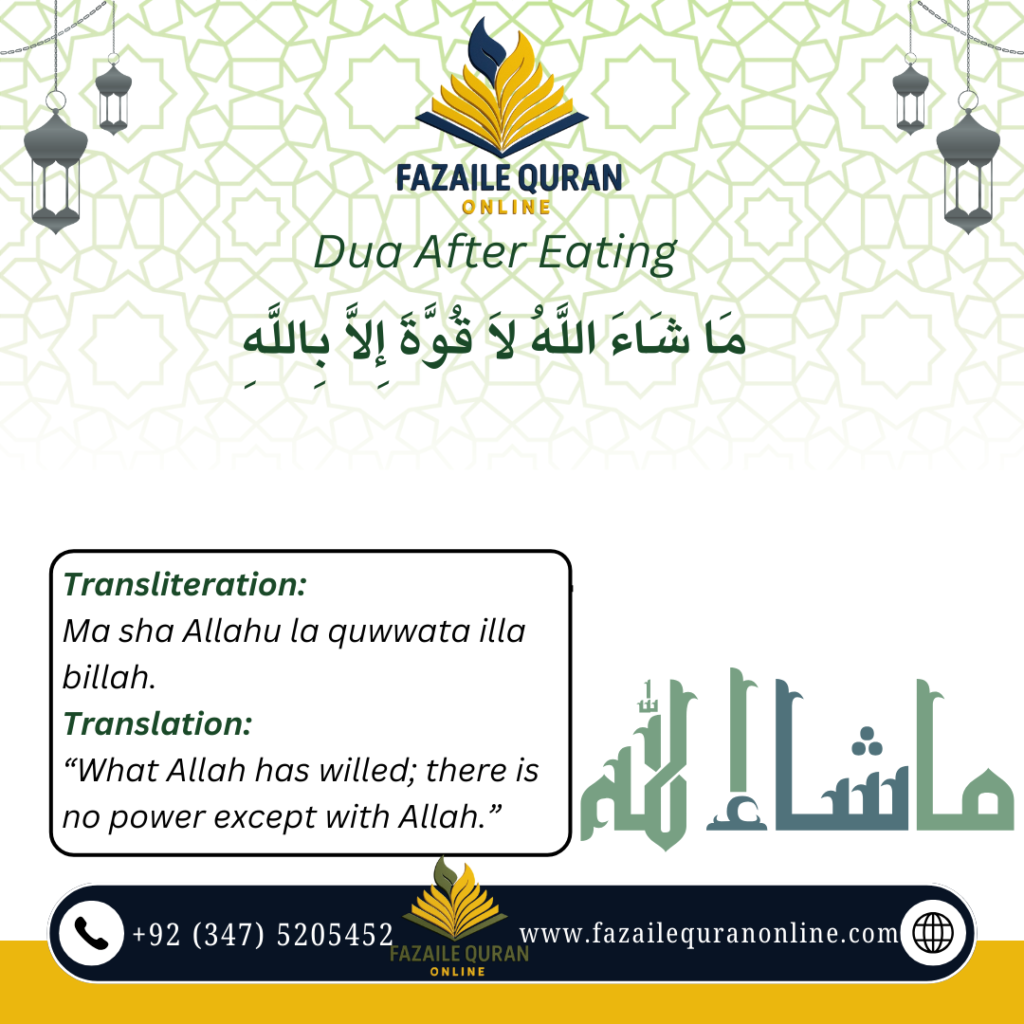
Dua When You See Something Beautiful – A Sunnah Filled With Barakah Islam gives us duas for every moment in life — even for the times when something beautiful catches our eyes. Whether it’s a person, a place, a gift, or a blessing from Allah, this Sunnah dua protects us from envy, increases gratitude, and keeps the heart spiritually focused. Authentic Dua When You See Something Beautiful The Prophet Muhammad ﷺ taught us to say: Arabic: مَا شَاءَ اللَّهُ لَا قُوَّةَ إِلَّا بِاللَّهِ Transliteration: Ma sha Allahu la quwwata illa billah. Meaning: “What Allah has willed; there is no power except with Allah.” This dua is also recommended when you admire something in others to prevent the evil eye (nazar). Another variation when admiring someone else’s blessing: Arabic: اللَّهُمَّ بَارِكْ لَهُ Meaning: “O Allah, bless him/her.” Why This Dua Is So Important Beauty in the world is a sign of Allah’s perfection. Reciting this dua protects your heart from jealousy, protects others from harmful nazar, and fills the moment with remembrance of Allah. Major Benefits Prevents evil eye — the dua shields others from accidental envy. Builds gratitude — you acknowledge Allah as the source of all beauty. Strengthens faith — you see beauty as a sign from your Creator. Promotes good adab — Muslims admire with humility, not pride. How to Use This Dua in Daily Life When you see a beautiful view When you admire someone’s success When you see a blessing in your own life When a child looks cute or impressive When you see new clothes, a house, or a car This dua transforms admiration into worship. Final Thoughts Reciting the Dua When You See Something Beautiful enriches your heart, protects others from envy, and connects admiration back to Allah. It’s a simple Sunnah with a deep spiritual impact. For learning more duas, Tajweed, and Quran classes with certified teachers, visit: Fazaile Quran Online U Quran Tutors FAQs About Dua when you see something beautiful Q1: Is this dua also used to prevent nazar (evil eye)? Yes, it is one of the strongest Sunnah duas for protection from nazar. Q2: Should I say it loudly? You may say it softly or in your heart. Saying it aloud is better when admiring someone else’s blessing. Q3: Can I say “MashAllah” only? Yes, but the full dua carries more reward and protection. Q4: Can children be taught this dua? Absolutely — it builds good manners and protects them. Enroll Now 📢 Share this article: Facebook | Twitter (X) | LinkedIn | WhatsApp | Copy Link for Instagram

Dua After Eating in Islam
Education, islam, Islamic Article, muslims, online quran, online quran classes, ramadan

Dua After Eating – Meaning, Benefits & Sunnah Etiquettes in Islam

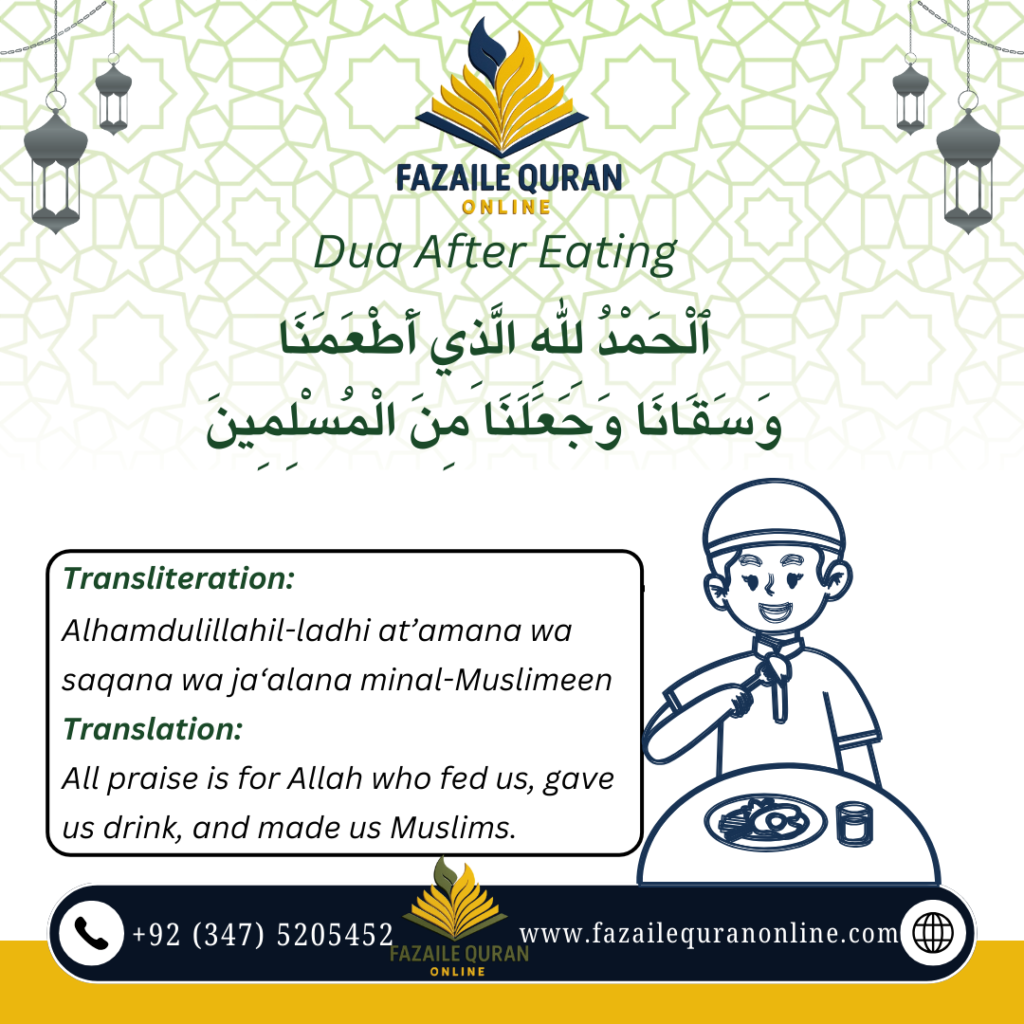
Dua After Eating – A Sunnah That Completes the Meal Finishing a meal with gratitude is a mark of a believer. Islam teaches us to remember Allah before eating and after eating, so our daily habits become acts of worship. Reciting the Dua After Eating strengthens gratitude, increases blessings, and keeps the heart humble. Authentic Dua After Eating Arabic Dua: ٱلْحَمْدُ لِلّٰهِ الَّذِي أَطْعَمَنَا وَسَقَانَا وَجَعَلَنَا مِنَ الْمُسْلِمِينَ Transliteration: Alhamdulillahil-ladhi at’amana wa saqana wa ja‘alana minal-Muslimeen. Meaning: “All praise is for Allah who fed us, gave us drink, and made us Muslims.” Another longer version (from Tirmidhi) is also Sunnah: Arabic: ٱلْحَمْدُ لِلّٰهِ الَّذِي أَطْعَمَنِي هَذَا، وَرَزَقَنِيهِ، مِنْ غَيْرِ حَوْلٍ مِنِّي وَلَا قُوَّةٍ Translation: “Praise be to Allah who gave me this food and provided it for me without any power or ability from myself.” Why Reciting the Dua After Eating Is Important The Prophet Muhammad ﷺ taught that expressing gratitude after meals increases barakah and earns reward. It is a powerful reminder that even the simplest blessing — food — comes only from Allah’s mercy. Benefits of Dua After Eating Gratitude increases provision: Grateful hearts receive more sustenance. Spiritual protection: You acknowledge Allah, which strengthens faith. Recorded as worship: Turning daily actions into good deeds. Boosts humility: Reminds you that everything comes from Allah alone. Sunnah Etiquettes After Eating Lick fingers if eating with hands. Wash hands once done. Rinse the mouth. Sit calmly until the dua is completed. Avoid wasting leftover food. Final Thoughts Reciting the Dua After Eating is a simple Sunnah with deep spiritual impact. It fills your heart with gratitude, protects your blessings, and keeps your faith alive in daily routines. For online Quran classes, Tajweed, duas, and Islamic studies with qualified tutors, visit: Fazaile Quran Online U Quran Tutors FAQs About Dua After Eating Q1: Is saying the Dua After Eating compulsory? No, it is Sunnah, but highly recommended because it brings reward and blessings. Q2: Can I say the dua in my own language? Yes, but reciting the Arabic version is more rewarding. You may add personal thanks in your language afterward. Q3: What if I forget to say the dua? Say it as soon as you remember — even after some time has passed. Q4: Should children be taught this dua? Absolutely. Teaching kids small Sunnah duas builds their Islamic identity from a young age. Q5: Can I recite the longer dua daily? Yes, both versions are authentic and can be recited anytime. Enroll Now 📢 Share this article: Facebook | Twitter (X) | LinkedIn | WhatsApp | Copy Link for Instagram

Lailatul Qadr
islam, muslims, online quran, online quran classes, ramadan

Laylatul Qadr: The Night of Power and Divine Blessings

Laylatul Qadr, or the Night of Power, is a pinnacle of spiritual significance in Islam. During the last ten nights of Ramadan, this night commemorates the momentous occasion when the Quran was revealed to the Prophet Muhammad (peace be upon him). The Quran describes this night as “better than a thousand months,” emphasizing its profound importance. Connection Between Laylatul Qadr and Qiyam-ul-Lail Qiyam-ul-Lail, the voluntary night prayer, holds special significance during Laylatul Qadr. Engaging in these prayers during this sacred night is believed to bring immense spiritual rewards and forgiveness. Signs of Laylatul Qadr While the exact date of Laylatul Qadr is not specified, it is traditionally sought during the odd-numbered nights of the last ten days of Ramadan. Some signs believed to indicate this night include: These signs, though not definitive, guide believers in their earnest search for this blessed night. Virtues and Rewards of Worship on This Blessed Night Worship performed on Laylatul Qadr is considered to be more rewarding than that of a thousand months. This immense multiplication of rewards underscores the unparalleled opportunity for spiritual elevation and closeness to Allah during this night. Recommended Acts of Worship To fully embrace the blessings of Laylatul Qadr, Muslims are encouraged to: Importance of the Last Ten Nights of Ramadan and I’tikaf The final ten nights of Ramadan are a period of intensified worship and reflection. Many Muslims observe I’tikaf, a practice of secluding oneself in the mosque to focus solely on worship and spiritual rejuvenation. This practice allows believers to detach from worldly distractions and seek a deeper connection with Allah. Hadiths and Quranic References About Laylatul Qadr The significance of Laylatul Qadr is highlighted in Surah Al-Qadr: “Indeed, We sent the Qur’an down during the Night of Decree. And what can make you know what is the Night of Decree? The Night of Decree is better than a thousand months.” Additionally, the Prophet Muhammad (peace be upon him) advised: “Search for Laylatul-Qadr in the odd nights of the last ten nights of Ramadan.” Maximizing the Blessings of Laylatul Qadr Laylatul Qadr offers a unique opportunity for spiritual growth and divine mercy. We can attain immense rewards and strengthen our faith by dedicating ourselves to worship during the last ten nights of Ramadan. Let us seize this blessed occasion to seek forgiveness, reflect on our actions, and renew our commitment to the path of righteousness. Enhancing Your Quranic Journey To deepen your connection with the Quran during this auspicious time, consider exploring resources that focus on its virtues and teachings. Platforms like Fazaile Quran Online offer opportunities to learn and reflect upon the Quran, enriching your spiritual journey. Fazail e Quran Online Embrace the blessings of Qiyam ul Layl by immersing yourself in worship, reflection, and the study of the Quran. May this sacred night bring peace, guidance, and immense blessings to all.

Tajweed
islam, muslims, online quran, online quran classes, Uncategorized

Mastering Tajweed: A Guide to Quranic Recitation

Mastering the Art of Tajweed: A Comprehensive Guide to Understanding the Quran   Step into the mesmerizing world of Tajweed and unlock the secrets of the Quran with our comprehensive guide. Dive deep into the intricate art of recitation as we unveil the essence of proper pronunciation, rhythm, and melody that define Tajweed. Embark on a journey of spiritual enrichment as we delve into the significance of Tajweed in understanding the divine message of the Quran. Discover the harmonious interplay of sounds and symbols that elevate your recitation to a higher level of proficiency and reverence. Whether you’re a novice seeking to enhance your recitation skills or a seasoned learner striving for perfection, our guide offers invaluable insights and techniques to master the art of Tajweed. Explore the nuances of each rule and principle with clarity and precision, empowering you to recite the Quran with eloquence and devotion. Importance of Tajweed in Quran Recitation The significance of Tajweed in Quran recitation transcends mere aesthetics; it embodies the very essence of conveying the divine message accurately. Tajweed ensures that each letter is pronounced with its rightful attributes, allowing listeners to grasp the true meaning of the words. When recited properly, the Quran resonates with a musical quality that enhances spiritual connection and understanding. The art of Tajweed reflects the reverence Muslims hold for the Quran, as it is not merely a text but a sacred revelation that demands respect and precision in its recitation. Moreover, Tajweed serves as a means of preserving the integrity of the Quranic text. The slight variations in pronunciation can lead to entirely different meanings, which underscores the importance of mastering these rules. Mispronouncing a single letter can change the essence of a verse, potentially leading to misunderstandings of the message. Therefore, Tajweed acts as a safeguard, ensuring that the recitation remains faithful to the original revelation as it was delivered to the Prophet Muhammad (PBUH). This aspect emphasizes Tajweed’s role in maintaining the authenticity of the Quran across generations. In addition, the practice of Tajweed cultivates a deeper appreciation for the Quran among reciters. Engaging with the rules of Tajweed encourages individuals to reflect on the meanings behind the words, fostering a connection that goes beyond surface-level reading. This engagement not only enhances one’s recitation but also enriches the spiritual experience of engaging with the Quran. As reciters become more proficient in Tajweed, they find themselves immersed in the beauty and intricacy of the text, leading to a profound sense of devotion and commitment to the teachings of Islam. Fundamentals of Tajweed Rules At the core of Tajweed are fundamental rules that govern the pronunciation of Arabic letters and the flow of recitation. One of the primary principles is the concept of Makhraj, which refers to the articulation point of each letter. Understanding Makhraj is crucial, as it allows reciters to produce sounds accurately. Each Arabic letter has a specific place of origin in the mouth and throat, and mastering these points ensures clarity and correctness in recitation. It is essential to spend time practicing these articulation points to achieve the desired level of proficiency. Another essential rule is Sifat, which pertains to the characteristics of each letter. Every letter in the Arabic alphabet possesses unique attributes, such as being heavy or light, emphatic or non-emphatic. These characteristics influence how the letters are pronounced and how they interact with each other in words. Recognizing the Sifat of letters allows reciters to infuse their recitation with the appropriate emotion and emphasis, enhancing the overall beauty of the Quranic verses. This understanding contributes to a more expressive and meaningful recitation that resonates with both the reciter and the audience. Furthermore, the rules of Idgham, Iqlab, and Ikhfa play pivotal roles in the flow of recitation. Idgham refers to the merging of letters, while Iqlab involves changing the sound of a letter when certain conditions are met. Ikhfa, on the other hand, is the concept of concealing a letter’s sound under specific circumstances. Mastering these rules aids in achieving a smooth and harmonious recitation, enabling the reciter to glide through the verses without interruption. Understanding these fundamentals is the foundation for anyone aiming to master the art of Tajweed. Common Mistakes in Tajweed Even dedicated learners can fall into common pitfalls while practicing Tajweed. One frequent mistake is the mispronunciation of letters, particularly those that are phonetically similar. For instance, Arabic letters such as ص (Sād) and س (Sīn) can often be confused by new learners, leading to incorrect recitation. This mispronunciation not only alters the meaning of the words but can also lead to misunderstandings of the Quranic message. It is vital to spend adequate time differentiating between these sounds and to practice with a knowledgeable teacher who can provide feedback. Another prevalent error is neglecting the rules of elongation, or Madd. Elongation refers to the proper extension of certain letters during recitation, which is crucial for maintaining the rhythm and flow of the Quran. Failing to apply the correct length can disrupt the natural cadence of the verses, diminishing the quality of the recitation. Reciters often underestimate the significance of these rules, yet they play a critical role in ensuring that the recitation sounds fluid and melodious, reflecting the beauty inherent in the Quran. Additionally, many learners struggle with the concept of Ghunna, which is the nasal sound produced during certain letters. This subtlety can be easily overlooked, leading to a flat and less expressive recitation. Ghunna adds depth and richness to the recitation, enhancing the overall experience for both the reciter and the audience. It is essential to pay attention to these nuances and practice them consistently, as they contribute to the overall mastery of Tajweed and the beauty of Quranic recitation. Techniques for Improving Tajweed Improving Tajweed requires a combination of dedicated practice and effective techniques. One of the most beneficial approaches is to listen actively to skilled reciters. Immersing oneself in the recitation of accomplished Qaris allows learners to internalize the rhythm, tone,

islam, muslims, online quran, online quran classes

The History of the Quran: A Journey Through Time

The Quran, revered as the final and most comprehensive revelation in Islam. The Quran has a profound history that spans over 1,400 years. It is believed to be the literal word of Allah (God), delivered to the Prophet Muhammad (PBUH) through the angel Jibril (Gabriel) in the Arabic language. Its content covers a broad spectrum, from divine guidance for personal conduct to principles for governance, ethics, and spirituality. The Revelation of the Quran The Quran’s journey began in 610 CE, in the cave of Hira, located near the city of Mecca. Prophet Muhammad (PBUH) was meditating when the angel Jibril appeared. And angel Jbril bringing him the first verses of the Quran: Surah Al-Alaq (96:1-5). The revelation continued over 23 years, with verses being revealed in various circumstances. Addressing both personal and societal issues faced by the early Muslim community. The Quran was not revealed in one complete form. Rather, it was gradually disclosed to Prophet Muhammad (PBUH) according to the needs of the time. The Prophet’s companions, known as the Sahabah, would memorize the verses, and some would write them down on whatever materials were available, such as parchment, bones, and leaves. Compilation and Preservation After the death of the Prophet Muhammad (PBUH), the need to preserve the Quran became more urgent. During the caliphate of the first caliph, Abu Bakr (RA). Many companions who had memorized the Quran were martyred in battle. Concerned that the Quran might be lost. But Abu Bakr (RA) ordered the compilation of the Quran into a single written volume under the supervision of Zayd ibn Thabit. Later, during the caliphate of Uthman ibn Affan (RA), the Quran was standardized into a single script. And copies were sent to various parts of the Muslim world to prevent disputes over the correct reading of the text. The preservation of the Quran, both in written and memorized forms, has continued through the centuries, ensuring its integrity and accuracy. The Quran’s Impact and Legacy The Quran is more than a book; it is a complete guide for living, providing spiritual, ethical, legal, and social guidance. Its eloquent language, timeless wisdom, and universal message continue to inspire and guide millions of people around the world. The Quran’s influence extends beyond religious boundaries. Shaping not only the lives of Muslims but also impacting literature, art, and philosophy throughout history. The Quran remains unchanged in its original form, preserving the exact words that were revealed to the Prophet Muhammad (PBUH). This miraculous preservation is considered one of the signs of its divine origin. Fazaile Quran Online Academy: A Modern Path to Learning the Quran In today’s digital age, access to knowledge is easier than ever, and the study of the Quran is no exception. Fazaile Quran Online Academy offers an innovative and accessible platform for learners worldwide to study the Quran. Regardless of their location or background. Whether you are looking to learn Quranic recitation (Tajweed), delve into its interpretation (Tafsir), memorize the Quran (Hifz), or simply understand its history and context. Fazaile Quran provides courses tailored to your needs. Fazaile Quran Online Academy prides itself on offering high-quality Quranic education, taught by experienced instructors who are dedicated to helping students understand the deep meanings of the Quranic text. With flexible online courses, students can learn at their own pace, making it easier to balance studies with daily life. The academy’s interactive lessons ensure that students not only memorize the Quran but also gain a deeper understanding of its teachings and how to apply them in everyday life. Whether you’re a beginner or someone looking to deepen your knowledge of the Quran. Fazaile Quran Online Academy is an excellent resource. It offers a community of learners and teachers who share a common goal of seeking knowledge and wisdom from the sacred text. Conclusion The history of the Quran is a testament to its divine origin and preservation through the ages. From its revelation to Prophet Muhammad (PBUH) to its compilation and widespread distribution. The Quran has remained unchanged, continuing to guide millions of people around the world. With the help of modern platforms like Fazaile Quran Online Academy, anyone can embark on a journey of learning and understanding the Quran. Ensuring that its timeless wisdom is passed down to future generations.

Scroll to Top