Fazaile Quran Online

Author name: Developer

Dua After Eating in Islam
Education, islam, Islamic Article, muslims, online quran, online quran classes, ramadan

Dua After Eating – Meaning, Benefits & Sunnah Etiquettes in Islam

Dua After Eating – A Sunnah That Completes the Meal Finishing a meal with gratitude is a mark of a believer. Islam teaches us to remember Allah before eating and after eating, so our daily habits become acts of worship. Reciting the Dua After Eating strengthens gratitude, increases blessings, and keeps the heart humble. Authentic Dua After Eating Arabic Dua: ٱلْحَمْدُ لِلّٰهِ الَّذِي أَطْعَمَنَا وَسَقَانَا وَجَعَلَنَا مِنَ الْمُسْلِمِينَ Transliteration: Alhamdulillahil-ladhi at’amana wa saqana wa ja‘alana minal-Muslimeen. Meaning: “All praise is for Allah who fed us, gave us drink, and made us Muslims.” Another longer version (from Tirmidhi) is also Sunnah: Arabic: ٱلْحَمْدُ لِلّٰهِ الَّذِي أَطْعَمَنِي هَذَا، وَرَزَقَنِيهِ، مِنْ غَيْرِ حَوْلٍ مِنِّي وَلَا قُوَّةٍ Translation: “Praise be to Allah who gave me this food and provided it for me without any power or ability from myself.” Why Reciting the Dua After Eating Is Important The Prophet Muhammad ﷺ taught that expressing gratitude after meals increases barakah and earns reward. It is a powerful reminder that even the simplest blessing — food — comes only from Allah’s mercy. Benefits of Dua After Eating Gratitude increases provision: Grateful hearts receive more sustenance. Spiritual protection: You acknowledge Allah, which strengthens faith. Recorded as worship: Turning daily actions into good deeds. Boosts humility: Reminds you that everything comes from Allah alone. Sunnah Etiquettes After Eating Lick fingers if eating with hands. Wash hands once done. Rinse the mouth. Sit calmly until the dua is completed. Avoid wasting leftover food. Final Thoughts Reciting the Dua After Eating is a simple Sunnah with deep spiritual impact. It fills your heart with gratitude, protects your blessings, and keeps your faith alive in daily routines. For online Quran classes, Tajweed, duas, and Islamic studies with qualified tutors, visit: Fazaile Quran Online U Quran Tutors FAQs About Dua After Eating Q1: Is saying the Dua After Eating compulsory? No, it is Sunnah, but highly recommended because it brings reward and blessings. Q2: Can I say the dua in my own language? Yes, but reciting the Arabic version is more rewarding. You may add personal thanks in your language afterward. Q3: What if I forget to say the dua? Say it as soon as you remember — even after some time has passed. Q4: Should children be taught this dua? Absolutely. Teaching kids small Sunnah duas builds their Islamic identity from a young age. Q5: Can I recite the longer dua daily? Yes, both versions are authentic and can be recited anytime. Enroll Now 📢 Share this article: Facebook | Twitter (X) | LinkedIn | WhatsApp | Copy Link for Instagram

Dua Before Eating
Education, islam, Islamic Article, muslims, online quran, online quran classes

Dua Before Eating – Sunnah Etiquettes, Meaning & Benefits in Islam

Dua Before Eating: Starting Your Meal With Barakah Eating is a blessing that Allah grants daily, and Islam teaches us to honor this blessing by beginning meals with the beautiful Sunnah dua. Saying the Dua Before Eating keeps the heart grateful, brings barakah to the food, and protects us from unseen harm. The Authentic Dua Before Eating Arabic: بِسْمِ اللَّهِ وَعَلَى بَرَكَةِ اللَّهِ Transliteration: Bismillāhi wa ‘alā barakatillāh. Translation: In the name of Allah and with the blessings of Allah. If someone forgets to say it at the start, the Prophet ﷺ taught us to say: “Bismillahi awwalahu wa akhirahu.” In the name of Allah, at the beginning and at the end. Why the Dua Before Eating Matters The Messenger of Allah ﷺ said that when a person forgets to mention Allah’s name, Shaytan partakes in the meal. By saying Bismillah, you block all negative spiritual influence and invite blessings into your food. Key Benefits Barakah in food—even small portions feel satisfying. Protection from Shaytan—he cannot join the meal. Mindful eating—you remember the Giver before enjoying His gift. Following Sunnah—turning a daily habit into worship. Sunnah Etiquettes Before eating Wash hands properly. Sit calmly and mention Allah’s name. Start with the right hand. Begin with food closest to you. During the Meal Eat slowly and avoid wasting food. Do not criticize food. Share meals when possible—sharing increases blessings. After the Meal Recite the post-meal dua: “Alhamdulillahi allathee at’amana wa saqana…” Wash hands and rinse mouth. Final Thoughts The Dua Before Eating is a simple Sunnah that transforms your meal into an act of worship. It keeps your heart connected to Allah and fills your life with gratitude and barakah. If you want to learn more duas, Quran recitation, and Islamic studies online with certified tutors, visit: www.fazailequranonline.com www.uqurantutors.com Enroll Now 📢 Share this article: Facebook | Twitter (X) | LinkedIn | WhatsApp | Copy Link for Instagram

how to do wudu properly
Education, islam, Islamic Article, muslims, online quran, online quran classes

How to Do Wudu Properly in Islam

Before standing in prayer, Islam requires a state of physical and spiritual purity. Wudu is not only a prerequisite for Salah, but also a means of discipline, mindfulness, and obedience to Allah. Many Muslims search for how to do wudu, wudu steps in order, or how to make wudu correctly to ensure their worship is valid. This guide by Fazaile Quran Online explains how to perform wudu correctly, why each step matters, and how to avoid common errors. Meaning and Purpose of Wudu Wudu is an act of purification commanded by Allah to prepare believers for worship. It removes minor impurity and prepares the heart and body to stand before the Creator. Allah says in the Qur’an: “When you rise for prayer, wash your faces and your hands up to the elbows, wipe over your heads, and wash your feet up to the ankles.” (Surah Al-Ma’idah 5:6) This verse outlines the core obligations of wudu. How to Make Wudu Correctly (Explained Simply) Instead of memorizing steps, it is important to understand the flow of wudu. Below is an easy and correct method. Step 1: Prepare Yourself Ensure clean water is available. Face the Qiblah if possible and clear distractions. Step 2: Intention (Niyyah) Silently intend in your heart to perform wudu for purification. Intention is not spoken aloud. Step 3: Begin With Allah’s Name Say Bismillah before starting. Step 4: Clean the Hands Wash both hands thoroughly up to the wrists. Three time Step 5: Purify the Mouth and Nose Rinse the mouth and clean the nose to remove impurities. Three time Step 6: Wash the Face Completely Ensure water covers the entire face, including beard area if present. Three time Step 7: Wash the Arms Wash the right arm first, then the left, ensuring elbows are included. Three time Step 8: Wipe the Head and Ears With wet hands, wipe the head once and clean both ears. Which called Masha Step 9: Wash the Feet Wash each foot carefully, ensuring water reaches the ankles and between the toes. Correct Order of Wudu Steps For those asking “wudu steps in order”, the sequence must be maintained. Changing the order intentionally makes wudu invalid. Correct sequence: Hands → Mouth → Nose → Face → Arms → Head → Ears → Feet How Do You Know Your Wudu Is Valid? Your wudu is valid when: All obligatory parts are washed The order is maintained Water reaches the required areas Nothing that breaks wudu occurs afterward Actions That Break Wudu Many ask “what breaks wudu” or “what breaks wudu for a woman.” The rules apply equally. Wudu is invalidated by: Passing urine, stool, or gas Deep sleep or unconsciousness Menstruation or post-natal bleeding Touching private parts directly (scholarly difference) Mistakes That Invalidate Wudu Leaving elbows or ankles dry Rushing through steps Skipping required actions Changing the order deliberately Correcting these mistakes improves both validity and reward. Why Proper Wudu Matters in Daily Life Wudu is not only for Salah. It: Encourages personal hygiene Builds spiritual awareness Increases reward when done frequently Prepares the believer for Qur’an recitation Learning wudu correctly strengthens daily worship. Learn Wudu and Qur’an Online With Proper Guidance Many mistakes in wudu occur due to lack of guidance. Learning from qualified teachers helps ensure correctness from the beginning. Fazaile Quran Online provides: One-to-one online classes Qur’an with Tajweed Islamic fundamentals for all ages Flexible class schedules Visit: www.fazailequranonline.com Enroll with Fazaile Quran Online to learn wudu, Salah, and Qur’an correctly. Enroll Now 📢 Share this article: Facebook | Twitter (X) | LinkedIn | WhatsApp | Copy Link for Instagram

Prophet Muhammad (SAW)
Education, Islamic Article

Prophet Muhammad (SAW): The Mercy to Mankind

Introduction Prophet Muhammad (peace be upon him), the final messenger of Allah, stands as the most influential and compassionate figure in human history. Born in the year 570 CE in the sacred city of Makkah, he brought a message of peace, unity, and submission to one God — a message that transformed the Arabian Peninsula and continues to guide over a billion Muslims around the globe today. In this blog, we will explore the life, character, and legacy of Prophet Muhammad (SAW), backed by references from the Qur’an and Hadith. This humanized yet respectful presentation is written to enlighten readers and help websites rank on Google with targeted keywords and proper structure. Early Life and Background Prophet Muhammad (SAW) was born into the noble Hashim clan of the Quraysh tribe, yet he faced the pain of orphanhood early in life. His father, Abdullah, died before his birth, and his mother Amina passed away when he was just six years old. He was raised by his grandfather Abdul Muttalib and later by his uncle Abu Talib. Despite these hardships, the Prophet (SAW) was known even in his youth as “Al-Ameen” (The Trustworthy) because of his honest and upright character. Prophethood and the Revelation At the age of 40, while meditating in the Cave of Hira, the Prophet (SAW) received the first revelation from Allah through the angel Jibreel (Gabriel). This moment marked the beginning of his mission as the Seal of the Prophets. “Read in the name of your Lord who created.” — Surah Al-Alaq (96:1) For the next 23 years, Prophet Muhammad (SAW) delivered the divine message that became the Qur’an, guiding mankind toward justice, mercy, and the worship of one God. Flawless Character and Divine Protection He was a man who, throughout his entire life, did not commit even a single minor mistake — free from error, guided by revelation, and protected by Allah. Every word he spoke was truthful, every action deliberate and pure. His life was the embodiment of perfection—not by human standards, but by divine will. “And indeed, you are of a great moral character.” — Surah Al-Qalam (68:4) Key Characteristics of Prophet Muhammad (SAW) 1. Compassion and Mercy The Qur’an beautifully describes him: “And We have not sent you, [O Muhammad], except as a mercy to the worlds.” — Surah Al-Anbiya (21:107) He forgave enemies, cared for the poor, treated women with dignity, and even showed kindness to animals. 2. Justice and Fairness The Prophet (SAW) was known for his fair treatment of all — Muslims and non-Muslims alike. He said: “Help your brother, whether he is an oppressor or is oppressed.” — Sahih Bukhari 3. Simplicity and Humility Despite his great status, he lived modestly, slept on a mat, and mended his own clothes. He never sought luxury or power. His Countless Good Deeds If I were to write about his good deeds, habits, and noble character, my pen would run dry and my notebook would be filled—but his virtues would still remain countless and beyond measure. He (SAW) was not just a man of words but of action—every step he took was a lesson, every smile a mercy, every decision a sign of divine guidance. Major Contributions to Society Social Justice: Eliminated class and racial superiority. Women’s Rights: Gave women inheritance rights, forbade female infanticide, and emphasized their spiritual equality. Orphan & Poor Care: Regularly reminded his followers to care for the less fortunate. “He is not a believer whose stomach is filled while the neighbor to his side goes hungry.” — Sahih al-Adab al-Mufrad The Truth of His Prophecies Everything that Prophet Muhammad (ﷺ) foretold—whether about the future of nations, signs of the Last Day, or spiritual realities—either has already come true or will inevitably come true. His words were not predictions, but divine revelations. As time unfolds, the truth of his statements continues to be confirmed by history and events. “Nor does he speak from [his own] desire. It is nothing but revelation sent down to him.” — Surah An-Najm (53:3–4) The Final Sermon: A Universal Message In his last sermon during Hajj, Prophet Muhammad (SAW) addressed over 120,000 people, emphasizing the core values of equality, justice, and the sanctity of life. He declared: “All mankind is from Adam and Eve. An Arab has no superiority over a non-Arab, nor does a non-Arab have superiority over an Arab…” Legacy and Influence Today, over 1.9 billion Muslims across every continent follow the teachings of Prophet Muhammad (SAW). His sayings (Hadith) and life events (Seerah) remain the foundation of Islamic law (Shariah) and ethics. Even non-Muslims have recognized his impact: “If greatness of purpose, smallness of means, and astounding results are the three criteria of human genius, who could dare to compare any great man in modern history with Muhammad?” — Alphonse de Lamartine, French writer and historian Why Learn About Prophet Muhammad (SAW)? Whether you are a Muslim seeking to strengthen your faith or a non-Muslim curious about Islam, learning about the Prophet Muhammad (SAW) helps you understand: The origin of Islamic civilization The foundation of Islamic spirituality and law The universal values of compassion, patience, and morality Conclusion Prophet Muhammad (SAW) is more than a historical figure; he is a spiritual guide, a social reformer, and a model of human excellence. His life continues to inspire people to seek truth, act justly, and live humbly. Explore More Islamic Knowledge Visit FazaileQuranOnline.com — an authentic platform dedicated to spreading the teachings of Islam through Qur’an recitation, Hadith study, and character development programs. Learn Islam the right way, from the right sources. Enroll Now

IMAN E MUFASSAL AND IMAN E MUJMAL
Education, Islamic Article, muslims, online quran

Iman-e-Mufassal and Iman-e-Mujmal – A Complete Guide

In Islam, faith (Iman) is the foundation of all beliefs and actions. A Muslim’s journey begins with understanding and accepting the core articles of faith. Among the most essential expressions of belief in Islam are Iman-e-Mufassal (Detailed Declaration of Faith) and Iman-e-Mujmal (Concise Declaration of Faith). Every Muslim child is taught to memorize these declarations, but understanding their meanings and implications is equally important. In this article, we provide a complete explanation of both declarations, discuss the seven pillars of Iman, and share how you or your children can learn these online through Fazaile Quran Online. What is Iman? Iman means belief and conviction in the heart, affirmation by the tongue, and acting upon it through deeds. Without Iman, Allah does not accept any Islamic act of worship—whether it be prayer, fasting, or charity. Therefore, understanding the essence of Iman is crucial for every Muslim. What is Iman-e-Mufassal? Iman-e-Mufassal is the detailed statement of belief in Islam. It encompasses the seven core pillars that form the basis of Islamic theology. These are explicitly mentioned in the Holy Qur’an and Hadith. Arabic Text of Iman-e-Mufassal: اٰمَنْتُ بِاللہِ وَمَلٰئِکَتِہٖ وَ کُتُبِہٖ وَرُسُلِہٖ وَالْیَوْمِ الْاٰخِرِ وَالْقَدْرِ خَیْرِہٖ وَشَرِّہٖ مِنَ اللہِ تَعَالٰی وَالْبَعْثِ بَعْدَالْمَوْت English Translation: “I believe in Allah, His angels, His books, His messengers, the Last Day, and in destiny, both good and bad, from Allah the Almighty, and in resurrection after death.” The Seven Pillars of Iman According to Iman-e-Mufassal and the Hadith of Jibreel, the seven articles of faith are: Belief in Allah – That He is One, without partner, and the sole Creator and Sustainer.  Belief in His Angels – Created from light, they never disobey Allah and perform specific duties.  Belief in His Books – Including the Torah, Psalms, Gospel, and especially the Qur’an, which is the final and preserved revelation.  Belief in His Messengers – That Allah sent prophets to guide mankind, with Muhammad (peace be upon him) as the final messenger.  Belief in the Last Day – The Day of Judgment when every soul will be held accountable.  Belief in Divine Decree (Qadar) – That all good and evil occurs by Allah’s will and knowledge.  Belief in Resurrection after Death – That every human being will be raised after death for final judgment.  What is Iman-e-Mujmal? Iman-e-Mujmal is a concise expression of a Muslim’s belief. While Iman-e-Mufassal details the components of faith, Iman-e-Mujmal summarizes a believer’s complete acceptance of Allah and all His commands. Arabic Text of Iman-e-Mujmal: اٰمَنْتُ بِاللہِ کَمَا ھُوَ بِاَسْمَآئِہٖ وَصِفَاتِہٖ وَقَبِلْتُ جَمِیْعَ اَحْکَامِہٖ اِقْرَارٌم بِاللِّسَانِ وَتَصْدِیْقٌ بِالْقَلْب English Translation: “I believe in Allah as He is, with all His names and attributes, and I accept all His commands.” This declaration represents complete submission to Allah and serves as the foundation for living a life by Islamic teachings. Hadith Reference for the Articles of Faith The foundations of Iman are outlined in the well-known Hadith of Jibreel, narrated in Sahih Muslim: The Prophet Muhammad (peace be upon him) said: “Iman is to believe in Allah, His angels, His books, His messengers, the Last Day, and in the Divine Decree, both its good and its evil.” [Sahih Muslim, Hadith 8] This hadith confirms all the elements included in Iman-e-Mufassal and validates the significance of these declarations in the Islamic creed. Why Learning These Declarations is Essential Memorizing and understanding Iman-e-Mufassal and Iman-e-Mujmal is essential for: Strengthening Islamic identity  Building a strong foundation in Aqeedah (Islamic theology)  Ensuring the correct belief for the acceptance of deeds  Teaching children the principles of Islam from an early age  Parents, teachers, and institutions should focus not only on memorization but also on comprehension and application. Where to Learn Quran and Islamic Beliefs Online For those seeking a structured, authentic, and reliable platform to learn Iman, Quran, Tajweed, and other Islamic essentials, Fazaile Quran Online offers: Online Quran classes with Tajweed  Basic and advanced Islamic belief courses  Memorization of daily Duas and Hadith  Male and female teachers for all age groups  Flexible timings for international students  Special Offer: Students who refer: 3 others Pay $30/month instead of 50$ 4 others Pay $20/month instead of 50$ 5 referrals earn a completely free course  Click on the link below and register now Conclusion Understanding Iman-e-Mufassal and Iman-e-Mujmal is crucial for every Muslim. These declarations summarize the core beliefs of Islam and help in building a strong connection with Allah. We should teach them with care, understand them with sincerity, and practice them with commitment. Platforms like Fazaile Quran Online make it easy to access authentic Islamic education from the comfort of your home. Whether for yourself or your children, start your journey toward stronger faith today. Enroll Now

Lailatul Qadr
islam, muslims, online quran, online quran classes, ramadan

Laylatul Qadr: The Night of Power and Divine Blessings

Laylatul Qadr, or the Night of Power, is a pinnacle of spiritual significance in Islam. During the last ten nights of Ramadan, this night commemorates the momentous occasion when the Quran was revealed to the Prophet Muhammad (peace be upon him). The Quran describes this night as “better than a thousand months,” emphasizing its profound importance. Connection Between Laylatul Qadr and Qiyam-ul-Lail Qiyam-ul-Lail, the voluntary night prayer, holds special significance during Laylatul Qadr. Engaging in these prayers during this sacred night is believed to bring immense spiritual rewards and forgiveness. Signs of Laylatul Qadr While the exact date of Laylatul Qadr is not specified, it is traditionally sought during the odd-numbered nights of the last ten days of Ramadan. Some signs believed to indicate this night include: These signs, though not definitive, guide believers in their earnest search for this blessed night. Virtues and Rewards of Worship on This Blessed Night Worship performed on Laylatul Qadr is considered to be more rewarding than that of a thousand months. This immense multiplication of rewards underscores the unparalleled opportunity for spiritual elevation and closeness to Allah during this night. Recommended Acts of Worship To fully embrace the blessings of Laylatul Qadr, Muslims are encouraged to: Importance of the Last Ten Nights of Ramadan and I’tikaf The final ten nights of Ramadan are a period of intensified worship and reflection. Many Muslims observe I’tikaf, a practice of secluding oneself in the mosque to focus solely on worship and spiritual rejuvenation. This practice allows believers to detach from worldly distractions and seek a deeper connection with Allah. Hadiths and Quranic References About Laylatul Qadr The significance of Laylatul Qadr is highlighted in Surah Al-Qadr: “Indeed, We sent the Qur’an down during the Night of Decree. And what can make you know what is the Night of Decree? The Night of Decree is better than a thousand months.” Additionally, the Prophet Muhammad (peace be upon him) advised: “Search for Laylatul-Qadr in the odd nights of the last ten nights of Ramadan.” Maximizing the Blessings of Laylatul Qadr Laylatul Qadr offers a unique opportunity for spiritual growth and divine mercy. We can attain immense rewards and strengthen our faith by dedicating ourselves to worship during the last ten nights of Ramadan. Let us seize this blessed occasion to seek forgiveness, reflect on our actions, and renew our commitment to the path of righteousness. Enhancing Your Quranic Journey To deepen your connection with the Quran during this auspicious time, consider exploring resources that focus on its virtues and teachings. Platforms like Fazaile Quran Online offer opportunities to learn and reflect upon the Quran, enriching your spiritual journey. Fazail e Quran Online Embrace the blessings of Qiyam ul Layl by immersing yourself in worship, reflection, and the study of the Quran. May this sacred night bring peace, guidance, and immense blessings to all.

Tajweed
islam, muslims, online quran, online quran classes, Uncategorized

Mastering Tajweed: A Guide to Quranic Recitation

Mastering the Art of Tajweed: A Comprehensive Guide to Understanding the Quran   Step into the mesmerizing world of Tajweed and unlock the secrets of the Quran with our comprehensive guide. Dive deep into the intricate art of recitation as we unveil the essence of proper pronunciation, rhythm, and melody that define Tajweed. Embark on a journey of spiritual enrichment as we delve into the significance of Tajweed in understanding the divine message of the Quran. Discover the harmonious interplay of sounds and symbols that elevate your recitation to a higher level of proficiency and reverence. Whether you’re a novice seeking to enhance your recitation skills or a seasoned learner striving for perfection, our guide offers invaluable insights and techniques to master the art of Tajweed. Explore the nuances of each rule and principle with clarity and precision, empowering you to recite the Quran with eloquence and devotion. Importance of Tajweed in Quran Recitation The significance of Tajweed in Quran recitation transcends mere aesthetics; it embodies the very essence of conveying the divine message accurately. Tajweed ensures that each letter is pronounced with its rightful attributes, allowing listeners to grasp the true meaning of the words. When recited properly, the Quran resonates with a musical quality that enhances spiritual connection and understanding. The art of Tajweed reflects the reverence Muslims hold for the Quran, as it is not merely a text but a sacred revelation that demands respect and precision in its recitation. Moreover, Tajweed serves as a means of preserving the integrity of the Quranic text. The slight variations in pronunciation can lead to entirely different meanings, which underscores the importance of mastering these rules. Mispronouncing a single letter can change the essence of a verse, potentially leading to misunderstandings of the message. Therefore, Tajweed acts as a safeguard, ensuring that the recitation remains faithful to the original revelation as it was delivered to the Prophet Muhammad (PBUH). This aspect emphasizes Tajweed’s role in maintaining the authenticity of the Quran across generations. In addition, the practice of Tajweed cultivates a deeper appreciation for the Quran among reciters. Engaging with the rules of Tajweed encourages individuals to reflect on the meanings behind the words, fostering a connection that goes beyond surface-level reading. This engagement not only enhances one’s recitation but also enriches the spiritual experience of engaging with the Quran. As reciters become more proficient in Tajweed, they find themselves immersed in the beauty and intricacy of the text, leading to a profound sense of devotion and commitment to the teachings of Islam. Fundamentals of Tajweed Rules At the core of Tajweed are fundamental rules that govern the pronunciation of Arabic letters and the flow of recitation. One of the primary principles is the concept of Makhraj, which refers to the articulation point of each letter. Understanding Makhraj is crucial, as it allows reciters to produce sounds accurately. Each Arabic letter has a specific place of origin in the mouth and throat, and mastering these points ensures clarity and correctness in recitation. It is essential to spend time practicing these articulation points to achieve the desired level of proficiency. Another essential rule is Sifat, which pertains to the characteristics of each letter. Every letter in the Arabic alphabet possesses unique attributes, such as being heavy or light, emphatic or non-emphatic. These characteristics influence how the letters are pronounced and how they interact with each other in words. Recognizing the Sifat of letters allows reciters to infuse their recitation with the appropriate emotion and emphasis, enhancing the overall beauty of the Quranic verses. This understanding contributes to a more expressive and meaningful recitation that resonates with both the reciter and the audience. Furthermore, the rules of Idgham, Iqlab, and Ikhfa play pivotal roles in the flow of recitation. Idgham refers to the merging of letters, while Iqlab involves changing the sound of a letter when certain conditions are met. Ikhfa, on the other hand, is the concept of concealing a letter’s sound under specific circumstances. Mastering these rules aids in achieving a smooth and harmonious recitation, enabling the reciter to glide through the verses without interruption. Understanding these fundamentals is the foundation for anyone aiming to master the art of Tajweed. Common Mistakes in Tajweed Even dedicated learners can fall into common pitfalls while practicing Tajweed. One frequent mistake is the mispronunciation of letters, particularly those that are phonetically similar. For instance, Arabic letters such as ص (Sād) and س (Sīn) can often be confused by new learners, leading to incorrect recitation. This mispronunciation not only alters the meaning of the words but can also lead to misunderstandings of the Quranic message. It is vital to spend adequate time differentiating between these sounds and to practice with a knowledgeable teacher who can provide feedback. Another prevalent error is neglecting the rules of elongation, or Madd. Elongation refers to the proper extension of certain letters during recitation, which is crucial for maintaining the rhythm and flow of the Quran. Failing to apply the correct length can disrupt the natural cadence of the verses, diminishing the quality of the recitation. Reciters often underestimate the significance of these rules, yet they play a critical role in ensuring that the recitation sounds fluid and melodious, reflecting the beauty inherent in the Quran. Additionally, many learners struggle with the concept of Ghunna, which is the nasal sound produced during certain letters. This subtlety can be easily overlooked, leading to a flat and less expressive recitation. Ghunna adds depth and richness to the recitation, enhancing the overall experience for both the reciter and the audience. It is essential to pay attention to these nuances and practice them consistently, as they contribute to the overall mastery of Tajweed and the beauty of Quranic recitation. Techniques for Improving Tajweed Improving Tajweed requires a combination of dedicated practice and effective techniques. One of the most beneficial approaches is to listen actively to skilled reciters. Immersing oneself in the recitation of accomplished Qaris allows learners to internalize the rhythm, tone,

online quran academies
islam, muslims, online quran, online quran classes

The Digital Path to Quranic Knowledge: Exploring the Benefits of an Online Quran Academy

Step into the digital era of Quranic knowledge! With the rise of online Quran academies, learning and understanding the Quran has never been more accessible. This article delves into the benefits of this innovative approach to Quranic education. Online Quran academies offer many advantages for individuals seeking to deepen their understanding of the Quran. Firstly, the flexibility and convenience of online learning provide freedom from geographical constraints. Students can access lessons from anywhere in the world, at any time, fostering a global community of Quranic learners. Furthermore, online Quran academies offer tailored courses to cater to the diverse needs of students. Whether you are a beginner or an advanced learner, these academies provide customized learning paths to ensure your personal growth and development in Quranic knowledge. Additionally, the use of interactive multimedia resources, such as videos and audio recordings, enhances the learning experience and engages students in a more meaningful way. Embrace the digital path to Quranic knowledge and unlock the limitless possibilities of online Quran academies. Let us embark on this transformative journey that bridges tradition and technology, enriching our understanding of the Quran like never before. Advantages of Learning the Quran Online The shift towards online education has transformed many fields, and Quranic studies are no exception. Learning the Quran online presents a multitude of advantages that traditional methods may not provide. One of the most significant benefits is the accessibility it offers. Students can engage with the Quran from the comfort of their homes, eliminating the need for travel to physical locations. This is particularly beneficial for those living in remote areas or for individuals with mobility challenges. The ease of access allows a wider audience to partake in Quranic education, fostering a more inclusive learning environment. Moreover, online learning platforms often provide a wealth of resources that enhance the educational experience. These resources can include interactive quizzes, multimedia presentations, and extensive libraries of supplementary materials. Such tools can cater to various learning styles, ensuring that students can absorb information in a way that resonates with them. This adaptability makes online Quran academies a favorable option for many learners, as they can engage with the content in a more personalized manner. Lastly, online Quran academies typically offer diverse course options that can be tailored to meet the needs of beginners, intermediates, and advanced students alike. This flexibility allows individuals to choose courses that align with their current level of understanding and personal goals. As a result, students are more likely to remain motivated and committed to their studies, leading to a richer engagement with the Quran. Quranic Knowledge Made Accessible Through Technology Technological advancements have ushered in a new era of educational opportunities, making Quranic knowledge more accessible than ever before. With just a few clicks, learners can access a variety of platforms that offer Quranic teachings, breaking down barriers that once hindered many from acquiring this sacred knowledge. This democratization of education means that individuals from various backgrounds and locations can explore the depths of the Quran, fostering a more profound understanding across cultures and communities. In addition to accessibility, technology enhances the way information is presented. Online Quran academies often employ a range of digital tools, such as video lectures, interactive simulations, and virtual classrooms, which can make learning more engaging. For instance, students can participate in live sessions where they can ask questions and receive immediate feedback from qualified instructors. This real-time interaction can significantly enrich the learning experience, making it feel more dynamic and participatory. Furthermore, the use of technology facilitates continuous learning. Students can revisit recorded lessons, review materials, and engage with online forums to discuss concepts with peers. This ongoing access to resources allows for deeper exploration of topics and encourages a culture of inquiry, where students feel empowered to seek answers and engage with the Quran on a more profound level. The result is a vibrant community of learners who can share insights and support each other in their spiritual journey. Flexibility and Convenience of Online Quran Learning One of the standout features of online Quran academies is the unparalleled flexibility they offer. Unlike traditional classroom settings that operate on fixed schedules, online platforms allow students to learn at their own pace and on their own time. This flexibility is particularly advantageous for those balancing various responsibilities, such as work, family, or other commitments. Students can choose to study during quiet hours, whether early in the morning or late at night, allowing them to integrate learning into their daily lives seamlessly. Additionally, the convenience of online learning means that geographical barriers are virtually eliminated. No longer are students confined to local Quranic schools or instructors. Instead, they can connect with educators and fellow learners from around the globe. This not only enriches the learning experience by exposing students to diverse perspectives but also creates a global community of Quranic scholars and enthusiasts. The ability to interact with a variety of cultures and interpretations can deepen one’s understanding and appreciation of the Quran. Moreover, the convenience of accessing learning materials from any device—be it a laptop, tablet, or smartphone—means that students can engage with their studies whenever they find a moment. Whether waiting for an appointment or commuting, learners can make use of brief periods to review lessons or participate in discussions. This on-the-go learning approach helps reinforce knowledge and keeps students connected to their studies, enhancing retention and comprehension over time. Personalized Learning Experience in Online Quran Academies Personalization is a key advantage of online Quran academies that sets them apart from traditional educational models. In a traditional classroom, it can be challenging for instructors to tailor their teaching methods to accommodate the varying levels and learning styles of each student. However, online platforms often provide tools that allow for a customized learning experience. Students can select courses that align with their specific interests, whether it be Tajweed, Tafsir, or memorization, allowing for a more engaging and relevant educational journey. Furthermore, many online Quran academies utilize assessments and quizzes

Imam Abu Hanifa
Uncategorized

 Imam Abu Hanifa: Pioneer of Islamic Jurisprudence

 Imam Abu Hanifa: Pioneer of Islamic Jurisprudence Imam Abu Hanifa, born Nu’man ibn Thabit, is celebrated as a luminary in Islamic scholarship and the founding figure of the Hanafi School of Thought—the largest and most widely practiced school of jurisprudence in Sunni Islam. Renowned for his intellectual brilliance, unwavering moral character, and forward-thinking approach to Islamic law, his teachings continue to illuminate the path of millions of Muslims across the globe. Early Life and Educational Journey Imam Abu Hanifa was born in Kufa, a thriving intellectual center in present-day Iraq. His family, of Persian heritage, instilled in him the values of honesty, hard work, and faith. His father, a merchant, provided him with a strong foundation in ethics and a supportive environment for learning. Although initially involved in the family business of silk trading, Imam Abu Hanifa’s keen mind and passion for knowledge soon drew him to the study of Islamic sciences. He became a student of Hammad ibn Abi Sulayman, a prominent scholar, under whom he gained a deep understanding of jurisprudence, Quranic interpretation, and the prophetic traditions (hadith). Contributions to Islamic Jurisprudence Imam Abu Hanifa’s scholarly contributions were transformative, laying the groundwork for the systematization of fiqh (Islamic jurisprudence). His methodology offered a structured and logical framework for deriving Islamic rulings that could address the needs of diverse and evolving societies. 1. Foundation of the Hanafi School of Thought The Hanafi School, emerging from his teachings, is characterized by its flexibility and adaptability. It emphasizes applying Islamic principles in ways that accommodate cultural and societal variations, making it one of the most universally applicable schools of thought. 2. Analogy (Qiyas) A hallmark of Imam Abu Hanifa’s approach was his use of qiyas—analogy—as a means of resolving issues not explicitly addressed in the Quran or Sunnah. By employing reason, he provided practical solutions to new challenges faced by Muslim communities. 3. Juristic Preference (Istihsan) Imam Abu Hanifa introduced the concept of istihsan—or juristic preference—allowing scholars to prioritize fairness and equity over rigid analogies in specific cases. This principle ensured that Islamic law upheld justice and compassion in its application. 4. Codification of Islamic Legal Principles The systematic methods developed by Imam Abu Hanifa for deriving rulings became a model for legal scholarship. His students, such as Abu Yusuf and Muhammad al-Shaybani, played a pivotal role in preserving and disseminating his teachings, helping the Hanafi madhab flourish across the Muslim world. Ethical Leadership and Independence Imam Abu Hanifa was as much a man of principle as he was a scholar. Despite offers of political power and material wealth, he remained steadfast in his independence, refusing positions that could compromise his impartiality. One notable example of his integrity was his refusal to serve as a judge under the Abbasid Caliph al-Mansur. His decision, based on the fear of being unable to deliver unbiased judgments, led to his imprisonment. He upheld his commitment to justice and scholarship even in the face of such adversity. The Enduring Legacy Today, the influence of Imam Abu Hanifa’s work can be seen in the widespread adoption of the Hanafi School across regions such as: His innovative methodologies also inspired subsequent generations of scholars, including Imam Malik, Imam Shafi’i, and Imam Ahmad ibn Hanbal, all of whom built upon his established foundational principles. Lessons from Imam Abu Hanifa’s Life Imam Abu Hanifa’s life offers profound lessons for individuals seeking to live with purpose and integrity. Deepen Your Understanding of Islamic Jurisprudence To explore the legacy of Imam Abu Hanifa and gain a deeper appreciation for Islamic law, consider enrolling in structured courses on fiqh and the works of prominent Islamic scholars. Platforms like Fazaile Quran Online offer comprehensive programs tailored to provide insights into foundational Islamic principles and their modern applications. 👉 Start your journey today with our specialized Fiqh course and discover how Imam Abu Hanifa’s teachings remain relevant in addressing today’s challenges. Final Reflections Imam Abu Hanifa’s life is a testament to the transformative power of knowledge, faith, and ethical leadership. His scholarly contributions and unwavering commitment to justice continue to inspire Muslims worldwide. By studying his teachings, we can find guidance to navigate. The complexities of modern life while staying rooted in Islamic values. Let us honor his legacy by embracing a life of learning, integrity, and service. Take the first step today—enroll in our courses. Explore the timeless wisdom of Imam Abu Hanifa and other great scholars through Fazaile Quran Online.   Enroll Now

online quran classes
Uncategorized

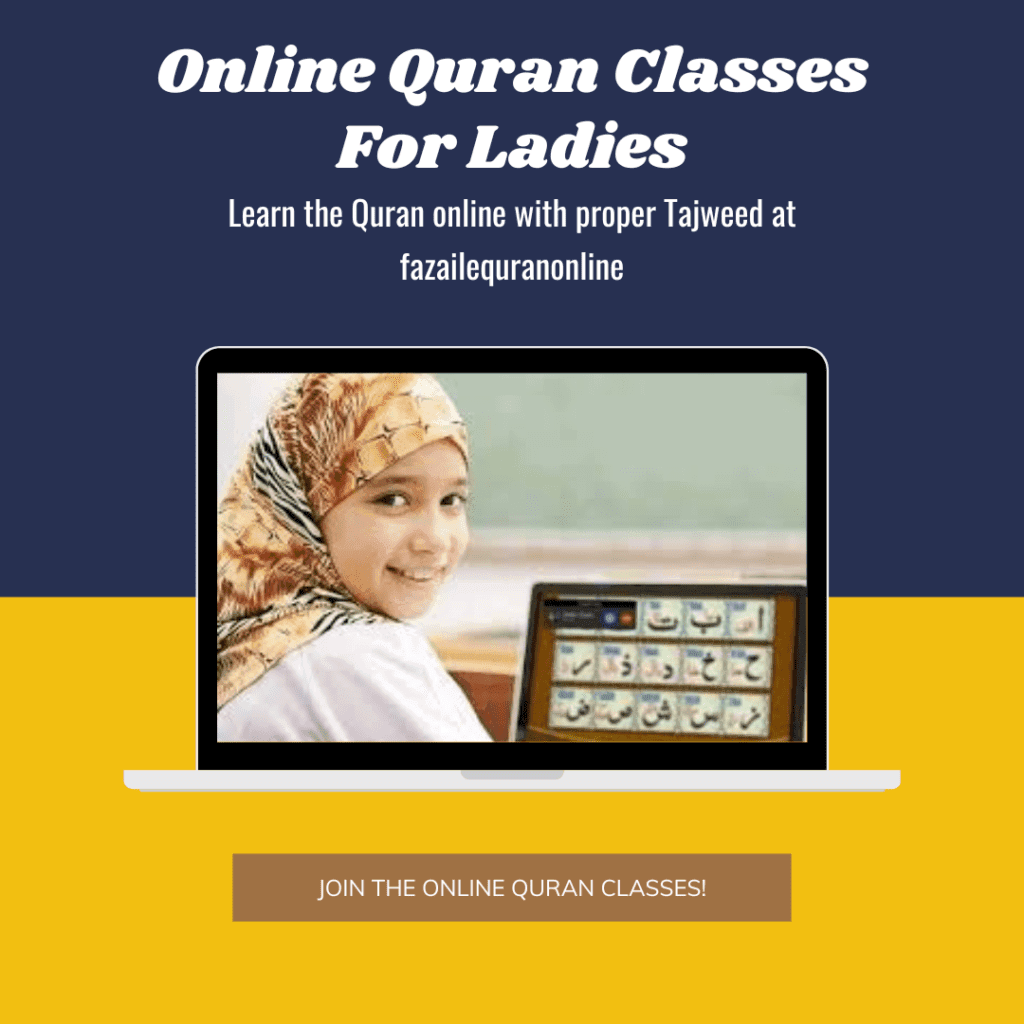
Online Quran Classes For Ladies (Sisters)

Online Quran Classes for Sisters: Tajweed, Quran Memorization, Islamic Studies, and More FazaileQuranOnline is committed to bringing the timeless wisdom of the Holy Quran to women worldwide through comprehensive online classes. With expert female tutors guiding you in Tajweed, Quran memorization, and Islamic studies, our courses provide a personalized learning experience from the comfort of your home. Whether you wish to perfect your recitation or delve deeper into Tafseer, our programs are tailored to your needs. Enjoy the flexibility of online learning, a supportive sisterhood, and access to highly qualified educators. Embark on a sacred journey to enrich your faith and understanding today. Making Quranic Knowledge Accessible Without Borders The Holy Quran is our ultimate guide in life, and we pray to Allah Almighty to make its light shine everywhere, transcending borders. Thanks to advancements in technology, Muslim women from all corners of the world, regardless of age or location, can now learn to read the Quran or deepen their understanding of it through convenient online lessons. At FazaileQuranOnline, we offer free trial online Quran classes for sisters taught by experienced female tutors who are certified Hafizas, specializing in Tajweed and Tarteel. Start your journey today with two free trial lessons, and experience the benefits of personalized learning tailored to your schedule. Explore Our Free Trial Islamic Courses for Sisters Online Islamic courses offer numerous features to guide your Quranic journey. From the basics of Noorani Qaida to advanced Quran memorization, our courses cater to women at every stage of learning. Here’s why online Quran education is an exceptional option for sisters: Our Online Quran Classes for Sisters 1. Tajweed Classes for Females Enhance your Quranic recitation with our Tajweed course. Learn essential Tajweed rules such as Ikhfa, Idgham, and Qalqalah, ensuring accurate pronunciation and rhythm. Under the guidance of our expert female instructors, gain confidence and precision in reciting the Quran as it is revealed. Whether you’re a beginner or seeking to refine your recitation, this course is tailored to meet your needs. 2. Noorani Qaida Course Designed for beginners, this course teaches the fundamentals of Arabic pronunciation and reading. Our native Arabic-speaking instructors provide step-by-step guidance, ensuring a strong foundation in Quranic reading. Start with Noorani Qaida and progress toward fluency in recitation with confidence. 3. Memorization Course for Sisters Strengthen your connection to the Quran by committing it to memory. This course is ideal for sisters aiming to memorize the Quran at their own pace. With personalized plans and regular reviews, our experienced female tutors ensure accurate retention and consistent progress. Whether starting from scratch or continuing your Hifdh journey, this course will support your goals. 4. Ten Qirat Course for Sisters Master the rich diversity of Quranic recitation styles with our Ten Qirat course. Explore the unique rhythmic variations and pronunciation of each Qirat under the mentorship of skilled teachers. This course provides a rare opportunity to deepen your understanding and appreciation of the Quran’s different recitation modes. 5. Tafseer Classes for Women Delve into the deeper meanings of the Quran with our Tafseer course. Learn about the historical context, linguistic nuances, and scholarly interpretations that illuminate the Quran’s divine message. This course is perfect for sisters seeking to enhance their faith and understanding of Allah’s words. 6. Islamic Studies for Sisters Gain comprehensive knowledge of Islamic principles, history, and teachings. This course is designed to enrich your understanding of Islam, covering a wide range of topics tailored specifically for women. Whether you’re new to the faith or looking to deepen your knowledge, our Islamic studies course will guide you. Advantages of Online Quran Learning for Sisters Meet Our Female Tutors Our experienced female Quran teachers are dedicated to providing high-quality education in a supportive environment. They are: The Importance of Learning the Quran The Prophet Muhammad (PBUH) said: “The best among you are those who learn the Quran and teach it.” (Sahih al-Bukhari) Learning and teaching the Quran is a virtuous act that brings immense rewards in this life and the hereafter. It strengthens our connection with Allah, enhances our understanding of His guidance, and helps us live according to the moral values of Islam. Memorizing and internalizing the Quran’s teachings is a lifelong gift for ourselves and future generations. Join the FazaileQuranOnline Family Today Thousands of women around the world have joined FazaileQuranOnline to enhance their Quranic knowledge and spiritual growth. Now it’s your turn! Take advantage of our free trial lessons and experience personalized, high-quality Quran education from the comfort of your home.Get Started Today! Contact us to begin your journey of Quranic learning with the best online female Quran tutors. May Allah illuminate your path and bless your efforts in this sacred endeavor. Enroll Now

Scroll to Top