Fazaile Quran Online

Islamic Article

Dua After Eating in Islam
Education, islam, Islamic Article, muslims, online quran, online quran classes, ramadan

Dua After Eating – Meaning, Benefits & Sunnah Etiquettes in Islam

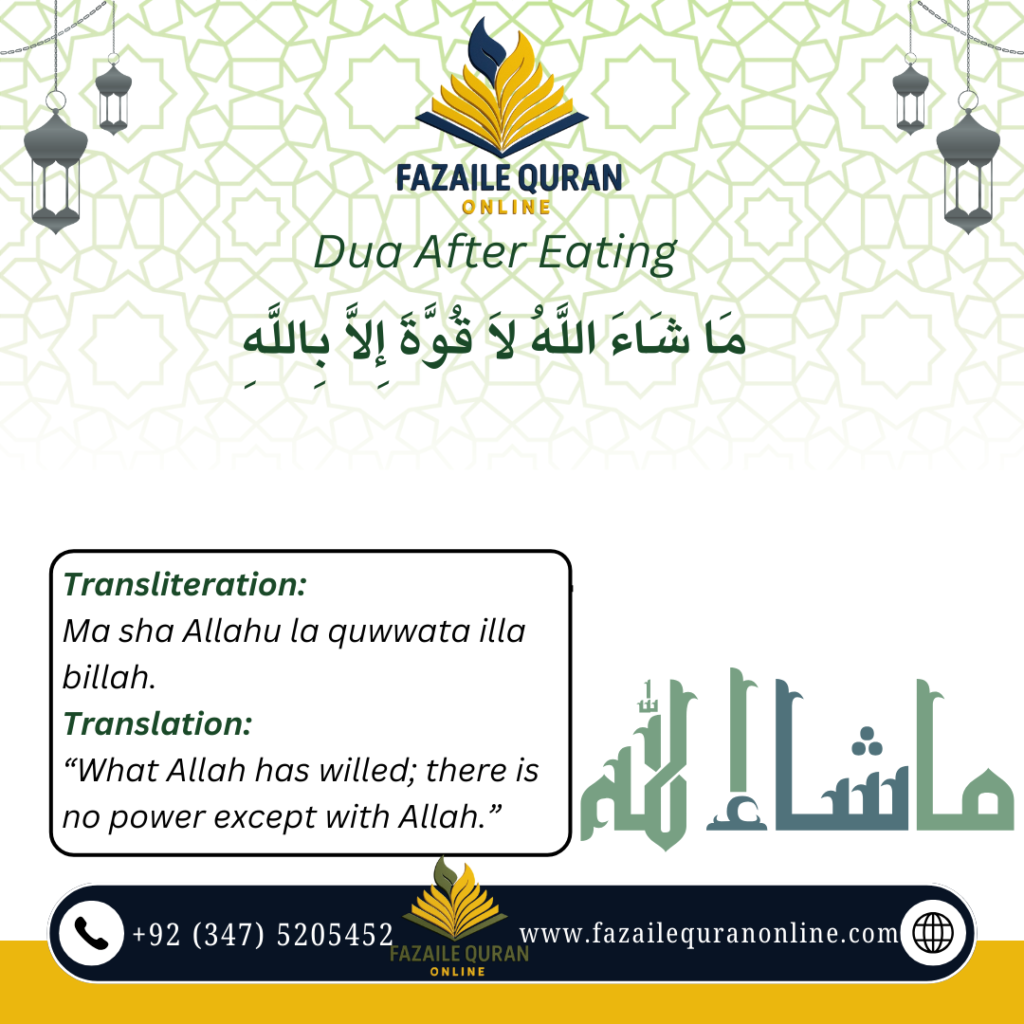
Dua After Eating – A Sunnah That Completes the Meal Finishing a meal with gratitude is a mark of a believer. Islam teaches us to remember Allah before eating and after eating, so our daily habits become acts of worship. Reciting the Dua After Eating strengthens gratitude, increases blessings, and keeps the heart humble. Authentic Dua After Eating Arabic Dua: ٱلْحَمْدُ لِلّٰهِ الَّذِي أَطْعَمَنَا وَسَقَانَا وَجَعَلَنَا مِنَ الْمُسْلِمِينَ Transliteration: Alhamdulillahil-ladhi at’amana wa saqana wa ja‘alana minal-Muslimeen. Meaning: “All praise is for Allah who fed us, gave us drink, and made us Muslims.” Another longer version (from Tirmidhi) is also Sunnah: Arabic: ٱلْحَمْدُ لِلّٰهِ الَّذِي أَطْعَمَنِي هَذَا، وَرَزَقَنِيهِ، مِنْ غَيْرِ حَوْلٍ مِنِّي وَلَا قُوَّةٍ Translation: “Praise be to Allah who gave me this food and provided it for me without any power or ability from myself.” Why Reciting the Dua After Eating Is Important The Prophet Muhammad ﷺ taught that expressing gratitude after meals increases barakah and earns reward. It is a powerful reminder that even the simplest blessing — food — comes only from Allah’s mercy. Benefits of Dua After Eating Gratitude increases provision: Grateful hearts receive more sustenance. Spiritual protection: You acknowledge Allah, which strengthens faith. Recorded as worship: Turning daily actions into good deeds. Boosts humility: Reminds you that everything comes from Allah alone. Sunnah Etiquettes After Eating Lick fingers if eating with hands. Wash hands once done. Rinse the mouth. Sit calmly until the dua is completed. Avoid wasting leftover food. Final Thoughts Reciting the Dua After Eating is a simple Sunnah with deep spiritual impact. It fills your heart with gratitude, protects your blessings, and keeps your faith alive in daily routines. For online Quran classes, Tajweed, duas, and Islamic studies with qualified tutors, visit: Fazaile Quran Online U Quran Tutors FAQs About Dua After Eating Q1: Is saying the Dua After Eating compulsory? No, it is Sunnah, but highly recommended because it brings reward and blessings. Q2: Can I say the dua in my own language? Yes, but reciting the Arabic version is more rewarding. You may add personal thanks in your language afterward. Q3: What if I forget to say the dua? Say it as soon as you remember — even after some time has passed. Q4: Should children be taught this dua? Absolutely. Teaching kids small Sunnah duas builds their Islamic identity from a young age. Q5: Can I recite the longer dua daily? Yes, both versions are authentic and can be recited anytime. Enroll Now 📢 Share this article: Facebook | Twitter (X) | LinkedIn | WhatsApp | Copy Link for Instagram
Dua Before Eating
Education, islam, Islamic Article, muslims, online quran, online quran classes

Dua Before Eating – Sunnah Etiquettes, Meaning & Benefits in Islam

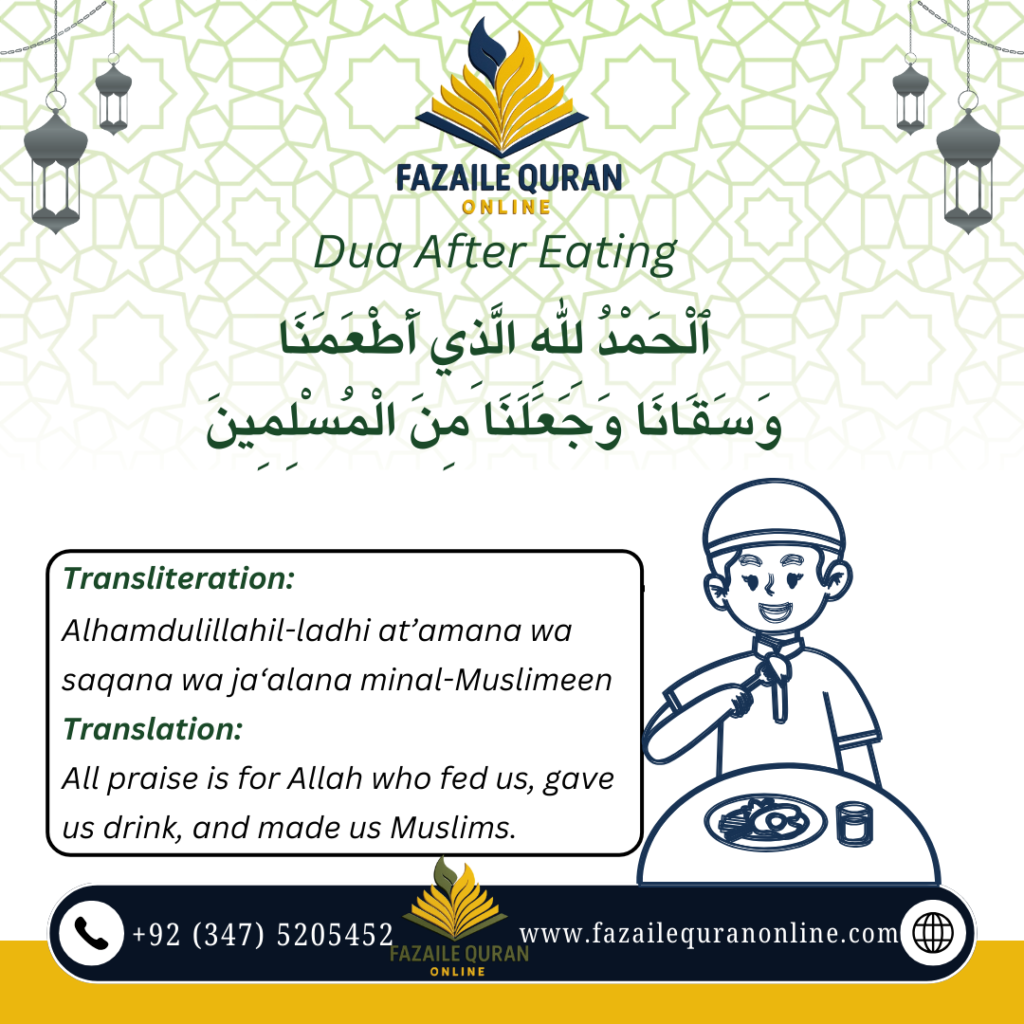
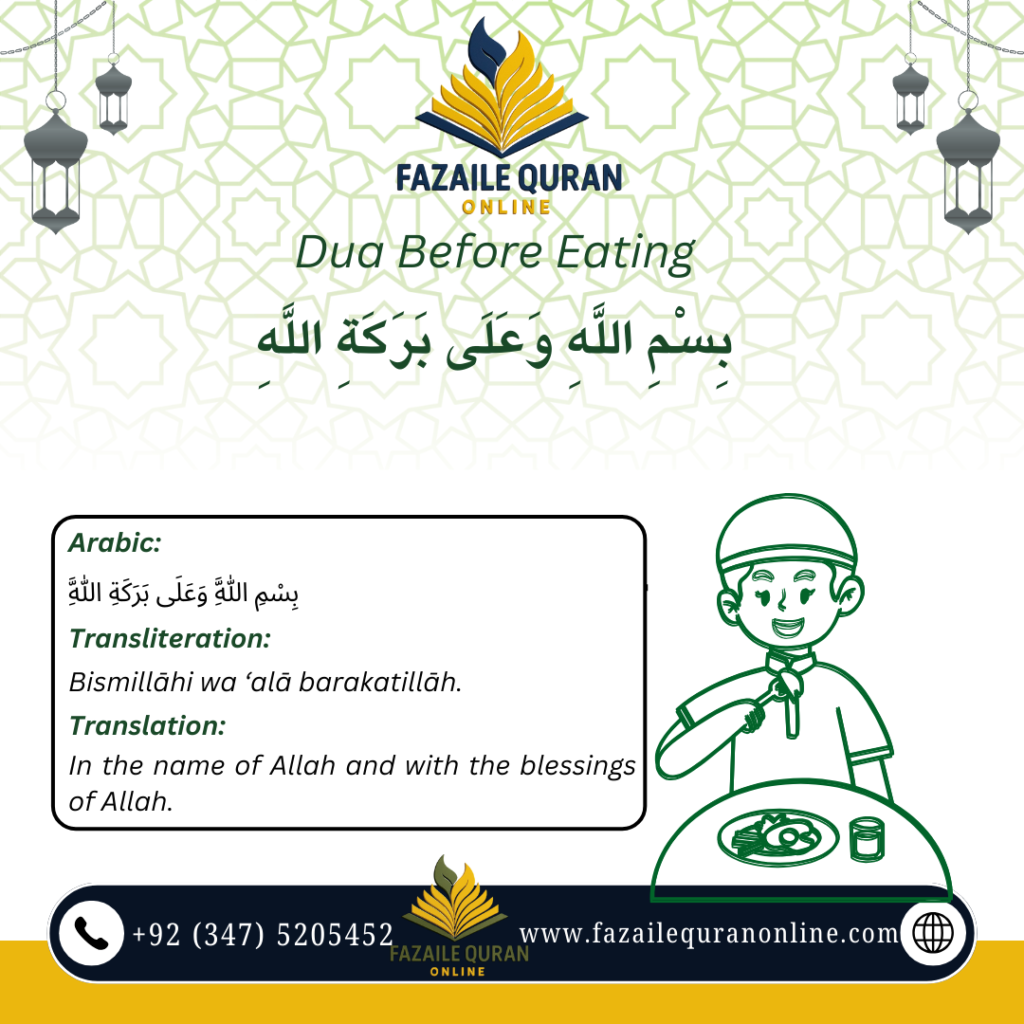
Dua Before Eating: Starting Your Meal With Barakah Eating is a blessing that Allah grants daily, and Islam teaches us to honor this blessing by beginning meals with the beautiful Sunnah dua. Saying the Dua Before Eating keeps the heart grateful, brings barakah to the food, and protects us from unseen harm. The Authentic Dua Before Eating Arabic: بِسْمِ اللَّهِ وَعَلَى بَرَكَةِ اللَّهِ Transliteration: Bismillāhi wa ‘alā barakatillāh. Translation: In the name of Allah and with the blessings of Allah. If someone forgets to say it at the start, the Prophet ﷺ taught us to say: “Bismillahi awwalahu wa akhirahu.” In the name of Allah, at the beginning and at the end. Why the Dua Before Eating Matters The Messenger of Allah ﷺ said that when a person forgets to mention Allah’s name, Shaytan partakes in the meal. By saying Bismillah, you block all negative spiritual influence and invite blessings into your food. Key Benefits Barakah in food—even small portions feel satisfying. Protection from Shaytan—he cannot join the meal. Mindful eating—you remember the Giver before enjoying His gift. Following Sunnah—turning a daily habit into worship. Sunnah Etiquettes Before eating Wash hands properly. Sit calmly and mention Allah’s name. Start with the right hand. Begin with food closest to you. During the Meal Eat slowly and avoid wasting food. Do not criticize food. Share meals when possible—sharing increases blessings. After the Meal Recite the post-meal dua: “Alhamdulillahi allathee at’amana wa saqana…” Wash hands and rinse mouth. Final Thoughts The Dua Before Eating is a simple Sunnah that transforms your meal into an act of worship. It keeps your heart connected to Allah and fills your life with gratitude and barakah. If you want to learn more duas, Quran recitation, and Islamic studies online with certified tutors, visit: www.fazailequranonline.com www.uqurantutors.com Enroll Now 📢 Share this article: Facebook | Twitter (X) | LinkedIn | WhatsApp | Copy Link for Instagram
how to do wudu properly
Education, islam, Islamic Article, muslims, online quran, online quran classes

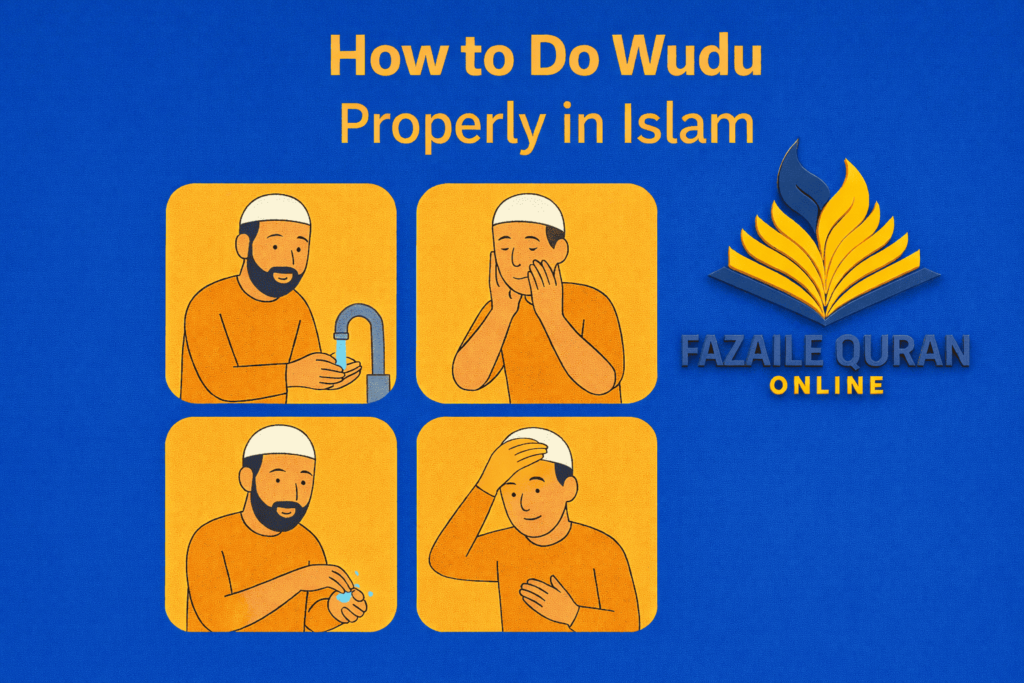
How to Do Wudu Properly in Islam

Before standing in prayer, Islam requires a state of physical and spiritual purity. Wudu is not only a prerequisite for Salah, but also a means of discipline, mindfulness, and obedience to Allah. Many Muslims search for how to do wudu, wudu steps in order, or how to make wudu correctly to ensure their worship is valid. This guide by Fazaile Quran Online explains how to perform wudu correctly, why each step matters, and how to avoid common errors. Meaning and Purpose of Wudu Wudu is an act of purification commanded by Allah to prepare believers for worship. It removes minor impurity and prepares the heart and body to stand before the Creator. Allah says in the Qur’an: “When you rise for prayer, wash your faces and your hands up to the elbows, wipe over your heads, and wash your feet up to the ankles.” (Surah Al-Ma’idah 5:6) This verse outlines the core obligations of wudu. How to Make Wudu Correctly (Explained Simply) Instead of memorizing steps, it is important to understand the flow of wudu. Below is an easy and correct method. Step 1: Prepare Yourself Ensure clean water is available. Face the Qiblah if possible and clear distractions. Step 2: Intention (Niyyah) Silently intend in your heart to perform wudu for purification. Intention is not spoken aloud. Step 3: Begin With Allah’s Name Say Bismillah before starting. Step 4: Clean the Hands Wash both hands thoroughly up to the wrists. Three time Step 5: Purify the Mouth and Nose Rinse the mouth and clean the nose to remove impurities. Three time Step 6: Wash the Face Completely Ensure water covers the entire face, including beard area if present. Three time Step 7: Wash the Arms Wash the right arm first, then the left, ensuring elbows are included. Three time Step 8: Wipe the Head and Ears With wet hands, wipe the head once and clean both ears. Which called Masha Step 9: Wash the Feet Wash each foot carefully, ensuring water reaches the ankles and between the toes. Correct Order of Wudu Steps For those asking “wudu steps in order”, the sequence must be maintained. Changing the order intentionally makes wudu invalid. Correct sequence: Hands → Mouth → Nose → Face → Arms → Head → Ears → Feet How Do You Know Your Wudu Is Valid? Your wudu is valid when: All obligatory parts are washed The order is maintained Water reaches the required areas Nothing that breaks wudu occurs afterward Actions That Break Wudu Many ask “what breaks wudu” or “what breaks wudu for a woman.” The rules apply equally. Wudu is invalidated by: Passing urine, stool, or gas Deep sleep or unconsciousness Menstruation or post-natal bleeding Touching private parts directly (scholarly difference) Mistakes That Invalidate Wudu Leaving elbows or ankles dry Rushing through steps Skipping required actions Changing the order deliberately Correcting these mistakes improves both validity and reward. Why Proper Wudu Matters in Daily Life Wudu is not only for Salah. It: Encourages personal hygiene Builds spiritual awareness Increases reward when done frequently Prepares the believer for Qur’an recitation Learning wudu correctly strengthens daily worship. Learn Wudu and Qur’an Online With Proper Guidance Many mistakes in wudu occur due to lack of guidance. Learning from qualified teachers helps ensure correctness from the beginning. Fazaile Quran Online provides: One-to-one online classes Qur’an with Tajweed Islamic fundamentals for all ages Flexible class schedules Visit: www.fazailequranonline.com Enroll with Fazaile Quran Online to learn wudu, Salah, and Qur’an correctly. Enroll Now 📢 Share this article: Facebook | Twitter (X) | LinkedIn | WhatsApp | Copy Link for Instagram
Prophet Muhammad (SAW)
Education, Islamic Article

Prophet Muhammad (SAW): The Mercy to Mankind

Introduction Prophet Muhammad (peace be upon him), the final messenger of Allah, stands as the most influential and compassionate figure in human history. Born in the year 570 CE in the sacred city of Makkah, he brought a message of peace, unity, and submission to one God — a message that transformed the Arabian Peninsula and continues to guide over a billion Muslims around the globe today. In this blog, we will explore the life, character, and legacy of Prophet Muhammad (SAW), backed by references from the Qur’an and Hadith. This humanized yet respectful presentation is written to enlighten readers and help websites rank on Google with targeted keywords and proper structure. Early Life and Background Prophet Muhammad (SAW) was born into the noble Hashim clan of the Quraysh tribe, yet he faced the pain of orphanhood early in life. His father, Abdullah, died before his birth, and his mother Amina passed away when he was just six years old. He was raised by his grandfather Abdul Muttalib and later by his uncle Abu Talib. Despite these hardships, the Prophet (SAW) was known even in his youth as “Al-Ameen” (The Trustworthy) because of his honest and upright character. Prophethood and the Revelation At the age of 40, while meditating in the Cave of Hira, the Prophet (SAW) received the first revelation from Allah through the angel Jibreel (Gabriel). This moment marked the beginning of his mission as the Seal of the Prophets. “Read in the name of your Lord who created.” — Surah Al-Alaq (96:1) For the next 23 years, Prophet Muhammad (SAW) delivered the divine message that became the Qur’an, guiding mankind toward justice, mercy, and the worship of one God. Flawless Character and Divine Protection He was a man who, throughout his entire life, did not commit even a single minor mistake — free from error, guided by revelation, and protected by Allah. Every word he spoke was truthful, every action deliberate and pure. His life was the embodiment of perfection—not by human standards, but by divine will. “And indeed, you are of a great moral character.” — Surah Al-Qalam (68:4) Key Characteristics of Prophet Muhammad (SAW) 1. Compassion and Mercy The Qur’an beautifully describes him: “And We have not sent you, [O Muhammad], except as a mercy to the worlds.” — Surah Al-Anbiya (21:107) He forgave enemies, cared for the poor, treated women with dignity, and even showed kindness to animals. 2. Justice and Fairness The Prophet (SAW) was known for his fair treatment of all — Muslims and non-Muslims alike. He said: “Help your brother, whether he is an oppressor or is oppressed.” — Sahih Bukhari 3. Simplicity and Humility Despite his great status, he lived modestly, slept on a mat, and mended his own clothes. He never sought luxury or power. His Countless Good Deeds If I were to write about his good deeds, habits, and noble character, my pen would run dry and my notebook would be filled—but his virtues would still remain countless and beyond measure. He (SAW) was not just a man of words but of action—every step he took was a lesson, every smile a mercy, every decision a sign of divine guidance. Major Contributions to Society Social Justice: Eliminated class and racial superiority. Women’s Rights: Gave women inheritance rights, forbade female infanticide, and emphasized their spiritual equality. Orphan & Poor Care: Regularly reminded his followers to care for the less fortunate. “He is not a believer whose stomach is filled while the neighbor to his side goes hungry.” — Sahih al-Adab al-Mufrad The Truth of His Prophecies Everything that Prophet Muhammad (ﷺ) foretold—whether about the future of nations, signs of the Last Day, or spiritual realities—either has already come true or will inevitably come true. His words were not predictions, but divine revelations. As time unfolds, the truth of his statements continues to be confirmed by history and events. “Nor does he speak from [his own] desire. It is nothing but revelation sent down to him.” — Surah An-Najm (53:3–4) The Final Sermon: A Universal Message In his last sermon during Hajj, Prophet Muhammad (SAW) addressed over 120,000 people, emphasizing the core values of equality, justice, and the sanctity of life. He declared: “All mankind is from Adam and Eve. An Arab has no superiority over a non-Arab, nor does a non-Arab have superiority over an Arab…” Legacy and Influence Today, over 1.9 billion Muslims across every continent follow the teachings of Prophet Muhammad (SAW). His sayings (Hadith) and life events (Seerah) remain the foundation of Islamic law (Shariah) and ethics. Even non-Muslims have recognized his impact: “If greatness of purpose, smallness of means, and astounding results are the three criteria of human genius, who could dare to compare any great man in modern history with Muhammad?” — Alphonse de Lamartine, French writer and historian Why Learn About Prophet Muhammad (SAW)? Whether you are a Muslim seeking to strengthen your faith or a non-Muslim curious about Islam, learning about the Prophet Muhammad (SAW) helps you understand: The origin of Islamic civilization The foundation of Islamic spirituality and law The universal values of compassion, patience, and morality Conclusion Prophet Muhammad (SAW) is more than a historical figure; he is a spiritual guide, a social reformer, and a model of human excellence. His life continues to inspire people to seek truth, act justly, and live humbly. Explore More Islamic Knowledge Visit FazaileQuranOnline.com — an authentic platform dedicated to spreading the teachings of Islam through Qur’an recitation, Hadith study, and character development programs. Learn Islam the right way, from the right sources. Enroll Now

IMAN E MUFASSAL AND IMAN E MUJMAL
Education, Islamic Article, muslims, online quran

Iman-e-Mufassal and Iman-e-Mujmal – A Complete Guide

In Islam, faith (Iman) is the foundation of all beliefs and actions. A Muslim’s journey begins with understanding and accepting the core articles of faith. Among the most essential expressions of belief in Islam are Iman-e-Mufassal (Detailed Declaration of Faith) and Iman-e-Mujmal (Concise Declaration of Faith). Every Muslim child is taught to memorize these declarations, but understanding their meanings and implications is equally important. In this article, we provide a complete explanation of both declarations, discuss the seven pillars of Iman, and share how you or your children can learn these online through Fazaile Quran Online. What is Iman? Iman means belief and conviction in the heart, affirmation by the tongue, and acting upon it through deeds. Without Iman, Allah does not accept any Islamic act of worship—whether it be prayer, fasting, or charity. Therefore, understanding the essence of Iman is crucial for every Muslim. What is Iman-e-Mufassal? Iman-e-Mufassal is the detailed statement of belief in Islam. It encompasses the seven core pillars that form the basis of Islamic theology. These are explicitly mentioned in the Holy Qur’an and Hadith. Arabic Text of Iman-e-Mufassal: اٰمَنْتُ بِاللہِ وَمَلٰئِکَتِہٖ وَ کُتُبِہٖ وَرُسُلِہٖ وَالْیَوْمِ الْاٰخِرِ وَالْقَدْرِ خَیْرِہٖ وَشَرِّہٖ مِنَ اللہِ تَعَالٰی وَالْبَعْثِ بَعْدَالْمَوْت English Translation: “I believe in Allah, His angels, His books, His messengers, the Last Day, and in destiny, both good and bad, from Allah the Almighty, and in resurrection after death.” The Seven Pillars of Iman According to Iman-e-Mufassal and the Hadith of Jibreel, the seven articles of faith are: Belief in Allah – That He is One, without partner, and the sole Creator and Sustainer.  Belief in His Angels – Created from light, they never disobey Allah and perform specific duties.  Belief in His Books – Including the Torah, Psalms, Gospel, and especially the Qur’an, which is the final and preserved revelation.  Belief in His Messengers – That Allah sent prophets to guide mankind, with Muhammad (peace be upon him) as the final messenger.  Belief in the Last Day – The Day of Judgment when every soul will be held accountable.  Belief in Divine Decree (Qadar) – That all good and evil occurs by Allah’s will and knowledge.  Belief in Resurrection after Death – That every human being will be raised after death for final judgment.  What is Iman-e-Mujmal? Iman-e-Mujmal is a concise expression of a Muslim’s belief. While Iman-e-Mufassal details the components of faith, Iman-e-Mujmal summarizes a believer’s complete acceptance of Allah and all His commands. Arabic Text of Iman-e-Mujmal: اٰمَنْتُ بِاللہِ کَمَا ھُوَ بِاَسْمَآئِہٖ وَصِفَاتِہٖ وَقَبِلْتُ جَمِیْعَ اَحْکَامِہٖ اِقْرَارٌم بِاللِّسَانِ وَتَصْدِیْقٌ بِالْقَلْب English Translation: “I believe in Allah as He is, with all His names and attributes, and I accept all His commands.” This declaration represents complete submission to Allah and serves as the foundation for living a life by Islamic teachings. Hadith Reference for the Articles of Faith The foundations of Iman are outlined in the well-known Hadith of Jibreel, narrated in Sahih Muslim: The Prophet Muhammad (peace be upon him) said: “Iman is to believe in Allah, His angels, His books, His messengers, the Last Day, and in the Divine Decree, both its good and its evil.” [Sahih Muslim, Hadith 8] This hadith confirms all the elements included in Iman-e-Mufassal and validates the significance of these declarations in the Islamic creed. Why Learning These Declarations is Essential Memorizing and understanding Iman-e-Mufassal and Iman-e-Mujmal is essential for: Strengthening Islamic identity  Building a strong foundation in Aqeedah (Islamic theology)  Ensuring the correct belief for the acceptance of deeds  Teaching children the principles of Islam from an early age  Parents, teachers, and institutions should focus not only on memorization but also on comprehension and application. Where to Learn Quran and Islamic Beliefs Online For those seeking a structured, authentic, and reliable platform to learn Iman, Quran, Tajweed, and other Islamic essentials, Fazaile Quran Online offers: Online Quran classes with Tajweed  Basic and advanced Islamic belief courses  Memorization of daily Duas and Hadith  Male and female teachers for all age groups  Flexible timings for international students  Special Offer: Students who refer: 3 others Pay $30/month instead of 50$ 4 others Pay $20/month instead of 50$ 5 referrals earn a completely free course  Click on the link below and register now Conclusion Understanding Iman-e-Mufassal and Iman-e-Mujmal is crucial for every Muslim. These declarations summarize the core beliefs of Islam and help in building a strong connection with Allah. We should teach them with care, understand them with sincerity, and practice them with commitment. Platforms like Fazaile Quran Online make it easy to access authentic Islamic education from the comfort of your home. Whether for yourself or your children, start your journey toward stronger faith today. Enroll Now

Scroll to Top