Fazaile Quran Online

ramadan

Ramadan 2025-2026 guide
Education, islam, Islamic Article, online quran, ramadan

Ramadan: Complete Guide to Fasting, Rules, Duas, Timings, and Calendar (2025–2026)

Ramadan is the ninth and most sacred month of the Islamic lunar calendar — a time when Muslims worldwide step into a routine of fasting, prayer, repentance, charity, and spiritual discipline. From dawn to sunset, believers detach from worldly desires and turn their hearts toward Allah. Beyond hunger and thirst, Ramadan trains patience, strengthens character, and revives the soul. This complete, SEO-optimized guide explains everything about Ramadan: its meaning, significance, fasting rules, duas, Sehri and Iftar timings, Ramadan 2025 and 2026 dates, Laylatul Qadr, benefits, and frequently asked questions — making it the ultimate resource for new learners and practicing Muslims alike. What Is Ramadan? Meaning & Importance Ramadan marks the month in which the Quran was revealed to Prophet Muhammad ﷺ, bringing guidance, mercy, and clarity to humanity. “The month of Ramadan in which was revealed the Quran, a guidance for mankind and clear proofs for guidance and the criterion.” (Surah Al-Baqarah 2:185) Meaning of the Word “Ramadan” The name comes from the Arabic root “ramida”, meaning intense heat — symbolizing the burning away of sins and purifying the soul through devotion. Why Ramadan Is Spiritually Important It is one of the Five Pillars of Islam Fasting (Sawm) is obligatory for eligible Muslims Good deeds are multiplied Strengthens faith, taqwa, self-control, and discipline Connects believers deeply with the Quran Ramadan isn’t just a month — it’s a heart reset. Why Muslims Fast During Ramadan Fasting is an act of obedience, patience, and gratitude. Allah says: “O you who believe, fasting has been prescribed for you as it was prescribed for those before you, so that you may attain Taqwa.” (Surah Al-Baqarah 2:183) Fasting teaches: Discipline Empathy for the poor Spiritual focus Gratitude for blessings Rules of Fasting in Ramadan Fasting begins at Fajr (dawn) and ends at Maghrib (sunset). Who Must Fast Adults who are: Muslim Sane Physically capable Who Is Exempt The sick Travelers Elderly Pregnant or breastfeeding women Those with medical conditions Missed fasts are made up later, or fidya may be paid when fasting is permanently not possible. What Breaks the Fast These actions break the fast: Eating or drinking intentionally Smoking Intentional vomiting Marital relations during fasting hours These do NOT break the fast: Eating/drinking by mistake Brushing teeth (without swallowing) Taking a shower Accidental vomiting Sehri & Iftar: Daily Ramadan Timings Ramadan follows the lunar calendar, so each year the dates shift by 10–11 days. Sehri (Pre-Dawn Meal) A blessed meal consumed before Fajr. The Prophet ﷺ said: “Eat Sehri, for in Sehri there is blessing.” (Bukhari) Iftar (Breaking the Fast) Traditionally done with dates and water, following the Sunnah. “The people will remain upon goodness as long as they hasten to break the fast.” (Bukhari & Muslim) Timings differ by country — always follow your local Ramadan timetable. 2025 & Ramadan 2026 Dates Ramadan 2025 (Completed) Began: Evening of Friday, 28 February 2025 First Fast: Saturday, 1 March 2025 Eid al-Fitr: Late March 2025 (varies by moon sighting) Ramadan 2026 (Upcoming) Expected Beginning: Evening of Tuesday, 17 February 2026 First Fast: Wednesday, 18 February 2026 Eid al-Fitr: Around 20 March 2026 Important: All dates depend on local moon sighting and announcements by Islamic authorities. Essential Duas for Ramadan Dua for Beginning the Fast Arabic: اللَّهُمَّ إِنِّي لَكَ صُمْتُ Translation: “O Allah, I fast for You.” Dua for Iftar (Breaking Fast) Arabic: اللَّهُمَّ إِنِّي لَكَ صُمْتُ وَبِكَ آمَنْتُ وَعَلَيْكَ تَوَكَّلْتُ وَعَلَىٰ رِزْقِكَ أَفْطَرْتُ Translation: “O Allah, I fasted for You, believed in You, trusted You, and with Your sustenance I break my fast.” General Duas to Recite in Ramadan Dua for forgiveness Dua for guidance Dua for protection from Hellfire Dua for acceptance of prayers Laylatul Qadr — The Night of Power Laylatul Qadr is the holiest night of the year, better than 1,000 months. “The Night of Decree is better than a thousand months.” (Surah Al-Qadr 97:3) When Is Laylatul Qadr? During the last ten nights, most likely in the odd nights (21st, 23rd, 25th, 27th, 29th). Best Dua for Laylatul Qadr Arabic: اللَّهُمَّ إِنَّكَ عَفُوٌّ تُحِبُّ العَفْوَ فَاعْفُ عَنِّي Translation: “O Allah, You are Most Forgiving and You love forgiveness, so forgive me.” Benefits of Fasting in Ramadan Spiritual Benefits Strengthens faith Builds taqwa Encourages self-reflection Inspires repentance Physical Benefits Better eating habits Improved metabolism Natural detoxification Social Benefits Empathy for the needy Increased charity (Zakat & Sadaqah) Stronger community bonds Learn Quran Properly During Ramadan — Online Classes for All Ages Ramadan is the month of the Quran – a perfect time to begin or strengthen your recitation and understanding. Fazaile Quran Online And U Quran Tutors offer structured, interactive, and student-friendly online Quran learning programs. Courses Include: Quran Reading with Tajweed Quran Memorization (Hifz) Tajweed Rules for Beginners & Advanced Students Islamic Studies for Kids & Adults 1-on-1 Live Classes With Qualified Teachers Flexible Timings for All Countries These platforms provide a supportive learning environment for children, adults, and beginners who want to build a strong connection with the Quran — especially in Ramadan. If you want your children or yourself to learn the Quran the right way, with proper Tajweed and understanding, Fazaile Quran Online and U Quran Tutors are reliable and trusted options. Final Note May Allah allow us to reach Ramadan with faith, accept our fasting, prayers, and duas, and grant us the ability to follow the guidance of the Quran. Ameen. Ramadan is not just a ritual – it’s a journey of the heart, a spiritual detox, and a chance to restart life with purity and purpose. May this Ramadan bring light, mercy, and blessings to every home Frequently Asked Questions (FAQs) 1. What is Ramadan? A sacred month of fasting, worship, and Quran recitation. 2. Can I drink water while fasting? No. Drinking anything during fasting hours breaks the fast. 3. Who is exempt from fasting? Sick individuals, travelers, elderly, and certain medical cases. 4. When does fasting start and end? Starts at Fajr and ends at Maghrib. 5. Is fasting only about food?
Dua When You See Something Beautiful
islam, Islamic Article, muslims, online quran, online quran classes, ramadan

Dua When You See Something Beautiful

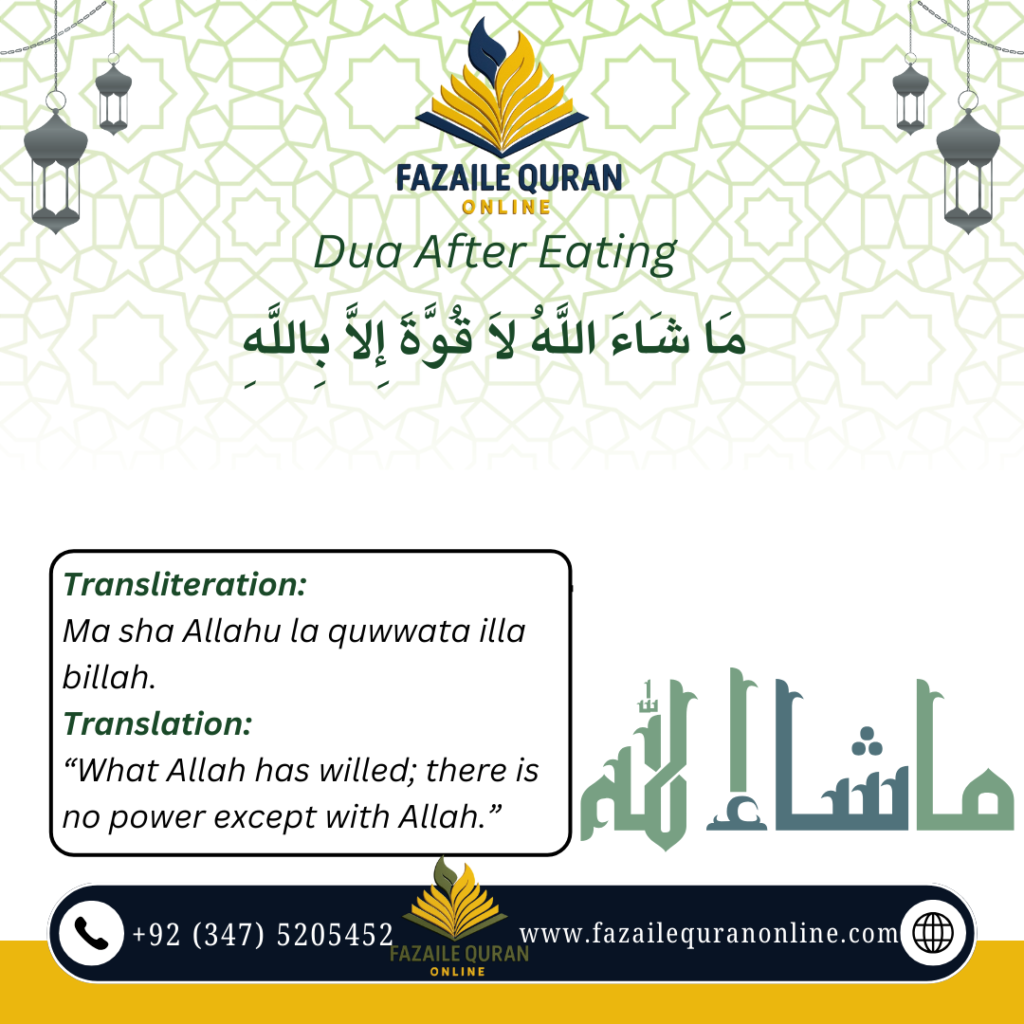
Dua When You See Something Beautiful – A Sunnah Filled With Barakah Islam gives us duas for every moment in life — even for the times when something beautiful catches our eyes. Whether it’s a person, a place, a gift, or a blessing from Allah, this Sunnah dua protects us from envy, increases gratitude, and keeps the heart spiritually focused. Authentic Dua When You See Something Beautiful The Prophet Muhammad ﷺ taught us to say: Arabic: مَا شَاءَ اللَّهُ لَا قُوَّةَ إِلَّا بِاللَّهِ Transliteration: Ma sha Allahu la quwwata illa billah. Meaning: “What Allah has willed; there is no power except with Allah.” This dua is also recommended when you admire something in others to prevent the evil eye (nazar). Another variation when admiring someone else’s blessing: Arabic: اللَّهُمَّ بَارِكْ لَهُ Meaning: “O Allah, bless him/her.” Why This Dua Is So Important Beauty in the world is a sign of Allah’s perfection. Reciting this dua protects your heart from jealousy, protects others from harmful nazar, and fills the moment with remembrance of Allah. Major Benefits Prevents evil eye — the dua shields others from accidental envy. Builds gratitude — you acknowledge Allah as the source of all beauty. Strengthens faith — you see beauty as a sign from your Creator. Promotes good adab — Muslims admire with humility, not pride. How to Use This Dua in Daily Life When you see a beautiful view When you admire someone’s success When you see a blessing in your own life When a child looks cute or impressive When you see new clothes, a house, or a car This dua transforms admiration into worship. Final Thoughts Reciting the Dua When You See Something Beautiful enriches your heart, protects others from envy, and connects admiration back to Allah. It’s a simple Sunnah with a deep spiritual impact. For learning more duas, Tajweed, and Quran classes with certified teachers, visit: Fazaile Quran Online U Quran Tutors FAQs About Dua when you see something beautiful Q1: Is this dua also used to prevent nazar (evil eye)? Yes, it is one of the strongest Sunnah duas for protection from nazar. Q2: Should I say it loudly? You may say it softly or in your heart. Saying it aloud is better when admiring someone else’s blessing. Q3: Can I say “MashAllah” only? Yes, but the full dua carries more reward and protection. Q4: Can children be taught this dua? Absolutely — it builds good manners and protects them. Enroll Now 📢 Share this article: Facebook | Twitter (X) | LinkedIn | WhatsApp | Copy Link for Instagram

Dua After Eating in Islam
Education, islam, Islamic Article, muslims, online quran, online quran classes, ramadan

Dua After Eating – Meaning, Benefits & Sunnah Etiquettes in Islam

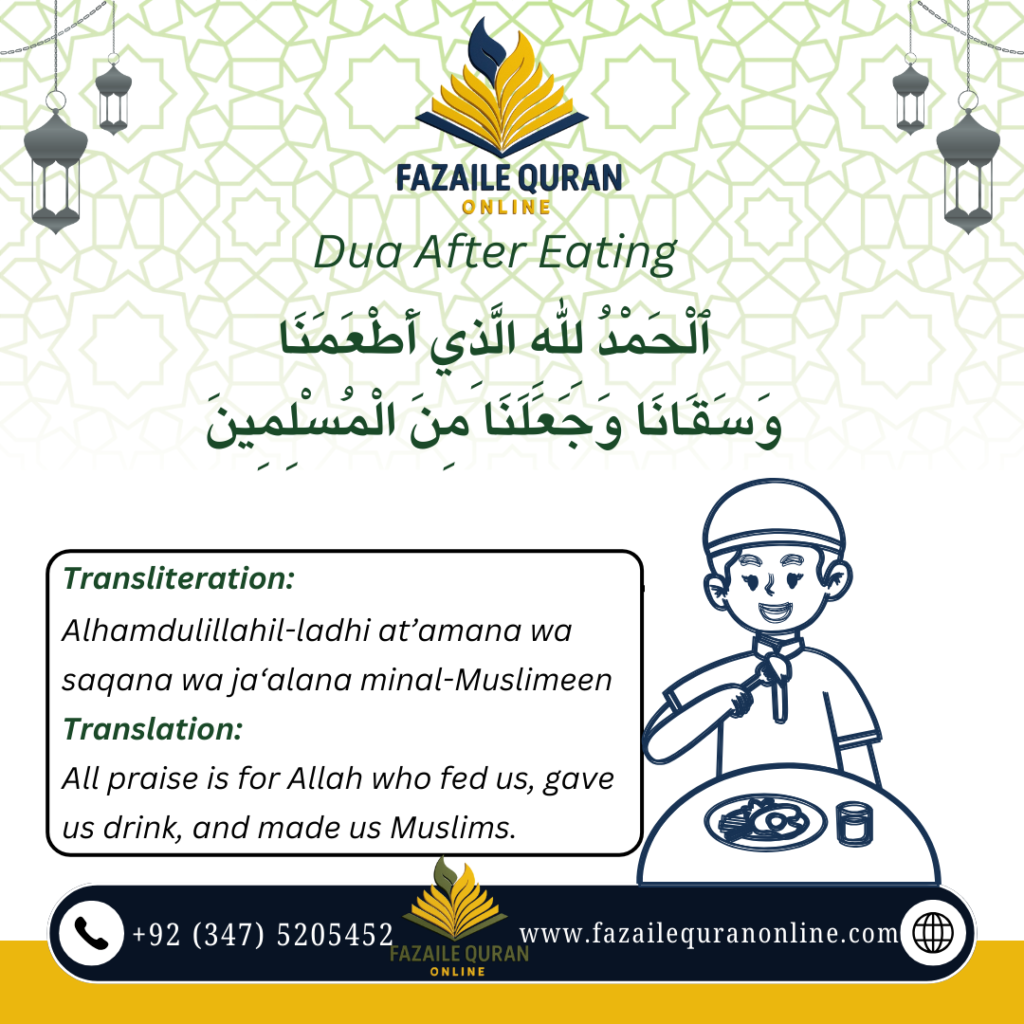
Dua After Eating – A Sunnah That Completes the Meal Finishing a meal with gratitude is a mark of a believer. Islam teaches us to remember Allah before eating and after eating, so our daily habits become acts of worship. Reciting the Dua After Eating strengthens gratitude, increases blessings, and keeps the heart humble. Authentic Dua After Eating Arabic Dua: ٱلْحَمْدُ لِلّٰهِ الَّذِي أَطْعَمَنَا وَسَقَانَا وَجَعَلَنَا مِنَ الْمُسْلِمِينَ Transliteration: Alhamdulillahil-ladhi at’amana wa saqana wa ja‘alana minal-Muslimeen. Meaning: “All praise is for Allah who fed us, gave us drink, and made us Muslims.” Another longer version (from Tirmidhi) is also Sunnah: Arabic: ٱلْحَمْدُ لِلّٰهِ الَّذِي أَطْعَمَنِي هَذَا، وَرَزَقَنِيهِ، مِنْ غَيْرِ حَوْلٍ مِنِّي وَلَا قُوَّةٍ Translation: “Praise be to Allah who gave me this food and provided it for me without any power or ability from myself.” Why Reciting the Dua After Eating Is Important The Prophet Muhammad ﷺ taught that expressing gratitude after meals increases barakah and earns reward. It is a powerful reminder that even the simplest blessing — food — comes only from Allah’s mercy. Benefits of Dua After Eating Gratitude increases provision: Grateful hearts receive more sustenance. Spiritual protection: You acknowledge Allah, which strengthens faith. Recorded as worship: Turning daily actions into good deeds. Boosts humility: Reminds you that everything comes from Allah alone. Sunnah Etiquettes After Eating Lick fingers if eating with hands. Wash hands once done. Rinse the mouth. Sit calmly until the dua is completed. Avoid wasting leftover food. Final Thoughts Reciting the Dua After Eating is a simple Sunnah with deep spiritual impact. It fills your heart with gratitude, protects your blessings, and keeps your faith alive in daily routines. For online Quran classes, Tajweed, duas, and Islamic studies with qualified tutors, visit: Fazaile Quran Online U Quran Tutors FAQs About Dua After Eating Q1: Is saying the Dua After Eating compulsory? No, it is Sunnah, but highly recommended because it brings reward and blessings. Q2: Can I say the dua in my own language? Yes, but reciting the Arabic version is more rewarding. You may add personal thanks in your language afterward. Q3: What if I forget to say the dua? Say it as soon as you remember — even after some time has passed. Q4: Should children be taught this dua? Absolutely. Teaching kids small Sunnah duas builds their Islamic identity from a young age. Q5: Can I recite the longer dua daily? Yes, both versions are authentic and can be recited anytime. Enroll Now 📢 Share this article: Facebook | Twitter (X) | LinkedIn | WhatsApp | Copy Link for Instagram

Lailatul Qadr
islam, muslims, online quran, online quran classes, ramadan

Laylatul Qadr: The Night of Power and Divine Blessings

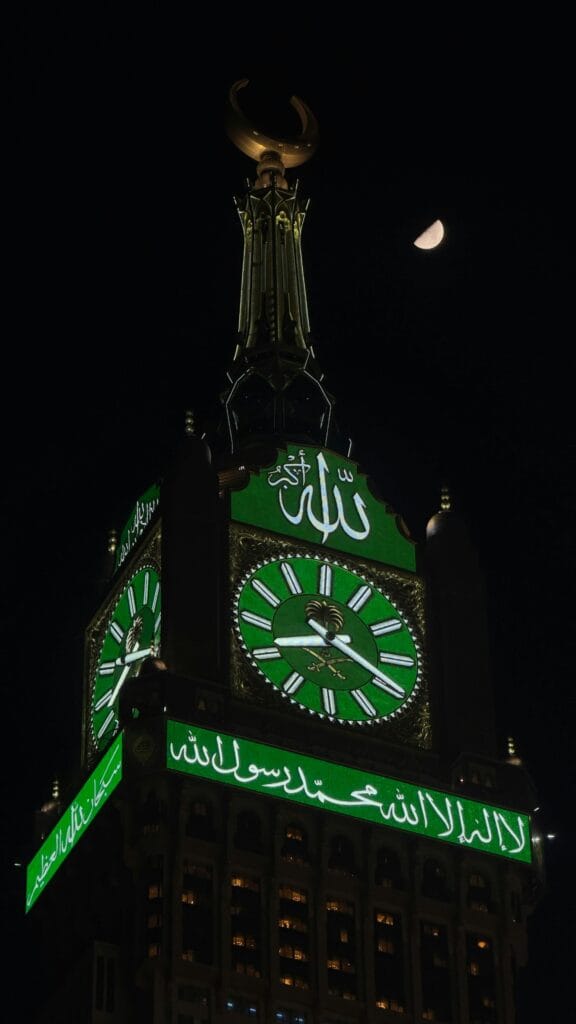
Laylatul Qadr, or the Night of Power, is a pinnacle of spiritual significance in Islam. During the last ten nights of Ramadan, this night commemorates the momentous occasion when the Quran was revealed to the Prophet Muhammad (peace be upon him). The Quran describes this night as “better than a thousand months,” emphasizing its profound importance. Connection Between Laylatul Qadr and Qiyam-ul-Lail Qiyam-ul-Lail, the voluntary night prayer, holds special significance during Laylatul Qadr. Engaging in these prayers during this sacred night is believed to bring immense spiritual rewards and forgiveness. Signs of Laylatul Qadr While the exact date of Laylatul Qadr is not specified, it is traditionally sought during the odd-numbered nights of the last ten days of Ramadan. Some signs believed to indicate this night include: These signs, though not definitive, guide believers in their earnest search for this blessed night. Virtues and Rewards of Worship on This Blessed Night Worship performed on Laylatul Qadr is considered to be more rewarding than that of a thousand months. This immense multiplication of rewards underscores the unparalleled opportunity for spiritual elevation and closeness to Allah during this night. Recommended Acts of Worship To fully embrace the blessings of Laylatul Qadr, Muslims are encouraged to: Importance of the Last Ten Nights of Ramadan and I’tikaf The final ten nights of Ramadan are a period of intensified worship and reflection. Many Muslims observe I’tikaf, a practice of secluding oneself in the mosque to focus solely on worship and spiritual rejuvenation. This practice allows believers to detach from worldly distractions and seek a deeper connection with Allah. Hadiths and Quranic References About Laylatul Qadr The significance of Laylatul Qadr is highlighted in Surah Al-Qadr: “Indeed, We sent the Qur’an down during the Night of Decree. And what can make you know what is the Night of Decree? The Night of Decree is better than a thousand months.” Additionally, the Prophet Muhammad (peace be upon him) advised: “Search for Laylatul-Qadr in the odd nights of the last ten nights of Ramadan.” Maximizing the Blessings of Laylatul Qadr Laylatul Qadr offers a unique opportunity for spiritual growth and divine mercy. We can attain immense rewards and strengthen our faith by dedicating ourselves to worship during the last ten nights of Ramadan. Let us seize this blessed occasion to seek forgiveness, reflect on our actions, and renew our commitment to the path of righteousness. Enhancing Your Quranic Journey To deepen your connection with the Quran during this auspicious time, consider exploring resources that focus on its virtues and teachings. Platforms like Fazaile Quran Online offer opportunities to learn and reflect upon the Quran, enriching your spiritual journey. Fazail e Quran Online Embrace the blessings of Qiyam ul Layl by immersing yourself in worship, reflection, and the study of the Quran. May this sacred night bring peace, guidance, and immense blessings to all.

Scroll to Top