How to Pray Eid Prayer Step by Step (Takbeer, Time & Complete Guide)
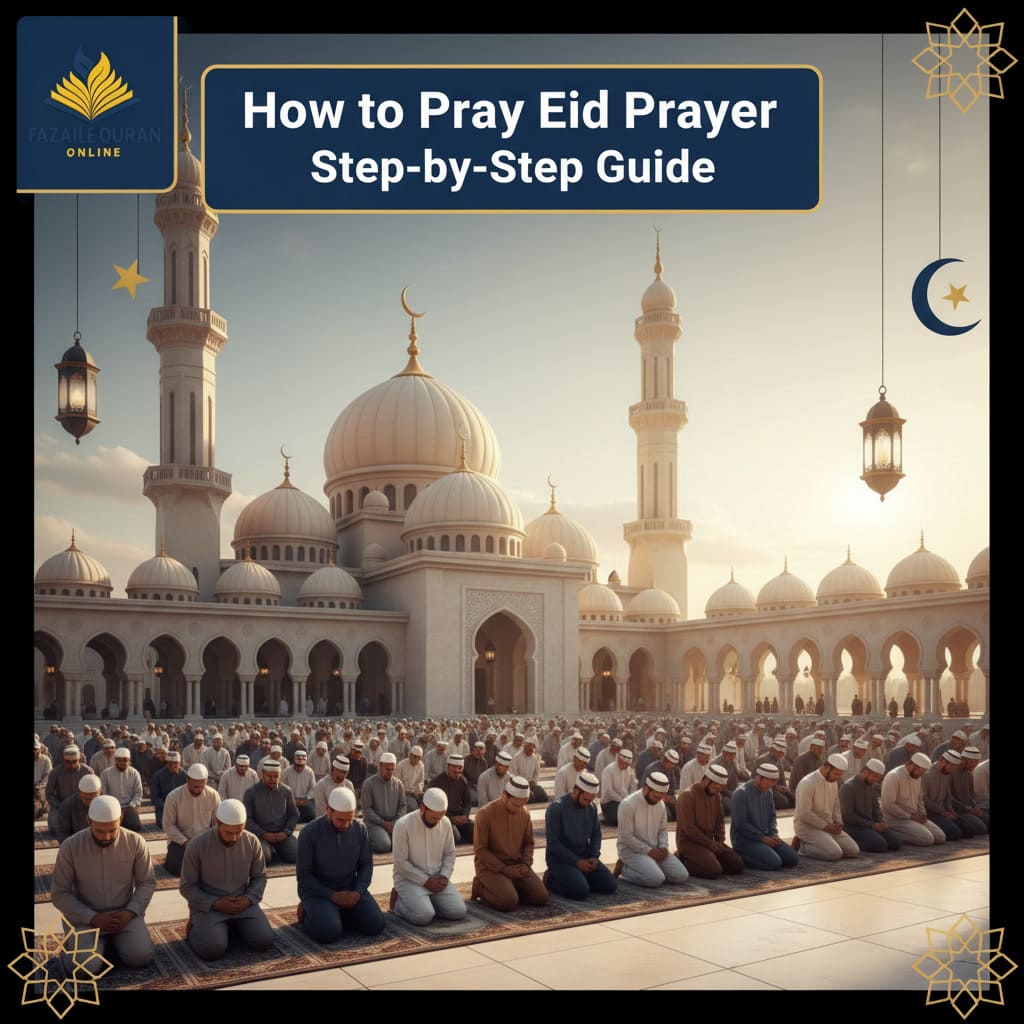
How to Pray Eid Prayer Step by Step (Takbeer, Time & Complete Guide) How to Pray Eid prayer step by step Introduction Eid prayer is one of the most beautiful acts of worship performed by Muslims around the world during Eid-ul-Fitr and Eid-ul-Adha. It is a special prayer that brings the Muslim community together to thank Allah after the blessings of Ramadan or the sacred days of Dhul-Hijjah. Many Muslims often ask questions such as: How to pray Eid prayer step by step• How many rakats are in Eid prayer• How many takbeer are in Eid prayer• What time Eid prayer starts This complete guide explains everything clearly according to authentic Islamic teachings. What Is Eid Prayer? Eid prayer is a special congregational prayer performed on the morning of Eid. It consists of two rakats and is followed by a khutbah (sermon). The prayer is performed in open grounds, mosques, or large prayer areas so the Muslim community can gather together. Allah says in the Qur’an: Therefore pray to your Lord and sacrifice.(Qur’an 108:2) Scholars explain that this verse refers to the Eid prayer and sacrifice of Eid-ul-Adha. When Is Eid Prayer Time? The time for Eid prayer begins shortly after sunrise. Generally: Start time: about 15–20 minutes after sunrise• End time: before the Dhuhr prayer Most mosques usually perform Eid prayer between 7:00 AM and 9:00 AM, depending on the location. It is recommended to perform it as early as possible. How Many Rakats in Eid Prayer? Eid prayer consists of: 2 Rakats However, the difference from normal prayers is that extra Takbeer are recited. How Many Takbeer in Eid Prayer? Scholars explain that Eid prayer includes additional Takbeer. The common method followed by many scholars: First Rakat 1 Takbeer for starting the prayer (Takbeer-e-Tahrima) 3 extra Takbeer Second Rakat Before ruku:3 extra Takbeer Total extra Takbeer: 6 Some Islamic schools mention slightly different counts, but the purpose remains the same: glorifying Allah on the day of Eid. How to Pray Eid Prayer Step by Step Here is the simple step-by-step method. Step 1: Make the Intention (Niyyah) Make the intention in your heart to perform two rakats of Eid prayer. And you can also make it by mouth. Step 2: Start the Prayer Raise your hands and say: Allahu Akbar This is called Takbeer-e-Tahrima. Step 3: Recite the Opening Supplication Recite Sana (Subhanaka Allahumma) quietly. Step 4: Recite the Extra Takbeer Raise your hands and say Allahu Akbar three times. After each Takbeer, briefly pause. Step 5: Recite Surah Al-Fatiha and Another Surah The Imam usually recites: Surah Al-A‘laor• Surah Qaf But any surah can be recited. Step 6: Complete the First Rakat Perform Ruku, Sujood, and stand for the second rakat. Step 7: Second Rakat Recitation Recite: Surah Al-Fatiha• Another Surah Step 8: Recite Extra Takbeer Again Before going to Ruku: Say Allahu Akbar three times. Step 9: Complete the Prayer Perform: Ruku• Sujood• Tashahhud• Salam The prayer ends after two rakats. Khutbah After Eid Prayer After the prayer, the Imam delivers a Khutbah (sermon). Unlike Jumu’ah prayer: The khutbah is after the prayer, not before. Muslims should listen attentively because the khutbah includes reminders, guidance, and supplications. Can Eid Prayer Be Prayed at Home? If someone cannot attend the congregation due to illness or other reasons, many scholars allow Eid prayer at home. However, praying in congregation is strongly recommended. The Prophet ﷺ encouraged Muslims, including women and children, to attend the Eid gathering. Sunnah Acts on the Day of Eid Before going to Eid prayer, Muslims should follow these beautiful Sunnahs: Take a bath (Ghusl)• Wear clean or new clothes• Apply perfume (for men)• Eat dates before Eid-ul-Fitr prayer• Recite Takbeer Example of Takbeer: Allahu Akbar, Allahu Akbar, La ilaha illa Allah. Allahu Akbar, Allahu Akbar, wa lillahil-hamd. Common Mistakes During Eid Prayer Many people unknowingly make small mistakes. Some common ones include: Missing the extra Takbeer• Talking during the khutbah• Leaving before the khutbah finishes• Arriving very late Understanding the correct method helps Muslims perform the prayer properly. Learn Quran and Islamic Knowledge Online Understanding Islamic worship correctly is very important for every Muslim. Learning the Qur’an with proper guidance helps strengthen faith and improve daily worship. Fazaile Quran Online is an online Quran academy dedicated to teaching the Qur’an to students around the world. The academy offers: Online Quran reading classes• Tajweed learning• Quran memorization (Hifz)• Islamic studies for children and adults Classes are conducted by experienced teachers and are suitable for students of all ages. Whether you are a beginner or want to improve your recitation, Fazaile Quran Online provides a comfortable environment to learn the Qur’an from home. Website:www.fazailequranonline.com Conclusion Eid prayer is a beautiful act of worship that strengthens the unity of the Muslim community and reminds believers to thank Allah for His blessings. By understanding how to pray Eid prayer step by step, the correct number of rakats, and the extra Takbeer, Muslims can perform this special prayer with confidence and devotion. May Allah accept our prayers and allow us to celebrate Eid with faith, gratitude, and unity. Eid Mubarak. Frequently Ask Question Q1: How many rakats are in Eid prayer? Eid prayer consists of two rakats performed in congregation. The khutbah (sermon) is delivered after the prayer, not before. Q2: How many takbeer are there in Eid prayer? In the most commonly practiced method, there are 6 extra Takbeer: • 3 Takbeer after the opening Takbeer in the first rakat • 3 Takbeer before going into ruku in the second rakat Q3: What time does Eid prayer start? Eid prayer starts 15–20 minutes after sunrise and must be performed before Dhuhr. Most masajid conduct Eid prayer between 7:00 AM and 9:00 AM. Q4: What should I recite during Eid prayer? The Imam recites Surah Al-Fatiha and a short surah. The Sunnah recitations include: • Surah Al-A‘la • Surah Al-Ghashiyah or • Surah Qaf • Surah Al-Qamar But any surah may be recited. Q5: Is Eid prayer wajib