Bait ul Muqqadas & Masjid Al-Aqsa History in the Qur’an | The Truth About Palestine
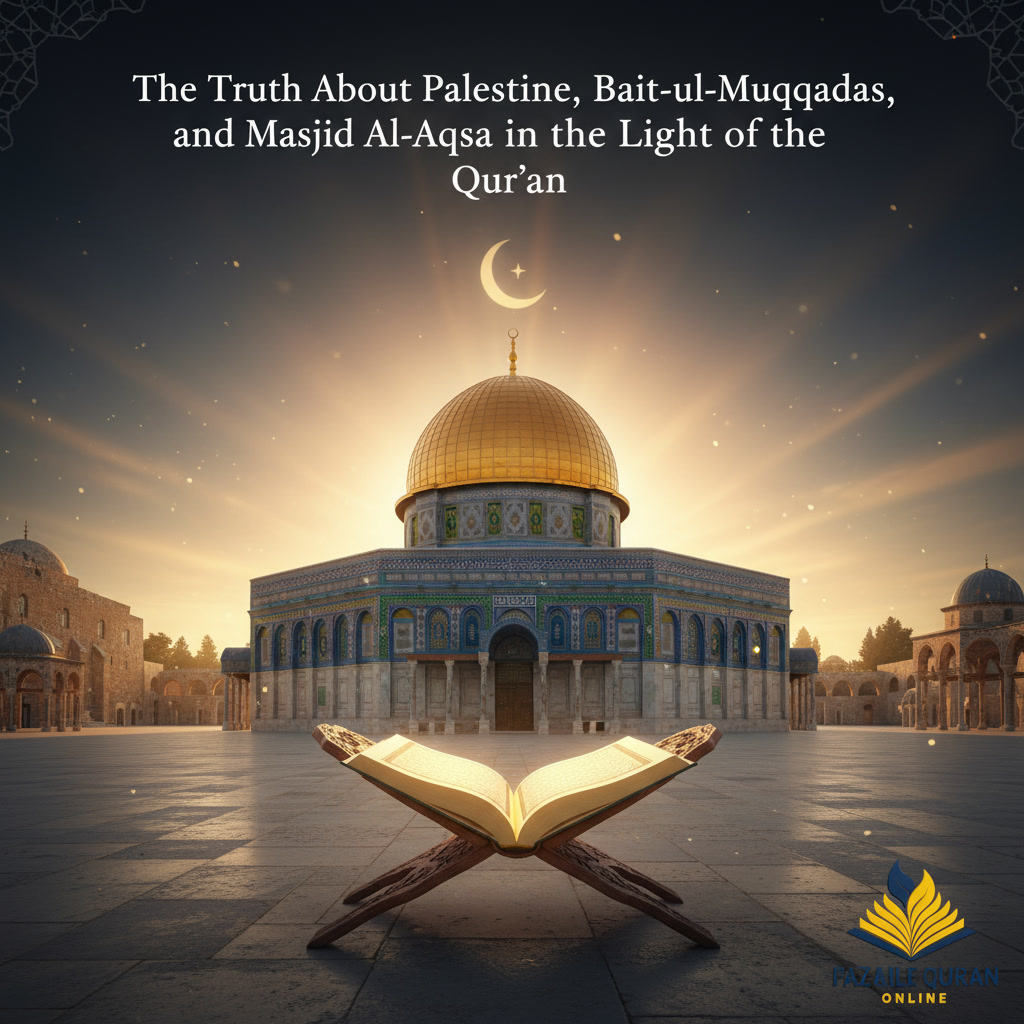
Bait ul Muqqadas & Masjid Al-Aqsa History in the Qur’an | The Truth About Palestine Bait ul Muqqadas The land of Palestine has always held a unique spiritual position in Islamic history. Long before modern borders and political debates existed, this region was known in the Qur’an as a blessed land chosen by Allah for His prophets. The sacred city of Jerusalem (Bait al-Maqdis), historically called Bait-ul-Muqqadas or Al-Quds, contains one of the most important mosques in Islam: Masjid Al-Aqsa. For Muslims around the world, understanding the history of Palestine, the meaning of Masjid Al-Aqsa, and the importance of this sacred land requires returning to authentic sources – especially the Qur’an. The Blessed Land Mentioned in the Qur’an In several verses of the Qur’an, Allah refers to the land of Palestine as a blessed region chosen for prophets and guidance. Allah says: And We delivered him (Ibrahim) and Lut to the land which We had blessed for the worlds. Qur’an 21:71 Classical Islamic scholars such as Ibn Kathir explain that this blessed land refers to the region of Palestine, Jerusalem, and the surrounding areas. This indicates that the holiness of the land predates modern history and was recognized thousands of years ago through divine revelation. Another verse highlights the spiritual significance of this land: O my people, enter the Holy Land which Allah has assigned to you. (Qur’an 5:21 This verse refers to the Sacred Land (Al-Ard Al-Muqaddasa), which many scholars identify with the land of Palestine. Masjid Al-Aqsa: The First Qiblah in Islam One of the most important aspects of Islamic history is that Masjid Al-Aqsa was the first direction of prayer for Muslims before the Kaaba in Makkah became the permanent Qiblah. Early Muslims prayed toward Bait-ul-Muqqadas until Allah revealed the command to face the Kaaba: So turn your face toward Al-Masjid Al-Haram. Qur’an 2:144 This historical moment shows the deep connection between early Islam and the sacred mosque of Al-Aqsa. Because of this, Masjid Al-Aqsa is often referred to as Qibla-e-Awwal, meaning the first Qiblah of Islam. The Night Journey: Al-Isra wal-Mi’raj Perhaps the most famous Qur’anic reference to Masjid Al-Aqsa is found in Surah Al-Isra, which describes the miraculous night journey of Prophet Muhammad ﷺ. Allah says: Glory be to Him who took His servant by night from Masjid Al-Haram to Masjid Al-Aqsa whose surroundings We have blessed. Qur’an 17:1 This verse establishes three important facts: Masjid Al-Aqsa existed during the time of the Prophet ﷺ. Its surrounding land was already blessed by Allah. It was chosen as the meeting place where the Prophet ﷺ led many earlier prophets in prayer. This event permanently connected Masjid Al-Aqsa to Islamic belief and spirituality. Who Built Masjid Al-Aqsa? According to Islamic tradition, the foundations of Masjid Al-Aqsa date back to the earliest generations of humanity. Many scholars state that Prophet Adam (AS) established the first place of worship on that site, while later prophets rebuilt and expanded it. Prophet Sulaiman (Solomon, AS) is often associated with the reconstruction and beautification of the mosque. The Qur’an describes how Allah gave Prophet Sulaiman the ability to command workers who built magnificent structures: They made for him whatever he wished of sanctuaries, statues, basins like reservoirs, and cooking pots fixed in place. Qur’an 34:13 Islamic historians relate this verse to the architectural works carried out during his rule, including structures within Jerusalem. The Meaning of Masjid and Al-Aqsa Understanding the terminology also helps clarify Islamic teachings. The Arabic word Masjid comes from the root sajada, meaning to prostrate. A masjid is therefore a place where believers prostrate to Allah in prayer. The Qur’an emphasizes the sacred nature of mosques: The mosques of Allah are only to be maintained by those who believe in Allah and the Last Day. Qur’an 9:18 The name Al-Aqsa means the farthest. At the time of revelation, Masjid Al-Aqsa was the farthest sacred mosque known to Muslims from Makkah. Palestine in the History of the Prophets The land of Palestine has been associated with many prophets mentioned in the Qur’an. Among them are: Prophet Ibrahim (AS) Prophet Ishaq (AS) Prophet Yaqub (AS) Prophet Musa (AS) Prophet Dawud (AS) Prophet Sulaiman (AS) Prophet Zakariya (AS) Prophet Yahya (AS) Prophet Isa (AS) Because so many prophets lived, preached, or traveled through this region, Palestine became known historically as the Land of the Prophets. Gaza in Islamic History The region of Gaza is also historically connected to the broader land of Palestine. It has existed as an important city for thousands of years and has been mentioned in historical texts related to trade routes and civilizations in the Levant. Although the Qur’an does not specifically name Gaza, the region falls within the blessed land described in several verses, according to classical scholars of Qur’anic geography. Why Masjid Al-Aqsa Is One of the Holiest Sites in Islam In Islam, three mosques hold a special spiritual status: Masjid Al-Haram in Makkah Masjid An-Nabawi in Madinah Masjid Al-Aqsa in Jerusalem Because of its connection to the prophets, the first Qiblah, and the miracle of Al-Isra wal-Mi’raj, Masjid Al-Aqsa is regarded as the third holiest mosque in Islam. Muslims throughout history have traveled to Jerusalem to pray in this sacred place and reflect on its spiritual significance. Preserving the Knowledge of the Qur’an Understanding the importance of Palestine and Masjid Al-Aqsa requires a strong connection with the Qur’an itself. When Muslims study the Qur’an deeply – including tajweed, tafsir, and the history of revelation – they begin to understand the deeper meanings behind the verses that speak about blessed lands and sacred places. Institutions such as Fazaile Quran Online help students learn the Qur’an with proper recitation and understanding. Through online Qur’an classes, students from around the world can strengthen their connection with the message of the Qur’an and the history connected to places like Bait-ul-Muqqadas and Masjid Al-Aqsa. Conclusion The history of Palestine and Bait-ul-Muqqadas is deeply rooted in Islamic teachings and Qur’anic revelation. The Qur’an describes this land as blessed, connects