Fazaile Quran Online

Author name: Developer

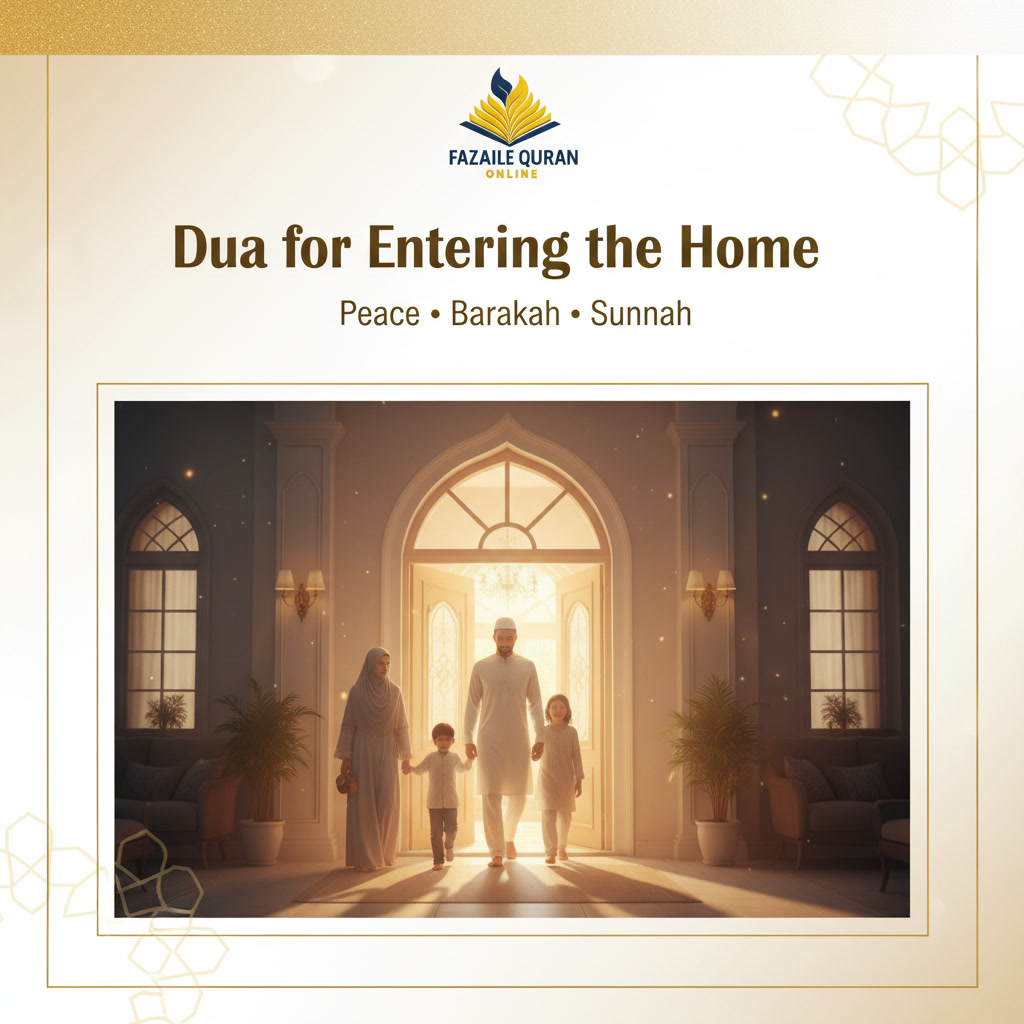
Dua for Entering the Home
Duas, Islamic Article

Dua for Entering the Home – Meaning, Virtues & Everyday Benefits

Dua for Entering the Home – Meaning, Virtues & Everyday Benefits Dua for Entering the Home Introduction Walking into your home is more than just opening a door — it’s stepping into a space that should hold peace, warmth, and Allah’s protection. The Sunnah teaches us a beautiful practice: reciting the Dua for Entering the Home. This simple supplication brings blessings, keeps negativity away, and fills your home with tranquillity. Arabic, Transliteration & Translation The Dua for Entering the Home اللّٰهُمَّ إِنِّيْ أَسْأَلُكَ خَيْرَ الْمَوْلِجِ وَخَيْرَ الْمَخْرَجِ؛ بِسْمِ اللّٰهِ وَلَجْنَا وَ بِسْمِ اللّٰهِ خَرَجْنَا وَعَلَى اللّٰهِ رَبِّنَا تَوَكَّلْنَا Allahumma innee as’aluka khayral mawliji wa khayral makhraji bismillahi walajna wa bismillahi kharajna wa alallahi rabbina tawakkalna. Translation: O Allah, I ask of you a good entry and a good exit. In the name of Allah, we enter and in the name of Allah we exit and upon Allah, our sustainer do we keep our trust. Abu Dawud Note: A person may also read only ‘Bismillah’ and this too will result in Shaytaan staying away. However, there is more benefit and virtue of reading the full Du’a. This greeting brings barakah and announces peace for everyone inside. Meaning & Explanation Reciting this dua as you step inside your house invites Allah’s mercy into your space. It sets a peaceful tone for the household and reminds us to enter with humility, positivity, and gratitude. It also protects the home from unseen harm, negative energy, and shayateen, because anything started with Bismillah becomes blessed. Benefits of Reciting the Dua 1. Brings Peace in the Home Entering with Allah’s name softens hearts and reduces arguments and tension. 2. Protection From Evil Influences Shayateen do not enter a house where Allah’s name is mentioned. 3. Barakah in Your Home The dua invites blessings in food, wealth, relationships, and overall atmosphere. 4. Strengthens Family Bonding Starting with Salam creates warmth and makes everyone feel valued. 5. Builds a Sunnah-Centered Lifestyle Small Sunnahs practiced daily shape a spiritually strong personality. How to Recite This Dua Daily Recite it every time before entering your home. Say “Assalamu Alaikum” even if no one is inside — the angels respond. Teach it to your kids so the whole household benefits. Make it a habit like locking the door — effortless but rewarding. Practical Examples Coming back from school or work → recite the dua. Entering late at night → recite the dua softly. Coming home angry or stressed → this dua instantly calms the mood. Conclusion The Dua for Entering the Home is a small Sunnah with massive impact. It wraps your home in blessings, protection, and peace. Making these duas part of daily life shapes a home where Allah’s mercy always stays present. If you want to learn more duas and improve your Quranic understanding with expert tutors, explore Fazaile Quran Online and U Quran Tutors for structured and beginner-friendly online classes FAQs – Dua beore entering Toilet Q1: What is the dua for entering the home? “Bismillah, Allahumma inni as’aluka khayral-mawlaji wa khayral-makhraji.” It means asking Allah for a blessed entrance and exit. Q2: Why should we recite dua before entering the house? It brings peace, blocks shayateen, and fills the home with barakah. Q3: Should I say Salam even if no one is home? Yes! The angels reply – it is Sunnah and a source of blessing. Q4: Can kids also recite this dua? Absolutely, and teaching them early creates a beautiful lifelong habit. Q5:Does reciting this dua prevent arguments at home? It helps soften hearts and reduce negativity by inviting Allah’s mercy. “Bismillah, Allahumma inni as’aluka khayral-mawlaji wa khayral-makhraji.” It means asking Allah for a blessed entrance and exit. It brings peace, blocks shayateen, and fills the home with barakah. Yes! The angels reply – it is Sunnah and a source of blessing. Absolutely, and teaching them early creates a beautiful lifelong habit. It helps soften hearts and reduce negativity by inviting Allah’s mercy. Enroll Now 📢 Share this article: Facebook | Twitter (X) | LinkedIn | WhatsApp | Copy Link for Instagram


Dua After Leaving the Toilet
Duas, Islamic Article

Dua After Leaving the Toilet – Meaning, Benefits & Sunnah Etiquettes

Dua After Leaving the Toilet – Meaning, Benefits & Sunnah Etiquettes Dua After Leaving the Toilet What Is the Dua After Leaving the Toilet? Islam teaches refined manners in every aspect of life —  even after using the bathroom. When a believer exits the toilet, the Prophet ﷺ taught a short but powerful dua that expresses gratitude and humility. Arabic, Transliteration & Translation Dua After Exiting the Toilet غُفْرَانَكَ، الحَمْدُ لِلَّهِ الَّذِي أَذْهَبَ عَنِّي الأَذَى وَعَافَانِي Ghufrānaka, alhamdu lillāhilladhī adh-haba ‘annī al-adha wa ‘āfānī. Meaning: “I seek Your forgiveness, O Allah. All praise is for Allah who removed harm from me and granted me well-being.” This extended version beautifully expresses gratitude and humility — recognizing both the blessing of relief and the gift of health. Why This Dua Matters Though it is short, this dua carries deep spiritual meaning. Key Benefits Shows gratitude – Allah allowed us to relieve ourselves and stay healthy.Seeks forgiveness – reminding us that every moment needs Allah’s mercy.Follows Sunnah – strengthening daily connection with prophetic etiquette.Purifies intentions – turning a simple act into an ibadah (worship). Every time a Muslim says Ghufranak, they acknowledge Allah’s blessings and rely on His forgiveness. Correct Sunnah for Exiting the Toilet 1. Leave With the Right Foot Just as we enter with the left foot, we exit with the right. 2. Recite the Dua As soon as you step out, say: Ghufranak. Annil a’za wa’a fani 3. Maintain Modesty Ensure your clothing is proper and clean before walking away. 4. Avoid Mentioning Allah Inside The dua is recited only after stepping out, not while still inside. Spiritual Meaning Behind “Ghufranak” Scholars explain that this dua has two layers: Physical gratitude: Allah allowed the body to function properly. Spiritual humility: Just as the body is cleansed in the washroom, the soul needs forgiveness and cleansing too. This creates a beautiful harmony between physical cleanliness and spiritual purification. Islam’s Emphasis on Cleanliness The Prophet ﷺ taught: “Cleanliness is half of faith.” Even simple daily habits, when done with Sunnah, become worship and bring a believer closer to Allah. Final Thoughts Reciting the Dua After Leaving the Toilet is a simple Sunnah that enriches your daily routine with gratitude and humility. These small acts bring barakah, discipline, and spiritual awareness into everyday life. For authentic Quran learning, Tajweed, Islamic studies, and one-to-one online classes with expert tutors, visit: Fazaile Quran OnlineU Quran Tutors FAQs – Dua beore entering Toilet Q1: What is the dua after leaving the toilet? It is “Ghufranak. Alhamdullih illazi azhaba anni’l a’za wa’a fani” Q2: What does Ghufranak mean? It means “O Allah, I seek Your forgiveness.” Q3: Do we say the dua inside or after exiting? Only after exiting, not inside. Q4: Which foot should I exit with? Exit with your right foot. Q5: Is this dua Sunnah? Yes, it is from the Sunnah of the Prophet ﷺ. It is “Ghufranak. Alhamdullih illazi azhaba anni’l a’za wa’a fani” It means “O Allah, I seek Your forgiveness.” Only after exiting, not inside. Exit with your right foot. Yes, it is from the Sunnah of the Prophet ﷺ. Enroll Now 📢 Share this article: Facebook | Twitter (X) | LinkedIn | WhatsApp | Copy Link for Instagram
Dua Before Entering the Toilet
Duas

Dua Before Entering the Toilet – Islamic Etiquette, Meaning & Daily Sunnah

Dua Before Entering the Toilet – Islamic Etiquette, Meaning & Daily Sunnah Dua Before Entering the Toilet Lorem ipsum dolor sit amet, consectetur adipiscing elit. Ut elit tellus, luctus nec ullamcorper mattis, pulvinar dapibus leo. Arabic, Transliteration & Translation Dua Before Entering the Toilet اللَّهُمَّ إِنِّي أَعُوذُ بِكَ مِنَ الْخُبُثِ وَالْخَبَائِثِ Allahumma inni a‘udhu bika minal-khubuthi wal-khaba’ith. Meaning: O Allah, I seek refuge in You from all evil and harmful creations. This supplication shields a believer from spiritual harm and reminds us to remain conscious of Allah in every small moment of life. Why This Dua Holds Great Importance Saying this dua may seem simple, but it carries deep spiritual benefits: Key Benefits Protection from Shaytan: The bathroom is a place of impurity, and this dua acts as a spiritual shield.Practicing Sunnah: Following the daily Sunnahs strengthens your faith and character.Mindfulness: It builds a habit of remembering Allah throughout everyday activities.Purification of Heart: Reminds us that Islam’s teachings cover every aspect of life with wisdom. How to Enter the Toilet the Sunnah Way Islam gives beautiful etiquettes (adab) for cleanliness and modesty. Before Entering Enter with your left foot first Recite the dua before stepping inside Do not mention Allah’s name once inside Inside the Toilet Remain quiet; avoid unnecessary speech Do not face the Qibla Maintain modesty and sit properly Complete istinja with care and cleanliness Dua After Leaving the Toilet Recite the Sunnah phrase: Ghufranaka Annil A,aza wa,a fani. Meaning: O Allah, I seek Your forgiveness. This reflects humility — we purify our bodies in the washroom, and seek spiritual purification from Allah outside. Cleanliness in Islam: A Sign of Faith The Prophet ﷺ said: Cleanliness is half of faith. (Sahih Muslim) Even bathroom etiquettes, when practiced with intention and Sunnah, become acts of worship and draw a believer closer to Allah. Final Thoughts The Dua Before Entering the Toilet is a short but powerful Sunnah that protects your body, mind, and spiritual state. Practicing these etiquettes daily increases discipline, hygiene, and closeness to Allah. For structured Quran learning, Tajweed classes, Islamic studies, and one-to-one lessons with expert male and female tutors, begin your journey with: Fazaile Quran Online FAQs – Dua beore entering Toilet Q1: What is the dua before entering the toilet? It is: Allahumma inni a‘udhu bika minal-khubuthi wal-khaba’ith. Q2: Before stepping into the bathroom. Before stepping into the bathroom. Q3: Which foot should I enter with? Enter with the left foot, exit with the right. Q4: Can I recite other duas inside the bathroom? No, duas and Quran should not be recited inside. Q5: What is the dua after coming out? Say Ghufranak annil a’za wa’a fani. Enroll Now 📢 Share this article: Facebook | Twitter (X) | LinkedIn | WhatsApp | Copy Link for Instagram

How to Pray Eid prayer step by step
Islamic Article, online quran classes

How to Pray Eid Prayer Step by Step (Takbeer, Time & Complete Guide)

How to Pray Eid Prayer Step by Step (Takbeer, Time & Complete Guide) How to Pray Eid prayer step by step Introduction Eid prayer is one of the most beautiful acts of worship performed by Muslims around the world during Eid-ul-Fitr and Eid-ul-Adha. It is a special prayer that brings the Muslim community together to thank Allah after the blessings of Ramadan or the sacred days of Dhul-Hijjah. Many Muslims often ask questions such as: How to pray Eid prayer step by step• How many rakats are in Eid prayer• How many takbeer are in Eid prayer• What time Eid prayer starts This complete guide explains everything clearly according to authentic Islamic teachings. What Is Eid Prayer? Eid prayer is a special congregational prayer performed on the morning of Eid. It consists of two rakats and is followed by a khutbah (sermon). The prayer is performed in open grounds, mosques, or large prayer areas so the Muslim community can gather together. Allah says in the Qur’an: Therefore pray to your Lord and sacrifice.(Qur’an 108:2) Scholars explain that this verse refers to the Eid prayer and sacrifice of Eid-ul-Adha. When Is Eid Prayer Time? The time for Eid prayer begins shortly after sunrise. Generally: Start time: about 15–20 minutes after sunrise• End time: before the Dhuhr prayer Most mosques usually perform Eid prayer between 7:00 AM and 9:00 AM, depending on the location. It is recommended to perform it as early as possible. How Many Rakats in Eid Prayer? Eid prayer consists of: 2 Rakats However, the difference from normal prayers is that extra Takbeer are recited. How Many Takbeer in Eid Prayer? Scholars explain that Eid prayer includes additional Takbeer. The common method followed by many scholars: First Rakat 1 Takbeer for starting the prayer (Takbeer-e-Tahrima) 3 extra Takbeer Second Rakat Before ruku:3 extra Takbeer Total extra Takbeer: 6 Some Islamic schools mention slightly different counts, but the purpose remains the same: glorifying Allah on the day of Eid. How to Pray Eid Prayer Step by Step Here is the simple step-by-step method. Step 1: Make the Intention (Niyyah) Make the intention in your heart to perform two rakats of Eid prayer. And you can also make it by mouth. Step 2: Start the Prayer Raise your hands and say: Allahu Akbar This is called Takbeer-e-Tahrima. Step 3: Recite the Opening Supplication Recite Sana (Subhanaka Allahumma) quietly. Step 4: Recite the Extra Takbeer Raise your hands and say Allahu Akbar three times. After each Takbeer, briefly pause. Step 5: Recite Surah Al-Fatiha and Another Surah The Imam usually recites: Surah Al-A‘laor• Surah Qaf But any surah can be recited. Step 6: Complete the First Rakat Perform Ruku, Sujood, and stand for the second rakat. Step 7: Second Rakat Recitation Recite: Surah Al-Fatiha• Another Surah Step 8: Recite Extra Takbeer Again Before going to Ruku: Say Allahu Akbar three times. Step 9: Complete the Prayer Perform: Ruku• Sujood• Tashahhud• Salam The prayer ends after two rakats. Khutbah After Eid Prayer After the prayer, the Imam delivers a Khutbah (sermon). Unlike Jumu’ah prayer: The khutbah is after the prayer, not before. Muslims should listen attentively because the khutbah includes reminders, guidance, and supplications. Can Eid Prayer Be Prayed at Home? If someone cannot attend the congregation due to illness or other reasons, many scholars allow Eid prayer at home. However, praying in congregation is strongly recommended. The Prophet ﷺ encouraged Muslims, including women and children, to attend the Eid gathering. Sunnah Acts on the Day of Eid Before going to Eid prayer, Muslims should follow these beautiful Sunnahs: Take a bath (Ghusl)• Wear clean or new clothes• Apply perfume (for men)• Eat dates before Eid-ul-Fitr prayer• Recite Takbeer Example of Takbeer: Allahu Akbar, Allahu Akbar, La ilaha illa Allah. Allahu Akbar, Allahu Akbar, wa lillahil-hamd. Common Mistakes During Eid Prayer Many people unknowingly make small mistakes. Some common ones include: Missing the extra Takbeer• Talking during the khutbah• Leaving before the khutbah finishes• Arriving very late Understanding the correct method helps Muslims perform the prayer properly. Learn Quran and Islamic Knowledge Online Understanding Islamic worship correctly is very important for every Muslim. Learning the Qur’an with proper guidance helps strengthen faith and improve daily worship. Fazaile Quran Online is an online Quran academy dedicated to teaching the Qur’an to students around the world. The academy offers: Online Quran reading classes• Tajweed learning• Quran memorization (Hifz)• Islamic studies for children and adults Classes are conducted by experienced teachers and are suitable for students of all ages. Whether you are a beginner or want to improve your recitation, Fazaile Quran Online provides a comfortable environment to learn the Qur’an from home. Website:www.fazailequranonline.com Conclusion Eid prayer is a beautiful act of worship that strengthens the unity of the Muslim community and reminds believers to thank Allah for His blessings. By understanding how to pray Eid prayer step by step, the correct number of rakats, and the extra Takbeer, Muslims can perform this special prayer with confidence and devotion. May Allah accept our prayers and allow us to celebrate Eid with faith, gratitude, and unity. Eid Mubarak. Frequently Ask Question Q1: How many rakats are in Eid prayer? Eid prayer consists of two rakats performed in congregation. The khutbah (sermon) is delivered after the prayer, not before. Q2: How many takbeer are there in Eid prayer? In the most commonly practiced method, there are 6 extra Takbeer: • 3 Takbeer after the opening Takbeer in the first rakat • 3 Takbeer before going into ruku in the second rakat Q3: What time does Eid prayer start? Eid prayer starts 15–20 minutes after sunrise and must be performed before Dhuhr. Most masajid conduct Eid prayer between 7:00 AM and 9:00 AM. Q4: What should I recite during Eid prayer? The Imam recites Surah Al-Fatiha and a short surah. The Sunnah recitations include: • Surah Al-A‘la • Surah Al-Ghashiyah or • Surah Qaf • Surah Al-Qamar But any surah may be recited. Q5: Is Eid prayer wajib

Bait ul Muqqadas
Education, islam, Islamic Article, Kalimas, muslims, online quran, online quran classes

Bait ul Muqqadas & Masjid Al-Aqsa History in the Qur’an | The Truth About Palestine

Bait ul Muqqadas & Masjid Al-Aqsa History in the Qur’an | The Truth About Palestine Bait ul Muqqadas The land of Palestine has always held a unique spiritual position in Islamic history. Long before modern borders and political debates existed, this region was known in the Qur’an as a blessed land chosen by Allah for His prophets. The sacred city of Jerusalem (Bait al-Maqdis), historically called Bait-ul-Muqqadas or Al-Quds, contains one of the most important mosques in Islam: Masjid Al-Aqsa. For Muslims around the world, understanding the history of Palestine, the meaning of Masjid Al-Aqsa, and the importance of this sacred land requires returning to authentic sources – especially the Qur’an.  The Blessed Land Mentioned in the Qur’an In several verses of the Qur’an, Allah refers to the land of Palestine as a blessed region chosen for prophets and guidance. Allah says: And We delivered him (Ibrahim) and Lut to the land which We had blessed for the worlds. Qur’an 21:71 Classical Islamic scholars such as Ibn Kathir explain that this blessed land refers to the region of Palestine, Jerusalem, and the surrounding areas. This indicates that the holiness of the land predates modern history and was recognized thousands of years ago through divine revelation. Another verse highlights the spiritual significance of this land: O my people, enter the Holy Land which Allah has assigned to you. (Qur’an 5:21 This verse refers to the Sacred Land (Al-Ard Al-Muqaddasa), which many scholars identify with the land of Palestine. Masjid Al-Aqsa: The First Qiblah in Islam One of the most important aspects of Islamic history is that Masjid Al-Aqsa was the first direction of prayer for Muslims before the Kaaba in Makkah became the permanent Qiblah. Early Muslims prayed toward Bait-ul-Muqqadas until Allah revealed the command to face the Kaaba: So turn your face toward Al-Masjid Al-Haram. Qur’an 2:144 This historical moment shows the deep connection between early Islam and the sacred mosque of Al-Aqsa. Because of this, Masjid Al-Aqsa is often referred to as Qibla-e-Awwal, meaning the first Qiblah of Islam. The Night Journey: Al-Isra wal-Mi’raj Perhaps the most famous Qur’anic reference to Masjid Al-Aqsa is found in Surah Al-Isra, which describes the miraculous night journey of Prophet Muhammad ﷺ. Allah says: Glory be to Him who took His servant by night from Masjid Al-Haram to Masjid Al-Aqsa whose surroundings We have blessed. Qur’an 17:1 This verse establishes three important facts: Masjid Al-Aqsa existed during the time of the Prophet ﷺ. Its surrounding land was already blessed by Allah. It was chosen as the meeting place where the Prophet ﷺ led many earlier prophets in prayer. This event permanently connected Masjid Al-Aqsa to Islamic belief and spirituality. Who Built Masjid Al-Aqsa? According to Islamic tradition, the foundations of Masjid Al-Aqsa date back to the earliest generations of humanity. Many scholars state that Prophet Adam (AS) established the first place of worship on that site, while later prophets rebuilt and expanded it. Prophet Sulaiman (Solomon, AS) is often associated with the reconstruction and beautification of the mosque. The Qur’an describes how Allah gave Prophet Sulaiman the ability to command workers who built magnificent structures: They made for him whatever he wished of sanctuaries, statues, basins like reservoirs, and cooking pots fixed in place. Qur’an 34:13 Islamic historians relate this verse to the architectural works carried out during his rule, including structures within Jerusalem. The Meaning of Masjid and Al-Aqsa Understanding the terminology also helps clarify Islamic teachings. The Arabic word Masjid comes from the root sajada, meaning to prostrate. A masjid is therefore a place where believers prostrate to Allah in prayer. The Qur’an emphasizes the sacred nature of mosques: The mosques of Allah are only to be maintained by those who believe in Allah and the Last Day. Qur’an 9:18 The name Al-Aqsa means the farthest. At the time of revelation, Masjid Al-Aqsa was the farthest sacred mosque known to Muslims from Makkah. Palestine in the History of the Prophets The land of Palestine has been associated with many prophets mentioned in the Qur’an. Among them are: Prophet Ibrahim (AS) Prophet Ishaq (AS) Prophet Yaqub (AS) Prophet Musa (AS) Prophet Dawud (AS) Prophet Sulaiman (AS) Prophet Zakariya (AS) Prophet Yahya (AS) Prophet Isa (AS) Because so many prophets lived, preached, or traveled through this region, Palestine became known historically as the Land of the Prophets. Gaza in Islamic History The region of Gaza is also historically connected to the broader land of Palestine. It has existed as an important city for thousands of years and has been mentioned in historical texts related to trade routes and civilizations in the Levant. Although the Qur’an does not specifically name Gaza, the region falls within the blessed land described in several verses, according to classical scholars of Qur’anic geography. Why Masjid Al-Aqsa Is One of the Holiest Sites in Islam In Islam, three mosques hold a special spiritual status: Masjid Al-Haram in Makkah Masjid An-Nabawi in Madinah Masjid Al-Aqsa in Jerusalem Because of its connection to the prophets, the first Qiblah, and the miracle of Al-Isra wal-Mi’raj, Masjid Al-Aqsa is regarded as the third holiest mosque in Islam. Muslims throughout history have traveled to Jerusalem to pray in this sacred place and reflect on its spiritual significance. Preserving the Knowledge of the Qur’an Understanding the importance of Palestine and Masjid Al-Aqsa requires a strong connection with the Qur’an itself. When Muslims study the Qur’an deeply – including tajweed, tafsir, and the history of revelation – they begin to understand the deeper meanings behind the verses that speak about blessed lands and sacred places. Institutions such as Fazaile Quran Online help students learn the Qur’an with proper recitation and understanding. Through online Qur’an classes, students from around the world can strengthen their connection with the message of the Qur’an and the history connected to places like Bait-ul-Muqqadas and Masjid Al-Aqsa. Conclusion The history of Palestine and Bait-ul-Muqqadas is deeply rooted in Islamic teachings and Qur’anic revelation. The Qur’an describes this land as blessed, connects

Salah (Prayer or Namaz) in Islam
islam, Salah (Prayer or Namaz)

What Is Salah (Prayer or Namaz) in Islam?

Meaning, Importance & Complete Types of Salah Salah – commonly known as Namaz – is the second pillar of Islam and a mandatory form of worship for every adult Muslim. It is a direct spiritual connection between the servant and Allah, performed five times a day and designed to purify the heart, discipline the mind, and uplift the soul. Meaning of Salah The word Salah (الصلاة) refers to: connection supplication devotion remembrance It is the believer’s daily communication with Allah, without any intermediaries, and a way to express gratitude, seek mercy, and stay spiritually grounded. Importance of Salah (Prayer or Namaz) in Islam A Command from Allah “Establish prayer for My remembrance. – Surah Ta-Ha (20:14) Salah is a divine obligation and one of the most emphasized acts of worship in the Qur’an. First Deed to Be Judged The Prophet ﷺ said: “The first matter a person will be questioned about on the Day of Judgment is the prayer. Protection from Sin Allah says: “Indeed, prayer prevents immorality and wrongdoing. – Surah Al-Ankabut (29:45) A Daily Spiritual Reset Each prayer realigns the believer’s heart with Allah, strengthens discipline, and brings inner peace. Five Daily Prayers and Their Raka’at (Complete Breakdown) Here are the exact details of each prayer, including Farz, Sunnah, and Witr – as you instructed: Prayer Name Time Total Raka’at Details Fajr Dawn 4 Raka’at 2 Farz, 2 Sunnah Dhuhr Midday 10 Raka’at 4 Sunnah, 4 Farz, 2 Sunnah Asr Afternoon 4 Raka’at All Farz Maghrib Sunset 5 Raka’at 3 Farz, 2 Sunnah Isha Night 9 Raka’at 4 Farz, 2 Sunnah, 3 Witr These five prayers structure a Muslim’s day from dawn until nightfall, ensuring spiritual connection throughout the day. Types of Salah (Prayer or Namaz) in Islam 1. Fard (Obligatory Prayers) Mandatory for all adult Muslims. Includes: Five daily prayers Jumu’ah (Friday) prayer for men Missing a Fard prayer knowingly is a major sin. 2. Wajib (Necessary Prayers) Highly important and sinful to skip without excuse. Includes: Witr after Isha Eid prayers Janazah (funeral prayer) 3. Sunnah Salah Prayers practiced by the Prophet ﷺ. Sunnah Mu’akkadah (Emphasized) Strongly recommended and regularly performed by the Prophet ﷺ. Examples: 2 before Fajr 4 before Dhuhr and 2 after 2 after Maghrib 2 after Isha Sunnah Ghair Mu’akkadah (Non-emphasized) Prayers the Prophet ﷺ performed occasionally. 4. Nafl (Voluntary Prayers) Optional prayers that bring immense reward. Examples: Tahajjud Duha Salatul-Tawbah Salatul-Istikhara 5. Special Prayers in Islam Salat al-Khawf – Prayer during fear or danger Salat al-Istisqa – Prayer for rain Salat al-Kusuf – Solar eclipse prayer Salat al-Khusuf – Lunar eclipse prayer Salat al-Tasbih – Special forgiveness prayer These demonstrate Islam’s flexibility and the importance of prayer in every situation. Benefits of Performing Salah Spiritual Benefits Cleanses the heart Strengthens faith Keeps the soul connected to Allah Mental Benefits Reduces stress and anxiety Improves focus Builds discipline Physical Benefits Improves posture and strength Encourages blood flow Promotes overall wellness Salah is a complete form of worship: spiritually, mentally, and physically. Who Must Perform Salah? Salah is obligatory for every Muslim who is: Adult Sane In a state of purity Not menstruating or in postnatal bleeding (for women) Conclusion Salah is more than a daily routine – it is a believer’s lifeline. It shapes character, strengthens the heart, and brings peace into life. Each prayer is an invitation to step closer to Allah, gain His mercy, and stay steady on the path of righteousness. Whoever holds firmly to Salah holds firmly to faith. Learn Salah Properly with Fazaile Quran Online If you or your family wish to learn: How to pray correctly Tajweed and Quran recitation Islamic studies for kids and adults Meaning and importance of Salah Fazaile Quran Online offers: One-on-one classes Qualified male & female teachers Flexible timings Beginner-friendly lessons Free trial classes Start your spiritual journey with trusted, well-structured Islamic learning. FAQs About Salah (Prayer or Namaz) Q1: What are the five daily prayers in Islam? The five daily prayers in Islam are Fajr, Dhuhr, Asr, Maghrib, and Isha. Each salah has its own timing and number of raka’at. Q2: How many raka’at are in each prayer? Fajr: 4 (2 Farz + 2 Sunnah)   Dhuhr: 10 (4 Sunnah + 4 Farz + 2 Sunnah)   Asr: 4 (4 Farz)   Maghrib: 5 (3 Farz + 2 Sunnah)   Isha: 9 (4 Farz + 2 Sunnah + 3 Witr) Q3: When do Muslims pray during the day? Most commonly, after the statement: Muslims pray at five specific times: dawn (Fajr), midday (Dhuhr), afternoon (Asr), sunset (Maghrib), and night (Isha). Q4: Why are the five daily prayers important? They strengthen faith, maintain discipline, purify the heart, and keep a Muslim spiritually connected to Allah throughout the day. Q5: Is it necessary to pray all five prayers daily? Yes, performing the five daily prayers is a core obligation for every adult Muslim, unless there is a valid Shari’ah excuse. Q6: Can I pray missed salah later? Yes, missed prayers should be made up (Qadha) as soon as possible. Q: Where can I learn prayer and Quran basics online? You can learn with Fazaile Quran Online, offering beginner-friendly Islamic and Quran courses for all ages. Enroll Now 📢 Share this article: Facebook | Twitter (X) | LinkedIn | WhatsApp | Copy Link for Instagram
Six Kalimas in Islam
islam, Islamic Article, Kalimas, muslims, online quran classes

Six Kalimas of Islam – Meaning, Arabic Text, Transliteration, Explanation & Benefits

The Six Kalimas hold a special place in Islamic tradition. For generations, Muslims have learned them as foundational expressions of belief. These Kalimas strengthen faith, purify the heart, and remind believers of the essence of Islam – Tawheed, praise, testimony, repentance, and rejecting disbelief. Every Muslim child grows up hearing, reciting, and memorizing these Kalimas at home, in madrassahs, and in Islamic study circles around the world. This complete guide explains all Six Kalimas with meaning, Kalimas explanation, Kalimas transliteration, and essential details, making it easy for beginners, students, and families to learn them properly. Why the Six Kalimas Are Important in Islam The Six Kalimas in islam are not only recitations – they are powerful statements that reflect a Muslim’s belief system. Each Kalima serves a unique purpose: Affirming Tawheed Recognizing Prophethood Praising Allah Declaring complete dependence on Him Seeking forgiveness Rejecting disbelief and shirk Reciting, understanding, and teaching them keeps Islamic values alive across generations. This is why Muslims worldwide use the Kalimas to teach children the basics of faith. In today’s age, online learning platforms such as Fazaile Quran Online help students learn them with accurate pronunciation, meaning, and explanation – keeping tradition alive with modern convenience. 1. Kalima Tayyibah (Declaration of Faith) Arabic: لَا إِلٰهَ إِلَّا اللّٰهُ مُحَمَّدٌ رَسُوْلُ اللّٰهِ Translation: There is no god but Allah; Muhammad is the Messenger of Allah. This Kalima is the central pillar of Islamic belief. Understanding it strengthens a Muslim’s identity and purifies their heart from hesitation or doubt. 2. Kalima Shahadah (Testimony of Faith) Arabic: أَشْهَدُ أَنْ لَا إِلٰهَ إِلَّا اللّٰهُ وَحْدَهُ لَا شَرِيْكَ لَهُ وَأَشْهَدُ أَنَّ مُحَمَّدًا عَبْدُهُ وَرَسُوْلُهُ Translation: I bear witness that there is no god but Allah, He is One and has no partner.And I bear witness that Muhammad is His servant and Messenger. This Kalima emphasizes conscious acceptance of Islam. 3. Kalima Tamjeed (Glorification of Allah) Arabic: سُبْحَانَ اللّٰهِ، وَالْحَمْدُ لِلّٰهِ، وَلَا إِلٰهَ إِلَّا اللّٰهُ، وَاللّٰهُ أَكْبَرُ وَلَا حَوْلَ وَلَا قُوَّةَ إِلَّا بِاللّٰهِ الْعَلِيِّ الْعَظِيمِ Translation: Glory be to Allah, all praise is for Allah, there is no god but Allah, and Allah is the Greatest. There is no power and no strength except with Allah, the Most High, the Most Great. A complete form of dhikr, recited for peace and spiritual elevation. 4. Kalima Tawheed (Oneness of Allah) Arabic: لَا إِلٰهَ إِلَّا اللّٰهُ وَحْدَهُ لَا شَرِيْكَ لَهُ، لَهُ الْمُلْكُ وَلَهُ الْحَمْدُ يُحْيِي وَيُمِيتُ وَهُوَ حَيٌّ لَا يَمُوْتُ أَبَدًا أَبَدًا ذُو الْجَلَالِ وَالْإِكْرَامِ، بِيَدِهِ الْخَيْرُ، وَهُوَ عَلٰى كُلِّ شَيْءٍ قَدِيرٌ Translation: There is no god but Allah. He is One and has no partner. His is the kingdom and all praise belongs to Him. He gives life and causes death, and He is Ever-Living and never dies. He is the Owner of Majesty and Honor. In His hand is all good, and He has power over all things. This Kalima protects a believer from any form of shirk. 5. Kalima Istighfar (Seeking Forgiveness) Arabic: أَسْتَغْفِرُ اللّٰهَ رَبِّي مِنْ كُلِّ ذَنْبٍ أَذْنَبْتُهُ عَمْدًا أَوْ خَطَأً سِرًّا أَوْ عَلَانِيَةً وَأَتُوبُ إِلَيْهِ مِنَ الذَّنْبِ الَّذِي أَعْلَمُ وَمِنَ الذَّنْبِ الَّذِي لَا أَعْلَمُ إِنَّكَ أَنْتَ عَلَّامُ الْغُيُوبِ، وَسَتَّارُ الْعُيُوبِ، وَغَفَّارُ الذُّنُوبِ وَلَا حَوْلَ وَلَا قُوَّةَ إِلَّا بِاللّٰهِ الْعَلِيِّ الْعَظِيمِ Translation: I seek forgiveness from Allah, my Lord, for every sin I committed knowingly or unknowingly, in secret or in public. I repent from the sins I know and those I do not know. Indeed, You are the Knower of the unseen, the Concealer of faults, and the Forgiver of sins. There is no power and no strength except with Allah, the Most High, the Most Great. Reciting it often purifies the heart and brings divine mercy. 6. Kalima Radd-ul-Kufr (Rejecting Disbelief) Arabic: اللّٰهُمَّ إِنِّي أَعُوذُ بِكَ مِنْ أَنْ أُشْرِكَ بِكَ شَيْئًا وَأَنَا أَعْلَمُ بِهِ وَأَسْتَغْفِرُكَ لِمَا لَا أَعْلَمُ بِهِ تُبْتُ عَنْهُ وَتَبَرَّأْتُ مِنَ الْكُفْرِ وَالشِّرْكِ وَالْكِذْبِ وَالْغِيبَةِ وَالْبِدْعَةِ وَالنَّمِيمَةِ وَالْفَوَاحِشِ وَالْبُهْتَانِ وَالْمَعَاصِي كُلِّهَا وَأَسْلَمْتُ وَأَقُوْلُ لَا إِلٰهَ إِلَّا اللّٰهُ مُحَمَّدٌ رَسُوْلُ اللّٰهِ Translation: O Allah! I seek refuge in You from knowingly associating anything with You, and I seek Your forgiveness for what I do not know. I repent from it and declare myself free from disbelief, polytheism, lies, backbiting, innovation, slander, indecency, false accusation, and all sins. And i submit to Your will and declare: There is no god but Allah, Muhammad is the Messenger of Allah. This Kalima renews a Muslim’s commitment to pure belief. Benefits of Reciting and Learning the Six Kalimas 1. Builds Strong Islamic Foundation The Kalimas are essential in developing core Islamic understanding. 2. Helps With Daily Dhikr Short and meaningful – perfect for daily remembrance. 3. Strengthens Iman Understanding the meaning deepens spiritual connection. 4. Encourages Repentance The Kalimas remind the believer to return to Allah regularly. 5. Helps Children Start Their Islamic Learning Journey They learn belief, repentance, praise, and core Islamic values in a structured way. 6. Easy to Memorize for All Ages Adults and kids can learn them quickly through constant repetition. How to Learn the Kalimas Properly (With Meaning & Tajweed) For students of all ages who want to learn: Six Kalimas in islam Kalimas meaning Kalimas explanation Kalimas transliteration Tajweed Noorani Qaida Quran with proper pronunciation And many more courses Fazaile Quran Online is one of the reliable platforms offering 1-on-1 Islamic learning. They provide: Live classes Male & female instructors Kids-friendly teaching style Proper tajweed & meaning International timing flexibility Whether you’re from the USA, UK, Canada, EU, UAE, or anywhere in the world – you can learn easily from home. FAQs About Six Prayer in Islam Q1: What are the five daily prayers in Islam? The five daily prayers in Islam are Fajr, Dhuhr, Asr, Maghrib, and Isha. Each salah has its own timing and number of raka’at. Q2: How many raka’at are in each prayer? Fajr: 4 (2 Farz + 2 Sunnah) Dhuhr: 10 (4 Sunnah + 4 Farz + 2 Sunnah) Asr: 4 (4 Farz) Maghrib: 5 (3 Farz + 2 Sunnah) Isha: 9 (4 Farz + 2 Sunnah + 3

In Sha Allah Meaning in Islam
Education, islam, Islamic Article, online quran

In Sha Allah Meaning – What It Really Means & When to Say It in Islam

What Is the Meaning of In Sha Allah? In Sha Allah (إن شاء الله) is among the most frequently used and deeply spiritual phrases in the Muslim world. It simply translates to: If Allah wills or  God willing. This phrase reflects complete trust in Allah’s power and His decree. Whether a Muslim is planning something big or something small, saying InShaAllah shows humility and recognition that all future outcomes are under Allah’s control.   Arabic, Transliteration & Translation Arabic: إِنْ شَاءَ ٱللَّهُ Transliteration: In shaa’ Allah Meaning:If Allah wills. This phrase is rooted in both faith and etiquette – a reminder that every plan succeeds only with His permission. Why Saying In Sha Allah Is Important in Islam Using this phrase is more than cultural habit – it’s a Quranic command and a reflection of a believer’s heart. Quranic Reference Allah says in Surah Kahf (18:23–24): Do not say about anything: ‘I will do that tomorrow,’ except by adding the phrase InShaAllah. This shows the spiritual weight of this beautiful expression. Key Benefits of Saying In Sha Allah Saying InShaAllah brings blessings and protects our intentions. Here are its main benefits: 1. Shows Reliance on Allah’s Will It reminds the believer that Allah decides what will happen. 2. Brings Barakah (Blessings) to Future Plans Anything connected to Allah gains spiritual strength. 3. Prevents Arrogance It protects the heart from thinking we control everything. 4. Fulfills a Direct Quranic Guidance It aligns your speech with Islamic manners. 5. Strengthens Tawakkul (Trust in Allah) Every time you say it, you renew your trust in Allah’s plan. When Should You Say In Sha Allah? Use InShaAllah whenever mentioning something in the future, including: I will come tomorrow, In Sha Allah. We will start the project, In Sha Allah. I will finish my work tonight, In Sha Allah. We will meet next week, In Sha Allah. I will try my best to improve, In Sha Allah. This phrase beautifies speech and keeps your heart connected to Allah. Meaning of Inshallah in Arabic (Detailed Explanation) In Arabic, the phrase is built from three words: إنْ (In) – If شاءَ (Shaa’a) – Wills/Decides اللهُ (Allah) – Allah, The Almighty Put together, it becomes: If Allah wills it to happen. This structure carries a powerful message: Nothing moves without Allah’s permission, and nothing delays except by His wisdom. Common Misuse to Avoid While many use it sincerely, some say “Inshallah” casually – often meaning no or showing no intention behind it. This is not correct. Islam teaches that: The phrase should be said with honestyIt should express true intention, not avoidanceIt should reflect trust in Allah, not sarcasm or laziness Final Thoughts “InShaAllah” is more than an Islamic expression — it is a declaration of faith. It shows humility, trust, and surrender to Allah’s perfect decree. When used sincerely, it transforms ordinary speech into an act of worship. If you want to learn Arabic phrases, Islamic duas, Tajweed, Quran recitation, or join structured Quran classes online, visit: Fazaile Quran OnlineU Quran Tutors Both platforms provide authentic Quran learning with expert tutors, ideal for kids and adults. FAQs – Six Kalimas of Islam Q1: What are the Six Kalimas? They are six foundational Islamic declarations about faith, repentance, tawheed, glorification, and rejecting disbelief. Q2: Why do Muslims learn the Kalimas? They define core beliefs and help Muslims understand the basics of their deen from childhood. Q3: Are the Kalimas mentioned in the Quran? While the exact list of “Six Kalimas” is not grouped in one place in the Quran or Hadith, each Kalima is derived from authentic Islamic teachings and concepts. Q4: Can children learn the Kalimas easily? Yes, the Kalimas are short and easy to memorize, making them perfect for young learners. Q5: Is writing ‘Inshallah’ wrong? No. Spellings such as Inshallah, InshaAllah, In Sha Allah, etc. are all acceptable. Q6: Does saying In Sha Allah guarantee success? It doesn’t guarantee the outcome — it guarantees barakah, sincerity, and reliance on Allah, which are more valuable than results. Enroll Now 📢 Share this article: Facebook | Twitter (X) | LinkedIn | WhatsApp | Copy Link for Instagram

Ramadan 2025-2026 guide
Education, islam, Islamic Article, online quran, ramadan

Ramadan: Complete Guide to Fasting, Rules, Duas, Timings, and Calendar (2025–2026)

Ramadan is the ninth and most sacred month of the Islamic lunar calendar — a time when Muslims worldwide step into a routine of fasting, prayer, repentance, charity, and spiritual discipline. From dawn to sunset, believers detach from worldly desires and turn their hearts toward Allah. Beyond hunger and thirst, Ramadan trains patience, strengthens character, and revives the soul. This complete, SEO-optimized guide explains everything about Ramadan: its meaning, significance, fasting rules, duas, Sehri and Iftar timings, Ramadan 2025 and 2026 dates, Laylatul Qadr, benefits, and frequently asked questions — making it the ultimate resource for new learners and practicing Muslims alike. What Is Ramadan? Meaning & Importance Ramadan marks the month in which the Quran was revealed to Prophet Muhammad ﷺ, bringing guidance, mercy, and clarity to humanity. “The month of Ramadan in which was revealed the Quran, a guidance for mankind and clear proofs for guidance and the criterion.” (Surah Al-Baqarah 2:185) Meaning of the Word “Ramadan” The name comes from the Arabic root “ramida”, meaning intense heat — symbolizing the burning away of sins and purifying the soul through devotion. Why Ramadan Is Spiritually Important It is one of the Five Pillars of Islam Fasting (Sawm) is obligatory for eligible Muslims Good deeds are multiplied Strengthens faith, taqwa, self-control, and discipline Connects believers deeply with the Quran Ramadan isn’t just a month — it’s a heart reset. Why Muslims Fast During Ramadan Fasting is an act of obedience, patience, and gratitude. Allah says: “O you who believe, fasting has been prescribed for you as it was prescribed for those before you, so that you may attain Taqwa.” (Surah Al-Baqarah 2:183) Fasting teaches: Discipline Empathy for the poor Spiritual focus Gratitude for blessings Rules of Fasting in Ramadan Fasting begins at Fajr (dawn) and ends at Maghrib (sunset). Who Must Fast Adults who are: Muslim Sane Physically capable Who Is Exempt The sick Travelers Elderly Pregnant or breastfeeding women Those with medical conditions Missed fasts are made up later, or fidya may be paid when fasting is permanently not possible. What Breaks the Fast These actions break the fast: Eating or drinking intentionally Smoking Intentional vomiting Marital relations during fasting hours These do NOT break the fast: Eating/drinking by mistake Brushing teeth (without swallowing) Taking a shower Accidental vomiting Sehri & Iftar: Daily Ramadan Timings Ramadan follows the lunar calendar, so each year the dates shift by 10–11 days. Sehri (Pre-Dawn Meal) A blessed meal consumed before Fajr. The Prophet ﷺ said: “Eat Sehri, for in Sehri there is blessing.” (Bukhari) Iftar (Breaking the Fast) Traditionally done with dates and water, following the Sunnah. “The people will remain upon goodness as long as they hasten to break the fast.” (Bukhari & Muslim) Timings differ by country — always follow your local Ramadan timetable. 2025 & Ramadan 2026 Dates Ramadan 2025 (Completed) Began: Evening of Friday, 28 February 2025 First Fast: Saturday, 1 March 2025 Eid al-Fitr: Late March 2025 (varies by moon sighting) Ramadan 2026 (Upcoming) Expected Beginning: Evening of Tuesday, 17 February 2026 First Fast: Wednesday, 18 February 2026 Eid al-Fitr: Around 20 March 2026 Important: All dates depend on local moon sighting and announcements by Islamic authorities. Essential Duas for Ramadan Dua for Beginning the Fast Arabic: اللَّهُمَّ إِنِّي لَكَ صُمْتُ Translation: “O Allah, I fast for You.” Dua for Iftar (Breaking Fast) Arabic: اللَّهُمَّ إِنِّي لَكَ صُمْتُ وَبِكَ آمَنْتُ وَعَلَيْكَ تَوَكَّلْتُ وَعَلَىٰ رِزْقِكَ أَفْطَرْتُ Translation: “O Allah, I fasted for You, believed in You, trusted You, and with Your sustenance I break my fast.” General Duas to Recite in Ramadan Dua for forgiveness Dua for guidance Dua for protection from Hellfire Dua for acceptance of prayers Laylatul Qadr — The Night of Power Laylatul Qadr is the holiest night of the year, better than 1,000 months. “The Night of Decree is better than a thousand months.” (Surah Al-Qadr 97:3) When Is Laylatul Qadr? During the last ten nights, most likely in the odd nights (21st, 23rd, 25th, 27th, 29th). Best Dua for Laylatul Qadr Arabic: اللَّهُمَّ إِنَّكَ عَفُوٌّ تُحِبُّ العَفْوَ فَاعْفُ عَنِّي Translation: “O Allah, You are Most Forgiving and You love forgiveness, so forgive me.” Benefits of Fasting in Ramadan Spiritual Benefits Strengthens faith Builds taqwa Encourages self-reflection Inspires repentance Physical Benefits Better eating habits Improved metabolism Natural detoxification Social Benefits Empathy for the needy Increased charity (Zakat & Sadaqah) Stronger community bonds Learn Quran Properly During Ramadan — Online Classes for All Ages Ramadan is the month of the Quran – a perfect time to begin or strengthen your recitation and understanding. Fazaile Quran Online And U Quran Tutors offer structured, interactive, and student-friendly online Quran learning programs. Courses Include: Quran Reading with Tajweed Quran Memorization (Hifz) Tajweed Rules for Beginners & Advanced Students Islamic Studies for Kids & Adults 1-on-1 Live Classes With Qualified Teachers Flexible Timings for All Countries These platforms provide a supportive learning environment for children, adults, and beginners who want to build a strong connection with the Quran — especially in Ramadan. If you want your children or yourself to learn the Quran the right way, with proper Tajweed and understanding, Fazaile Quran Online and U Quran Tutors are reliable and trusted options. Final Note May Allah allow us to reach Ramadan with faith, accept our fasting, prayers, and duas, and grant us the ability to follow the guidance of the Quran. Ameen. Ramadan is not just a ritual – it’s a journey of the heart, a spiritual detox, and a chance to restart life with purity and purpose. May this Ramadan bring light, mercy, and blessings to every home Frequently Asked Questions (FAQs) 1. What is Ramadan? A sacred month of fasting, worship, and Quran recitation. 2. Can I drink water while fasting? No. Drinking anything during fasting hours breaks the fast. 3. Who is exempt from fasting? Sick individuals, travelers, elderly, and certain medical cases. 4. When does fasting start and end? Starts at Fajr and ends at Maghrib. 5. Is fasting only about food?

Dua When You See Something Beautiful
islam, Islamic Article, muslims, online quran, online quran classes, ramadan

Dua When You See Something Beautiful

Dua When You See Something Beautiful – A Sunnah Filled With Barakah Islam gives us duas for every moment in life — even for the times when something beautiful catches our eyes. Whether it’s a person, a place, a gift, or a blessing from Allah, this Sunnah dua protects us from envy, increases gratitude, and keeps the heart spiritually focused. Authentic Dua When You See Something Beautiful The Prophet Muhammad ﷺ taught us to say: Arabic: مَا شَاءَ اللَّهُ لَا قُوَّةَ إِلَّا بِاللَّهِ Transliteration: Ma sha Allahu la quwwata illa billah. Meaning: “What Allah has willed; there is no power except with Allah.” This dua is also recommended when you admire something in others to prevent the evil eye (nazar). Another variation when admiring someone else’s blessing: Arabic: اللَّهُمَّ بَارِكْ لَهُ Meaning: “O Allah, bless him/her.” Why This Dua Is So Important Beauty in the world is a sign of Allah’s perfection. Reciting this dua protects your heart from jealousy, protects others from harmful nazar, and fills the moment with remembrance of Allah. Major Benefits Prevents evil eye — the dua shields others from accidental envy. Builds gratitude — you acknowledge Allah as the source of all beauty. Strengthens faith — you see beauty as a sign from your Creator. Promotes good adab — Muslims admire with humility, not pride. How to Use This Dua in Daily Life When you see a beautiful view When you admire someone’s success When you see a blessing in your own life When a child looks cute or impressive When you see new clothes, a house, or a car This dua transforms admiration into worship. Final Thoughts Reciting the Dua When You See Something Beautiful enriches your heart, protects others from envy, and connects admiration back to Allah. It’s a simple Sunnah with a deep spiritual impact. For learning more duas, Tajweed, and Quran classes with certified teachers, visit: Fazaile Quran Online U Quran Tutors FAQs About Dua when you see something beautiful Q1: Is this dua also used to prevent nazar (evil eye)? Yes, it is one of the strongest Sunnah duas for protection from nazar. Q2: Should I say it loudly? You may say it softly or in your heart. Saying it aloud is better when admiring someone else’s blessing. Q3: Can I say “MashAllah” only? Yes, but the full dua carries more reward and protection. Q4: Can children be taught this dua? Absolutely — it builds good manners and protects them. Enroll Now 📢 Share this article: Facebook | Twitter (X) | LinkedIn | WhatsApp | Copy Link for Instagram
Scroll to Top