Fazaile Quran Online

e-quran

Online Quran Memorization Classes
Quran

Online Quran Memorization Classes – The Easiest Way to Hifz the Quran From Home

Online Quran Memorization Classes – The Easiest Way to Hifz the Quran From Home Online Quran Memorization Classes Memorizing the Quran has always been a noble dream, something our elders valued deeply and passed down for generations. Today, Alhamdulillah, you don’t need to travel far or join a madrasa physically – you can now memorize the Quran online with proper tajweed, personal guidance, and a structured schedule. In this guide, you’ll learn about:  memorise the Quran online free online hifz course for kids & adults best online quran memorization classes Female Hifz teachers online daily hifz schedule online one-on-one memorization classes free hifz trial classes And by the end, you’ll see why Fazaile Quran Online is one of the best places to begin your journey. Why Memorize Quran Online? (The Modern Yet Sunnah-Friendly Path) Online Hifz isn’t just convenient – it’s actually more efficient for most students today. One-on-One Attention You get a dedicated teacher who listens to every ayah carefully. Faster Memorization No classroom noise. No waiting for your turn. Flexible Timings Whether you’re a student or a working person, the schedule adjusts around you. Teacher Choices Male or female teachers, Arabic-speaking teachers, Hafiz/Hafiza – your comfort matters. Perfect for Kids & Adults Kids stay focused, adults stay consistent – win-win. Best Online Quran Memorization Course (Structured, Personalized & Proven) At Fazaile Quran Online, our Hifz program is designed to help you memorize more quickly and retain it long-term. What You Will Get Personalized memorization plan Daily sabaq (new lesson) Daily sabaqi (old revision) Manzil (complete old review) Full Tajweed correction Attendance & performance tracking Monthly progress reports Motivation & discipline support This structure makes you remember the Quran for life – not just temporarily. Female Quran Memorization Teachers (For Sisters & Kids) Many sisters prefer learning with a female teacher – that’s why we provide certified Hafiza instructors who teach: Beginner hifz classes One-on-one memorization Complete tajweed correction Flexible timing for mothers & students Online Hifz Classes for Kids – Smart, Engaging, and Safe Kids memorize much faster when the class is: One-on-one Short but engaging Reward-based Alongside gentle discipline Taught by a trained Hifz instructor This is exactly how our teachers run kids’ sessions. Your child will learn in a peaceful, Islamic environment, right from home – no risk, no travel. Free Online Hifz Trial Class – Try Before You Join We offer a 100% free trial class so you can meet the teacher, test the system, and see if the vibe is right. No commitment. No pressure. Just message Fazaile Quran Online on WhatsApp for your free session, or fill outthe  contact form on the official website of Fazaile Quran Online How Our Online Quran Memorization Class Works (Step-By-Step) Book a Free Trial You select your timing – we assign you a teacher. Start With Small Portions Begin with 3–5 lines a day, depending on your pace. Learn With Proper Tajweed Your teacher ensures every letter is correct. Daily Revision System This system ensures ZERO forgetting. Monthly Report You will know exactly how much has been memorized. Daily Hifz Schedule (For Kids & Adults) Kids 30–45 minutes daily New lesson + revision Weekly test Adults 45–60 minutes daily Strong focus on retention Flexible timings (morning/night) Is Online Hifz Really Effective? Yes – for most students, it’s even better than physical classes. Your pace increases 30–50%Your retention improvesYour confidence growsYou build a daily ibadah habit And you stay consistent – the key to Hifz. Join Our Online Quran Memorization Classes Today If you’re serious about Hifz – or want your child to start gently – this is your moment. WhatsApp: +92-347-5205452 Free Trial Class AvailableMale & Female TeachersKids & Adults Programs Start today and build a lifelong connection with the Quran. Frequently Asked Questions (FAQs) 1. Can I memorize the Quran online for free? Yes, you can start with free trial classes and free memorization resources. After that, you can join a structured paid program for proper long-term progress. 2. How long does it take to memorize the Quran online? Kids: 2.5–4 yearsAdults: 3–5 yearsIt depends on how many lines you take daily and your revision consistency. 3. Is online Hifz good for kids? Yes – kids memorize faster online because the teacher gives them 100% attention in a distraction-free environment. 4. Do you have female Quran teachers? Yes, we have certified Hafiza teachers for sisters and young girls. 6. Do you take beginners? Yes, even if you don’t know Tajweed, we start from the basics and build your confidence. 7. How do I start? Message us on WhatsApp for your free trial class, meet your teacher, and begin your Hifz journey. Or fill out contact form. Yes, you can start with free trial classes and free memorization resources. After that, you can join a structured paid program for proper long-term progress. Kids: 2.5–4 yearsAdults: 3–5 yearsIt depends on how many lines you take daily and your revision consistency. Yes – kids memorize faster online because the teacher gives them 100% attention in a distraction-free environment. Yes, we have certified Hafiza teachers for sisters and young girls. Yes, even if you don’t know Tajweed, we start from the basics and build your confidence. Message us on WhatsApp for your free trial class, meet your teacher, and begin your Hifz journey. Or fill out contact form. Enroll Now 📢 Share this article: Facebook | Twitter (X) | LinkedIn | WhatsApp | Copy Link for Instagram
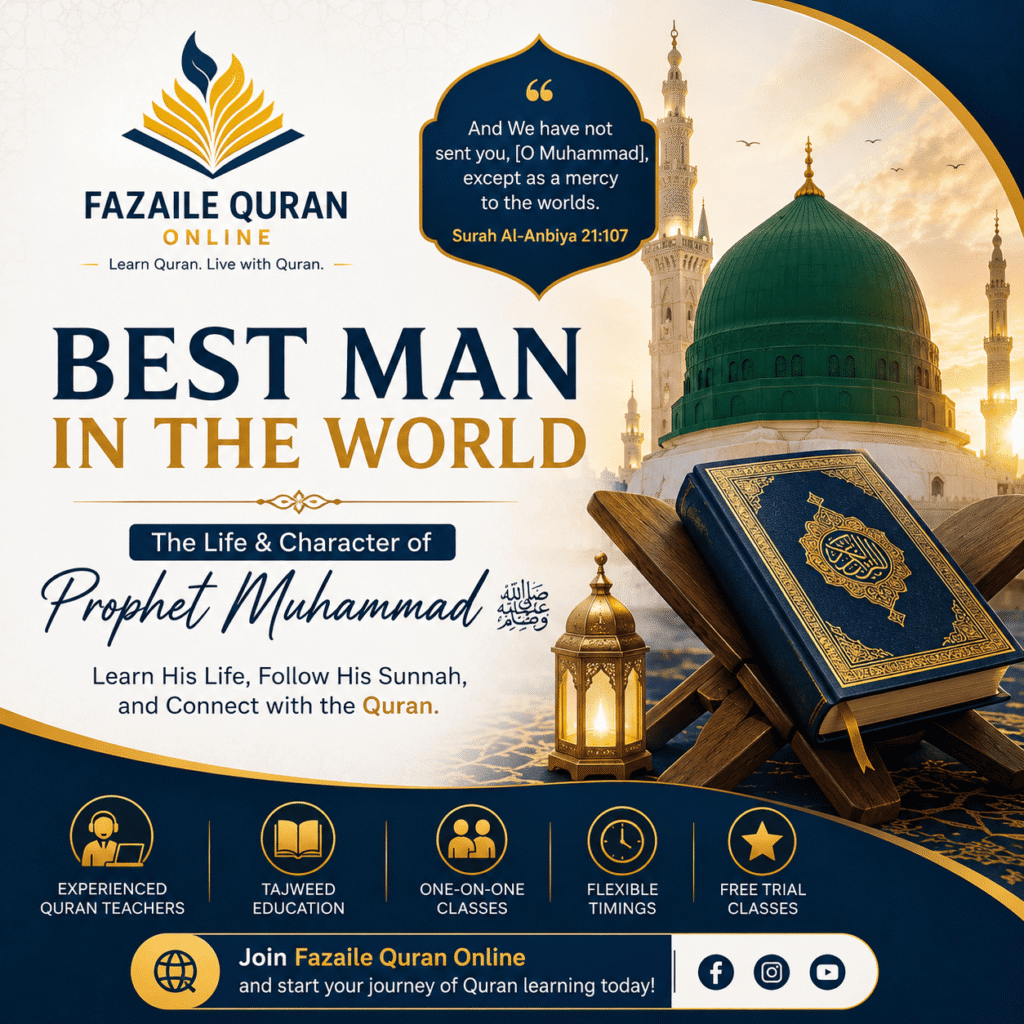

Best Man in the World
Islamic Article, Quran

Best Man in the World – Who Is He According to Islam?

Best Man in the World – Who Is He According to Islam? Best Man in the World In a world full of leaders, celebrities, influencers, and powerful personalities, one question continues to inspire millions of hearts: Who is the best man in the world? For Muslims, the answer is clear and timeless: Prophet Muhammad ﷺ – the final Messenger of Allah, the perfect example for humanity, and the greatest man to ever walk on Earth. His character, mercy, honesty, wisdom, and compassion transformed the world forever. Even non-Muslim historians and scholars have recognized his unmatched influence on mankind. At Fazaile Quran Online, we believe every Muslim child and adult should learn about the life of Prophet Muhammad ﷺ alongside learning the Holy Quran with proper Tajweed and understanding.  Why Prophet Muhammad ﷺ Is Called the Best Man in the World Allah says in the Holy Quran: And We have not sent you, [O Muhammad], except as a mercy to the worlds. – Surah Al-Anbiya 21:107 The Prophet ﷺ was: Honest and trustworthy Kind to children Merciful to enemies Respectful to women Gentle with animals A perfect teacher and leader Even before prophethood, the people of Makkah called him Al-Ameen (The Trustworthy). His life teaches humanity: patience forgiveness kindness discipline honesty worship of Allah What Makes Prophet Muhammad ﷺ Different From Other Leaders? Many leaders changed nations. Prophet Muhammad ﷺ changed hearts, societies, and generations. Within just 23 years: ignorance turned into knowledge hatred turned into brotherhood oppression turned into justice He taught people to: respect parents seek knowledge help the poor speak truthfully read and learn the Quran That is why billions of Muslims love him deeply today. The Quran and the Character of the Prophet ﷺ The Holy Quran and the life of Prophet Muhammad ﷺ are deeply connected. When asked about the Prophet’s character, Aisha bint Abi Bakr رضي الله عنها said: His character was the Quran. This means he practiced every teaching of the Quran perfectly. That is why learning the Quran is one of the best ways to become closer to the teachings of Prophet Muhammad ﷺ. Why Every Muslim Should Learn the Quran Online Today, many families struggle to find qualified Quran teachers locally. That is why online Quran learning has become one of the best solutions for Muslims around the world. At Fazaile Quran Online, students can learn: Noorani Qaida Quran reading Tajweed Quran memorization (Hifz) Islamic studies Duas and daily Sunnahs from experienced online Quran teachers from the comfort of home. Benefits of Joining an Online Quran Academy 1. Learn From Qualified Quran Teachers Our academy provides experienced male and female Quran tutors for kids and adults. 2. Flexible Timings Classes are available according to your country and schedule. 3. One-on-One Quran Classes Personal attention helps students improve quickly. 4. Learn Quran With Tajweed Correct pronunciation is essential for proper Quran recitation. 5. Safe Islamic Environment for Kids Parents can monitor classes from home. How Learning Quran Changes a Person’s Life The Quran teaches: patience in hardship peace of heart discipline respect honesty connection with Allah A person who studies the Quran regularly develops better manners and stronger faith. The Prophet Muhammad ﷺ said: The best among you are those who learn the Quran and teach it. This Hadith shows the great importance of Quran education in Islam. Why Parents Prefer Online Quran Classes Today Modern families are choosing online Quran academies because: they save travel time classes are safer for children students learn from home qualified teachers are easily available schedules are flexible This is especially helpful for Muslims living in: USA UK Canada Australia Europe where local Quran teachers may not always be available. Why Choose Fazaile Quran Online? Fazaile Quran Online is dedicated to helping Muslims worldwide learn the Quran easily and correctly. We Offer: Certified Quran teachers Online Quran classes for kids & adults Male & female tutors Tajweed courses Flexible timings Affordable fees Free trial classes Whether you are a beginner or want to improve your recitation, our online Quran academy can help you step by step. Best Online Quran Teacher for Kids and Adults Finding the right Quran teacher is important for proper Islamic education. A good online Quran teacher should: recite clearly teach patiently understand Tajweed motivate students create a comfortable learning environment At Fazaile Quran Online, our tutors focus on building confidence, fluency, and love for the Quran. The Connection Between Loving the Prophet ﷺ and Learning the Quran If we truly love Prophet Muhammad ﷺ, we should: follow his Sunnah read the Quran regularly teach Islam to our children improve our character The Quran was the greatest miracle given to the Prophet ﷺ. Learning it is one of the best ways to strengthen faith and connection with Allah. Final Thoughts The world has seen many great people, but no one compares to Prophet Muhammad ﷺ in character, mercy, leadership, and guidance. His life teaches us the importance of: faith kindness honesty Quran learning helping others If we want ourselves and our children to grow closer to Islam, learning the Quran is the best starting point. Join Fazaile Quran Online today and begin your journey of Quran learning with experienced online Quran teachers. Frequently Asked Questions (FAQs) 1. Who is the best man in the world according to Islam? According to Islam, Prophet Muhammad ﷺ is the best man in the world because of his perfect character, mercy, honesty, and guidance for humanity. 2. Why is Prophet Muhammad ﷺ important? He is the final Messenger of Allah who taught people the Quran, good manners, justice, and worship of Allah. 3. What is the best way to learn the Quran today? Online Quran academies provide flexible and effective Quran learning with qualified teachers from home. 4. Can children learn Quran online? Yes. Children can learn Quran online safely through one-on-one classes with experienced tutors. 5. What does Fazaile Quran Online teach? Fazaile Quran Online teaches: Quran reading Tajweed Noorani Qaida Hifz Islamic studies Duas 6.

Online Quran Classes 2026
Islamic Article, online quran classes

Online Quran Classes 2026: Learn the Quran at Home With Certified Teachers

Online Quran Classes 2026: Learn the Quran at Home With Certified Teachers Online Quran Classes 2026 In today’s fast-moving world, families want a simple, authentic, and reliable way to learn the Quran from home. Online Quran learning has become the most trusted method – safe, flexible, and available for every age. Whether you’re a beginner, a parent searching for a qualified teacher for your child, or an adult trying to reconnect with the Book of Allah, online Quran classes offer the easiest and most comfortable path. Fazaile Quran Online is one of the leading platforms helping students worldwide learn the Quran with proper pronunciation, tajweed, and understanding. Why Online Quran Classes Are Becoming So Popular 1. Learn at home, safely and comfortably You don’t need to travel, search for a teacher, or adjust to someone’s schedule. Your home becomes your madrasa. 2. Flexible timings for students, parents, and working adults You choose the time – morning, afternoon, evening, or late night. Classes are available 24/7. 3. One-on-one teaching improves results A dedicated online Quran teacher focuses only on you or your child, which builds confidence, fluency, and proper tajweed quickly. 4. Perfect for kids Children learn better in a peaceful, familiar environment. Online Quran classes make learning fun, interactive, and stress-free. 5. Ideal for adults restarting their journey No embarrassment, no pressure – adults can learn at their own pace. What You Will Learn in Online Quran Classes Noorani Qaida for beginners For children or adults starting from zero. Full Quran Reading (Nazra) Reading with fluency and correct pronunciation. Tajweed Rules Learning how to recite the Quran the way it was revealed. Quran Memorization (Hifz Program) Step-by-step method designed for long-term retention. Islamic Studies & Duas Authentic duas, manners, and basic Islamic teachings. Best for Kids: Online Quran Classes for Children Children need patience, softness, and a teacher who understands how young minds learn. Our teachers use: Visual teaching Repetition techniques Small bite-sized lessons Engaging voice tones Rewards to motivate This is why kids progress faster online than in physical academies. Best for Adults: Learn Quran Online at Your Own Pace No matter your age, your schedule, or your past – you can still learn the Quran beautifully. Our adult classes are perfect for: Total beginners Reverts People with busy jobs Parents Students preparing for Ramadan or Umrah Why Fazaile Quran Online Is the Best Choice Your goal is to get more students, so these selling points hit hard: Certified male and female Quran teachers Experienced in tajweed, hifz, and online teaching. One-on-one live classes Not group-based – full focus on the student. Free trial classes Try first, continue only if you’re satisfied. Affordable monthly fees Plans for every family. Classes available 24/7 Any time zone, anywhere in the world. Kids-friendly teaching style Soft, patient, and engaging. Who Can Join Fazaile Quran Online? Everyone. Kids (4+ years) Adults Reverts Beginners Hifz students Sisters who want a female teacher Anyone wanting tajweed perfection If you want to learn the Quran with comfort, privacy, and professionalism – this is the best place to start.   Start Learning Quran Today – Join Fazaile Quran Online If you want your child or yourself to learn the Quran in the most convenient and authentic way, now is the best time to begin. Contact Fazaile Quran Online WhatsApp: +92-347-5205452 Email: fazailequran@gmail.comWebsite: www.fazailequranonline.com Get 3 Free Trial Classes – No Registration Fee. Frequently Asked Questions (FAQs) 1. Are online Quran classes effective? Yes. One-on-one attention and flexible timings make them more effective than traditional classes. 2. Can kids learn Quran online? Absolutely – kids learn faster online because the teacher gives full attention and uses modern teaching methods. 3. How long does it take to learn the Quran online? Beginners usually become fluent within 6–12 months with regular practice. 4. Do online classes include tajweed? Yes, Tajweed is taught in all reading programs. 5. Can adults start learning from zero? Of course, age is never a barrier in online Quran learning. Yes. One-on-one attention and flexible timings make them more effective than traditional classes. Absolutely – kids learn faster online because the teacher gives full attention and uses modern teaching methods. Beginners usually become fluent within 6–12 months with regular practice. Yes, Tajweed is taught in all reading programs. Of course, age is never a barrier in online Quran learning. Enroll Now 📢 Share this article: Facebook | Twitter (X) | LinkedIn | WhatsApp | Copy Link for Instagram
Inna Lillahi Wa Inna Ilayhi Raji’un Meaning
islam, Islamic Article, Kalimas

Inna Lillahi Wa Inna Ilayhi Raji’un – Meaning, Arabic, Translation, When to Say & Benefits

Inna Lillahi Wa Inna Ilayhi Raji’un – Meaning, Arabic, Translation, When to Say & Benefits Inna Lillahi Wa Inna Ilayhi Raji’un Meaning In difficult moments of life, Islam teaches us powerful words that bring peace, patience, and connection with Allah. One of the most important phrases Muslims recite during hardship is: Inna Lillahi Wa Inna Ilayhi Raji’un This short yet profound statement carries deep meaning about life, death, and our ultimate return to Allah. In this guide, you’ll learn the Arabic text, translation, meaning, when to say it, and its benefits, along with authentic references. Arabic Text إِنَّا لِلَّٰهِ وَإِنَّا إِلَيْهِ رَاجِعُونَ Transliteration Inna lillahi wa inna ilayhi raji’un English Translation Indeed, we belong to Allah, and indeed to Him we will return. Meaning Explained This phrase reminds us of two powerful truths: We belong to Allah. Our life, wealth, and everything we have is a trust from Him We will return to Him. Every soul will go back to Allah after death It teaches: Patience in hardship Acceptance of Allah’s decree (Qadr) Detachment from worldly losses Quranic Reference (Authentic) This phrase comes directly from the Quran: Who, when disaster strikes them, say: ‘Indeed we belong to Allah, and indeed to Him we will return.’(Surah Al-Baqarah 2:156) Allah praises those who say this during hardship and promises them: Mercy Guidance Blessings When to Say Inna Lillahi Wa Inna Ilayhi Raji’un Many people think this is only said when someone dies – but that’s incomplete. You should say it when: Hearing about someone’s death Losing something valuable Facing illness or hardship Experiencing any kind of loss During emotional pain or stress It’s a general response to any calamity, big or small. Hadith Reference (Authentic) The Prophet ﷺ said: Whoever says this at the time of calamity and makes the dua:Allahumma’jurni fi musibati wa akhlif li khayran منها(O Allah, reward me for my affliction and replace it with something better) Allah will replace it with something better. (Sahih Muslim) Benefits of Saying This Phrase 1. Brings Inner Peace It reminds you that everything is under Allah’s control. 2. Builds Patience (Sabr) Helps you stay strong during difficult times. 3. Earns Reward from Allah Allah وعد (promises) reward for those who say it with sincerity. 4. Strengthens Faith (Iman) You acknowledge Allah’s ownership and wisdom. Common Mistake Only saying it at deathCorrect: Say it during any hardship or loss How This Phrase Changes Your Mindset Instead of reacting with panic or frustration, this phrase teaches: Acceptance Trust in Allah Emotional control Spiritual strength Learn More Islamic Duas & Meanings Understanding phrases like this is essential for every Muslim, especially children and beginners. If you want to: Learn Quran with proper Tajweed Understand Islamic phrases deeply Help your kids grow with Islamic knowledge Join Fazaile Quran Online Academy At Fazaile Quran Online, we provide: One-on-one Quran classesTajweed & pronunciation trainingIslamic duas & daily supplicationsCourses for kids & adultsFlexible timings worldwide Contact: +92 347 5205452Email: fazailequran@gmail.comWebsite: www.fazailequranonline.com Start your journey today and connect with the Quran from home. Conclusion The phrase Inna Lillahi Wa Inna Ilayhi Raji’un is more than just words-it is a complete mindset of faith, patience, and submission to Allah. By understanding and practicing it in daily life, a Muslim can face hardships with strength and hope. Frequently Asked Questions (FAQs) 1. What does Inna Lillahi Wa Inna Ilayhi Raji’un mean? Inna Lillahi Wa Inna Ilayhi Raji’un means “Indeed, we belong to Allah, and indeed to Him we will return.” It reminds Muslims that everything we have comes from Allah and we will ultimately return to Him. 2. When should you say Inna Lillahi Wa Inna Ilayhi Raji’un? You should say this phrase during any calamity, loss, or hardship, including: When someone dies When you lose something valuable During illness or emotional pain It is not limited to death—it applies to all types of difficulties. 3. Is Inna Lillahi Wa Inna Ilayhi Raji’un only for death? No, this phrase is not only for death.It is a general Islamic response to any loss or hardship, as taught in the Quran (Surah Al-Baqarah 2:156) 4. What is the Arabic text of Inna Lillahi Wa Inna Ilayhi Raji’un? The Arabic text is: إِنَّا لِلَّٰهِ وَإِنَّا إِلَيْهِ رَاجِعُونَ 5. What is the reward for saying Inna Lillahi Wa Inna Ilayhi Raji’un? According to Islamic teachings, those who say this phrase with patience during hardship receive: Allah’s mercy Blessings Guidance Allah praises such people in the Quran. 6. What dua should be read after Inna Lillahi Wa Inna Ilayhi Raji’un? After saying this phrase, you can recite: “Allahumma’jurni fi musibati wa akhlif li khayran منها” (O Allah, reward me for my hardship and replace it with something better) This is based on an authentic Hadith. 7. Why is Inna Lillahi Wa Inna Ilayhi Raji’un important in Islam? This phrase is important because it: Strengthens faith (Iman) Teaches patience (Sabr) Reminds us of life’s temporary nature Helps Muslims cope with loss in a healthy spiritual way 8. Can you say Inna Lillahi for small problems? Yes, you can say it for small and big problems alike. Islam encourages remembering Allah in every situation, not just major events. 9. How does this phrase help in difficult times? It helps by: Bringing emotional peace Reducing stress and panic Reminding you that everything is part of Allah’s plan This creates a strong and calm mindset. 10. How can I learn more Islamic duas and meanings? You can learn Islamic duas, Quran recitation, and meanings through structured guidance. Inna Lillahi Wa Inna Ilayhi Raji’un means “Indeed, we belong to Allah, and indeed to Him we will return.” It reminds Muslims that everything we have comes from Allah and we will ultimately return to Him. You should say this phrase during any calamity, loss, or hardship, including: When someone dies When you lose something valuable During illness or emotional pain It is not limited to death—it applies to all types of difficulties. No, this phrase is not only for death.It is a

Who wrote the Quran
islam, Quran

Who Wrote the Quran? The Truth Every Muslim and Seeker Should Know

Who Wrote the Quran? The Truth Every Muslim and Seeker Should Know Who wrote the Quran One of the most searched and deeply important questions today is: Who wrote the Quran? Many people-Muslims and non-Muslims alike-seek a clear, authentic answer. Understanding this topic is not just about knowledge; it is about faith, guidance, and connection with Allah. This article will give you a simple, truthful, and authentic explanation based on Islamic teachings, so you can understand with clarity and confidence. Who Wrote the Quran? The Quran was not written by any human being. It is the word of Allah (God), revealed to the Prophet Muhammad (peace be upon him) through the Angel Jibreel (Gabriel) over a period of approximately 23 years. The Prophet Muhammad (peace be upon him) did not author the Quran. He could not read or write at that time, yet he conveyed the message exactly as it was revealed, without any change. How Was the Quran Preserved? During the time of the Prophet (peace be upon him): The Quran was memorized by companions (Huffaz) It was also written down on materials like parchment, bones, and leaves Dedicated scribes recorded every revelation carefully After the Prophet (peace be upon him), the Quran was compiled into a single book form to preserve it perfectly for future generations. This is why today, the Quran remains unchanged, pure, and (protected)-just as it was revealed. Why Do People Ask Who Authored the Quran? This question often comes from a misunderstanding. Some assume: It was written by the Prophet (peace be upon him) It is a historical or human-authored book But the Quran itself clearly states that it is divine revelation, not human speech. Its language, depth, and unmatched style are beyond human ability. The Miracle of the Quran The Quran is not just a book-it is a living miracle: Its language has challenged mankind for over 1400 years Millions of people have memorized it word for word It provides guidance for every aspect of life Not a single letter has changed This is proof that it is not written by any human, but revealed by Allah. How the Quran Was Revealed (Detailed Process) The Quran was revealed by Allah through the Angel Jibreel (Gabriel) to the Prophet Muhammad (peace be upon him). It was not revealed all at once. Instead, it came gradually over 23 years to guide humanity step by step. Each revelation came in different situations-sometimes to answer questions, sometimes to solve problems, and sometimes to strengthen the hearts of believers. This gradual method made the Quran easier to understand, memorize, and apply in daily life. When the Revelation Began (First Revelation in Ghar-e-Hira) The revelation of the Quran began in the blessed cave of Ghar-e-Hira near Makkah. During a moment of reflection and worship, Angel Jibreel appeared to the Prophet Muhammad (peace be upon him) and commanded: “Read!” This was the first revelation of the Quran and marked the beginning of a new era for humanity. It showed that the Quran is a divine message meant to guide mankind out of darkness into light. That’s another complete story that will be published later in another article. Where the Quran Was Revealed (Makkah & Madinah) The Quran was revealed in two sacred cities: Makkah: Where the early revelations focused on faith, belief in one God, patience, and the afterlife. Madinah: Where the later revelations focused on laws, society, justice, and community life. These two locations together shaped both the spiritual and practical guidance of Islam. Duration of Revelation (23 Years) The Quran was revealed over a period of approximately 23 years. 13 years in Makkah 10 years in Madinah This long duration helped believers gradually understand, memorize, and implement the teachings in real life without difficulty. Makkah  and Madina Revelations The Quranic revelations are divided into two phases: Makkan Revelations: Focus on belief in Allah Life after death Moral values and patience Strengthening faith Madinan Revelations: Islamic laws and rulings Social and family matters Rights and responsibilities Building a strong Muslim society Together, they complete the full guidance for humanity. How the Quran Was Written During the Prophet’s Lifetime During the lifetime of Prophet Muhammad (peace be upon him), the Quran was not yet collected in one book form. Instead: Verses were memorized by companions Skilled scribes wrote them on materials like leather, bones, and parchment The Prophet guided where each verse belonged in each Surah This ensured perfect accuracy from the beginning. The Role of the Scribes in Recording the Quran The Prophet (peace be upon him) appointed trusted companions as scribes/writers. Whenever revelation came, they would immediately write it down under his supervision. These scribes ensured that every word was recorded exactly as revealed, without any change or error. This system helped preserve the Quran even before it was compiled into a book. How the Quran Was Collected Into One Book After the Prophet’s Passing After the passing of Prophet Muhammad (peace be upon him), the companions realized the importance of preserving the Quran in one unified form. They: Collected written pieces from different sources Verified them through memorization of companions Compiled them into one complete Mushaf Later, standardized copies were distributed across the Muslim world. This is why today the Quran remains the same everywhere. The First Compilation of the Qur’an – Era of Abu Bakr Siddiq (RA) The very first official collection of the Qur’an took place during the caliphate of Abu Bakr Siddiq (RA). After the Battle of Yamama, where many Huffaz were martyred, Umar ibn Al-Khattab (RA) advised that the Qur’an should be compiled in written form to protect it for future generations. Abu Bakr (RA) assigned this sensitive and immense responsibility to Zaid ibn Thabit (RA), the trusted scribe of revelation. Zaid (RA) compiled the Qur’an by: Gathering verses from written materials like parchments, bones, leather, and palm leaves Verifying each verse with multiple Sahaba who had memorized it Accepting only those verses with two authentic witnesses This resulted in the first

4 Qul Surahs
Islamic Article, Surah

4 Qul Surahs – Arabic, Transliteration, Translation, Meaning & Complete Benefits

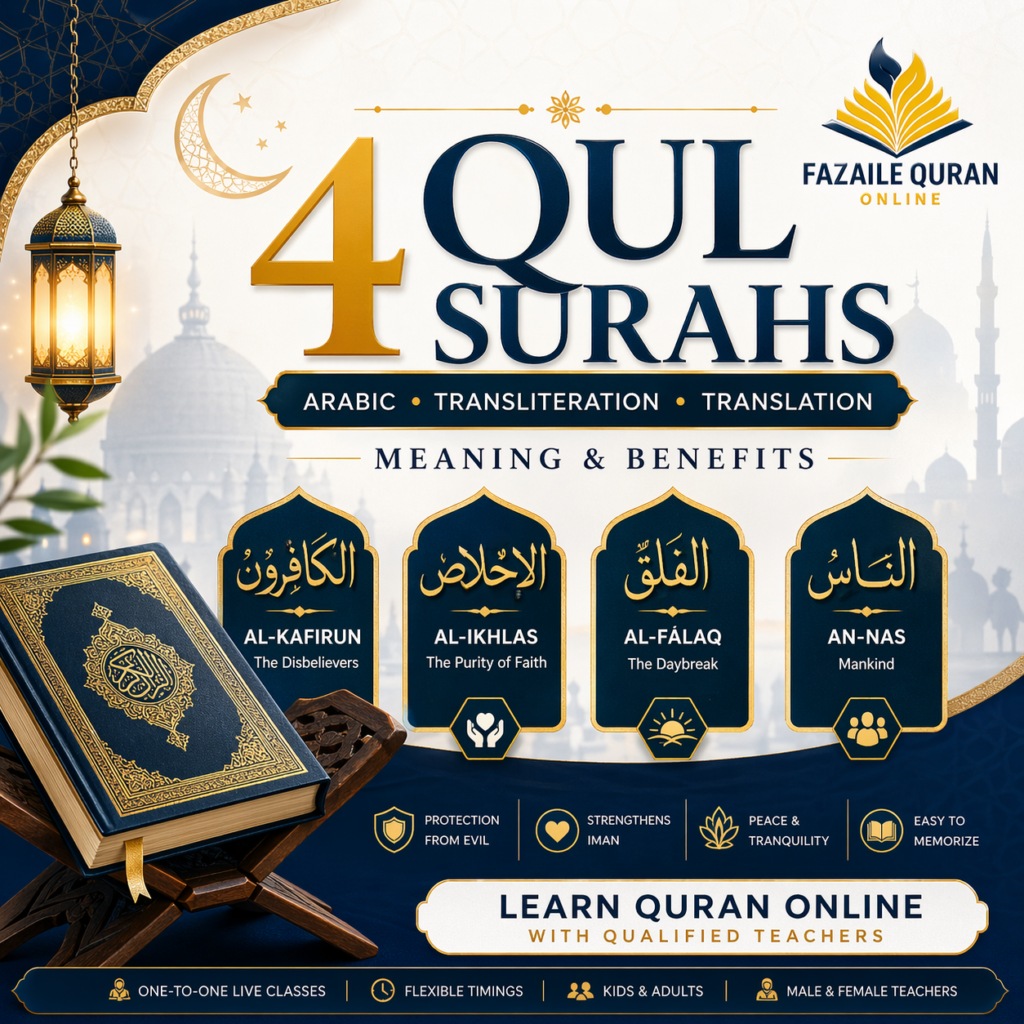
4 Qul Surahs – Arabic, Transliteration, Translation, Meaning & Complete Benefits 4 Qul Surahs The 4 Qul Surahs are four short yet powerful chapters of the Holy Quran that begin with the command Qul (قُل), meaning Say. These Surahs hold a special place in Muslim daily life for protection, purification of belief, and strengthening spiritual connection with Allah. For generations, Muslims have recited the 4 Qul for safety, peace, barakah, and as a shield against all forms of harm. In this guide, you will find: Arabic text of each Surah Transliteration for easy reading English translation Detailed meaning Spiritual benefits How to recite correctly Why these Surahs are essential for every Muslim What Are the 4 Qul Surahs? The four Surahs that begin with Qul are: Surah Al-Kafirun Surah Al-Ikhlas Surah Al-Falaq Surah An-Nas These Surahs are commonly known as Char Qul and are memorized by adults and children alike due to their short length and powerful meanings 1. Surah Al-Kafirun – The Disbelievers Arabic قُلْ يَا أَيُّهَا الْكَافِرُونَ لَا أَعْبُدُ مَا تَعْبُدُونَ وَلَا أَنتُمْ عَابِدُونَ مَا أَعْبُدُ وَلَا أَنَا عَابِدٌ مَّا عَبَدتُّمْ وَلَا أَنتُمْ عَابِدُونَ مَا أَعْبُدُ لَكُمْ دِينُكُمْ وَلِيَ دِينِ Transliteration Qul yā ayyuhal-kāfirūn Lā a‘budu mā ta‘budūn Wa lā antum ‘ābidūna mā a‘bud Wa lā anā ‘ābidum mā ‘abattum Wa lā antum ‘ābidūna mā a‘bud Lakum dīnukum wa liya dīn Translation Say: O disbelievers, I do not worship what you worship, Nor do you worship what I worship. And I will never worship what you worship, Nor will you ever worship what I worship .For you is your religion, and for me is mine . Meaning & Lessons This Surah teaches: Clear distinction in belief Complete devotion to Allah alone No compromise in matters of faith Respectful separation without hatred 2. Surah Al-Ikhlas – The Purity of Faith Arabic قُلْ هُوَ اللَّهُ أَحَدٌ اللَّهُ الصَّمَدُ لَمْ يَلِدْ وَلَمْ يُولَدْ وَلَمْ يَكُن لَّهُ كُفُوًا أَحَدٌ Transliteration Qul huwa Allāhu aḥad Allāhuṣ-ṣamad Lam yalid wa lam yūlad Wa lam yakun lahu kufuwan aḥad Translation Say: He is Allah, the One. Allah, the Perfect and Eternal. He neither begets nor is born, And there is nothing equal to Him. Meaning & Lessons This Surah: Explains pure monotheism (Tawheed) Rejects all false beliefs Represents sincerity in worship Is equal to one-third of the Quran in meaning 3. Surah Al-Falaq – The Daybreak Arabic قُلْ أَعُوذُ بِرَبِّ الْفَلَقِ مِن شَرِّ مَا خَلَقَ وَمِن شَرِّ غَاسِقٍ إِذَا وَقَبَ وَمِن شَرِّ النَّفَّاثَاتِ فِي الْعُقَدِ وَمِن شَرِّ حَاسِدٍ إِذَا حَسَدَ Transliteration Qul a‘ūdhu birabbil-falaq Min sharri mā khalaq Wa min sharri ghāsiqin idhā waqab Wa min sharrin-naffāthāti fil-‘uqad Wa min sharri ḥāsidin idhā ḥasad Translation Say: I seek refuge with the Lord of daybreak, From the evil of all that He has created, From the evil of darkness as it spreads, From the evil of those who blow on knots, And from the evil of an envier when he envies. Meaning & Lessons This Surah protects from: Dark forces and unseen harm Black magic and witchcraft Envy and jealousy The evil eye 4. Surah An-Nas – Mankind Arabic قُلْ أَعُوذُ بِرَبِّ النَّاسِ مَلِكِ النَّاسِ إِلَٰهِ النَّاسِ مِن شَرِّ الْوَسْوَاسِ الْخَنَّاسِ الَّذِي يُوَسْوِسُ فِي صُدُورِ النَّاسِ مِنَ الْجِنَّةِ وَالنَّاسِ Transliteration Qul a‘ūdhu birabbin-nās Malikin-nās Ilāhin-nās Min sharri l-waswāsi l-khannās Alladhī yuwaswisu fī ṣudūrin-nās Minal-jinnati wan-nās Translation Say: I seek refuge in the Lord of mankind, The King of mankind, The God of mankind, From the evil of the whisperer who withdraws, Who whispers in the hearts of mankind, From among jinn and humankind. Meaning & Lessons This Surah protects from: Shaytan’s whispers Evil thoughts Spiritual harm Hidden influences Benefits of Reciting the 4 Qul Reciting these Surahs together provides: 1. Daily Protection The Prophet ﷺ taught these Surahs as a shield from harm, evil eye, magic, and fear. 2. Strengthening of Faith Surah Al-Ikhlas strengthens Tawheed, the foundation of Islamic belief. 3. Peace and Tranquility Regular recitation brings emotional calmness and reliance on Allah. 4. Night-Time Protection The Prophet ﷺ recited these Surahs before sleeping and blew over his body for safety. 5. Easy to Memorize These short Surahs are ideal for beginners and children to memorize. When Should You Recite the 4 Qul? After every obligatory Salah In morning & evening adhkar Before sleeping When feeling scared, anxious, or spiritually weak When seeking protection from any harm Learn to Recite the 4 Qul Correctly (Tajweed Matters) Many Muslims recite these Surahs daily, yet mispronunciation can change meanings. Proper Tajweed ensures: Correct letter pronunciation Proper elongation Accurate pauses Clear meaning If you want to learn beautifully and confidently, a qualified teacher is essential. Learn Quran Online with Fazaile Quran Online Fazaile Quran Online helps students of all ages learn: Proper Quran recitation with Tajweed Memorization of short Surahs including the 4 Qul Full Nazra Quran Islamic studies & duas One-on-one interactive classes Why Students Prefer Fazaile Quran Online Flexible timings Professional teachers Kids-friendly learning Affordable monthly fee Classes for beginners & adults Safe, private online environment If you’re seeking a trusted place to learn the Quran from home, this academy can guide you step by step. Final Thoughts The 4 Qul Surahs carry deep meaning, spiritual strength, and powerful protection. Reciting them regularly brings peace, safety, and closeness to Allah. Whether you want to memorize them, understand them, or improve your recitation, connecting with these Surahs is a beautiful part of Muslim life. If you need guidance, Fazaile Quran Online is available to help you learn with proper Tajweed and understanding Frequently Asked Questions (FAQs) 1. What are the 4 Qul Surahs in the Quran? The 4 Qul Surahs are Surah Al-Kafirun, Surah Al-Ikhlas, Surah Al-Falaq, and Surah An-Nas. Each begins with the word “Qul,” meaning “Say,” and they are widely recited for protection and strengthening faith. 2. Why are the 4 Qul Surahs important? These Surahs are important because they strengthen Tawheed (belief in Allah’s oneness), protect from evil, and are part of daily Islamic supplications recommended by the Prophet ﷺ. 3. When should

Dua for Entering the Home
Duas, Islamic Article

Dua for Entering the Home – Meaning, Virtues & Everyday Benefits

Dua for Entering the Home – Meaning, Virtues & Everyday Benefits Dua for Entering the Home Introduction Walking into your home is more than just opening a door — it’s stepping into a space that should hold peace, warmth, and Allah’s protection. The Sunnah teaches us a beautiful practice: reciting the Dua for Entering the Home. This simple supplication brings blessings, keeps negativity away, and fills your home with tranquillity. Arabic, Transliteration & Translation The Dua for Entering the Home اللّٰهُمَّ إِنِّيْ أَسْأَلُكَ خَيْرَ الْمَوْلِجِ وَخَيْرَ الْمَخْرَجِ؛ بِسْمِ اللّٰهِ وَلَجْنَا وَ بِسْمِ اللّٰهِ خَرَجْنَا وَعَلَى اللّٰهِ رَبِّنَا تَوَكَّلْنَا Allahumma innee as’aluka khayral mawliji wa khayral makhraji bismillahi walajna wa bismillahi kharajna wa alallahi rabbina tawakkalna. Translation: O Allah, I ask of you a good entry and a good exit. In the name of Allah, we enter and in the name of Allah we exit and upon Allah, our sustainer do we keep our trust. Abu Dawud Note: A person may also read only ‘Bismillah’ and this too will result in Shaytaan staying away. However, there is more benefit and virtue of reading the full Du’a. This greeting brings barakah and announces peace for everyone inside. Meaning & Explanation Reciting this dua as you step inside your house invites Allah’s mercy into your space. It sets a peaceful tone for the household and reminds us to enter with humility, positivity, and gratitude. It also protects the home from unseen harm, negative energy, and shayateen, because anything started with Bismillah becomes blessed. Benefits of Reciting the Dua 1. Brings Peace in the Home Entering with Allah’s name softens hearts and reduces arguments and tension. 2. Protection From Evil Influences Shayateen do not enter a house where Allah’s name is mentioned. 3. Barakah in Your Home The dua invites blessings in food, wealth, relationships, and overall atmosphere. 4. Strengthens Family Bonding Starting with Salam creates warmth and makes everyone feel valued. 5. Builds a Sunnah-Centered Lifestyle Small Sunnahs practiced daily shape a spiritually strong personality. How to Recite This Dua Daily Recite it every time before entering your home. Say “Assalamu Alaikum” even if no one is inside — the angels respond. Teach it to your kids so the whole household benefits. Make it a habit like locking the door — effortless but rewarding. Practical Examples Coming back from school or work → recite the dua. Entering late at night → recite the dua softly. Coming home angry or stressed → this dua instantly calms the mood. Conclusion The Dua for Entering the Home is a small Sunnah with massive impact. It wraps your home in blessings, protection, and peace. Making these duas part of daily life shapes a home where Allah’s mercy always stays present. If you want to learn more duas and improve your Quranic understanding with expert tutors, explore Fazaile Quran Online and U Quran Tutors for structured and beginner-friendly online classes FAQs – Dua beore entering Toilet Q1: What is the dua for entering the home? “Bismillah, Allahumma inni as’aluka khayral-mawlaji wa khayral-makhraji.” It means asking Allah for a blessed entrance and exit. Q2: Why should we recite dua before entering the house? It brings peace, blocks shayateen, and fills the home with barakah. Q3: Should I say Salam even if no one is home? Yes! The angels reply – it is Sunnah and a source of blessing. Q4: Can kids also recite this dua? Absolutely, and teaching them early creates a beautiful lifelong habit. Q5:Does reciting this dua prevent arguments at home? It helps soften hearts and reduce negativity by inviting Allah’s mercy. “Bismillah, Allahumma inni as’aluka khayral-mawlaji wa khayral-makhraji.” It means asking Allah for a blessed entrance and exit. It brings peace, blocks shayateen, and fills the home with barakah. Yes! The angels reply – it is Sunnah and a source of blessing. Absolutely, and teaching them early creates a beautiful lifelong habit. It helps soften hearts and reduce negativity by inviting Allah’s mercy. Enroll Now 📢 Share this article: Facebook | Twitter (X) | LinkedIn | WhatsApp | Copy Link for Instagram

Dua After Leaving the Toilet
Duas, Islamic Article

Dua After Leaving the Toilet – Meaning, Benefits & Sunnah Etiquettes

Dua After Leaving the Toilet – Meaning, Benefits & Sunnah Etiquettes Dua After Leaving the Toilet What Is the Dua After Leaving the Toilet? Islam teaches refined manners in every aspect of life —  even after using the bathroom. When a believer exits the toilet, the Prophet ﷺ taught a short but powerful dua that expresses gratitude and humility. Arabic, Transliteration & Translation Dua After Exiting the Toilet غُفْرَانَكَ، الحَمْدُ لِلَّهِ الَّذِي أَذْهَبَ عَنِّي الأَذَى وَعَافَانِي Ghufrānaka, alhamdu lillāhilladhī adh-haba ‘annī al-adha wa ‘āfānī. Meaning: “I seek Your forgiveness, O Allah. All praise is for Allah who removed harm from me and granted me well-being.” This extended version beautifully expresses gratitude and humility — recognizing both the blessing of relief and the gift of health. Why This Dua Matters Though it is short, this dua carries deep spiritual meaning. Key Benefits Shows gratitude – Allah allowed us to relieve ourselves and stay healthy.Seeks forgiveness – reminding us that every moment needs Allah’s mercy.Follows Sunnah – strengthening daily connection with prophetic etiquette.Purifies intentions – turning a simple act into an ibadah (worship). Every time a Muslim says Ghufranak, they acknowledge Allah’s blessings and rely on His forgiveness. Correct Sunnah for Exiting the Toilet 1. Leave With the Right Foot Just as we enter with the left foot, we exit with the right. 2. Recite the Dua As soon as you step out, say: Ghufranak. Annil a’za wa’a fani 3. Maintain Modesty Ensure your clothing is proper and clean before walking away. 4. Avoid Mentioning Allah Inside The dua is recited only after stepping out, not while still inside. Spiritual Meaning Behind “Ghufranak” Scholars explain that this dua has two layers: Physical gratitude: Allah allowed the body to function properly. Spiritual humility: Just as the body is cleansed in the washroom, the soul needs forgiveness and cleansing too. This creates a beautiful harmony between physical cleanliness and spiritual purification. Islam’s Emphasis on Cleanliness The Prophet ﷺ taught: “Cleanliness is half of faith.” Even simple daily habits, when done with Sunnah, become worship and bring a believer closer to Allah. Final Thoughts Reciting the Dua After Leaving the Toilet is a simple Sunnah that enriches your daily routine with gratitude and humility. These small acts bring barakah, discipline, and spiritual awareness into everyday life. For authentic Quran learning, Tajweed, Islamic studies, and one-to-one online classes with expert tutors, visit: Fazaile Quran OnlineU Quran Tutors FAQs – Dua beore entering Toilet Q1: What is the dua after leaving the toilet? It is “Ghufranak. Alhamdullih illazi azhaba anni’l a’za wa’a fani” Q2: What does Ghufranak mean? It means “O Allah, I seek Your forgiveness.” Q3: Do we say the dua inside or after exiting? Only after exiting, not inside. Q4: Which foot should I exit with? Exit with your right foot. Q5: Is this dua Sunnah? Yes, it is from the Sunnah of the Prophet ﷺ. It is “Ghufranak. Alhamdullih illazi azhaba anni’l a’za wa’a fani” It means “O Allah, I seek Your forgiveness.” Only after exiting, not inside. Exit with your right foot. Yes, it is from the Sunnah of the Prophet ﷺ. Enroll Now 📢 Share this article: Facebook | Twitter (X) | LinkedIn | WhatsApp | Copy Link for Instagram
Dua Before Entering the Toilet
Duas

Dua Before Entering the Toilet – Islamic Etiquette, Meaning & Daily Sunnah

Dua Before Entering the Toilet – Islamic Etiquette, Meaning & Daily Sunnah Dua Before Entering the Toilet Lorem ipsum dolor sit amet, consectetur adipiscing elit. Ut elit tellus, luctus nec ullamcorper mattis, pulvinar dapibus leo. Arabic, Transliteration & Translation Dua Before Entering the Toilet اللَّهُمَّ إِنِّي أَعُوذُ بِكَ مِنَ الْخُبُثِ وَالْخَبَائِثِ Allahumma inni a‘udhu bika minal-khubuthi wal-khaba’ith. Meaning: O Allah, I seek refuge in You from all evil and harmful creations. This supplication shields a believer from spiritual harm and reminds us to remain conscious of Allah in every small moment of life. Why This Dua Holds Great Importance Saying this dua may seem simple, but it carries deep spiritual benefits: Key Benefits Protection from Shaytan: The bathroom is a place of impurity, and this dua acts as a spiritual shield.Practicing Sunnah: Following the daily Sunnahs strengthens your faith and character.Mindfulness: It builds a habit of remembering Allah throughout everyday activities.Purification of Heart: Reminds us that Islam’s teachings cover every aspect of life with wisdom. How to Enter the Toilet the Sunnah Way Islam gives beautiful etiquettes (adab) for cleanliness and modesty. Before Entering Enter with your left foot first Recite the dua before stepping inside Do not mention Allah’s name once inside Inside the Toilet Remain quiet; avoid unnecessary speech Do not face the Qibla Maintain modesty and sit properly Complete istinja with care and cleanliness Dua After Leaving the Toilet Recite the Sunnah phrase: Ghufranaka Annil A,aza wa,a fani. Meaning: O Allah, I seek Your forgiveness. This reflects humility — we purify our bodies in the washroom, and seek spiritual purification from Allah outside. Cleanliness in Islam: A Sign of Faith The Prophet ﷺ said: Cleanliness is half of faith. (Sahih Muslim) Even bathroom etiquettes, when practiced with intention and Sunnah, become acts of worship and draw a believer closer to Allah. Final Thoughts The Dua Before Entering the Toilet is a short but powerful Sunnah that protects your body, mind, and spiritual state. Practicing these etiquettes daily increases discipline, hygiene, and closeness to Allah. For structured Quran learning, Tajweed classes, Islamic studies, and one-to-one lessons with expert male and female tutors, begin your journey with: Fazaile Quran Online FAQs – Dua beore entering Toilet Q1: What is the dua before entering the toilet? It is: Allahumma inni a‘udhu bika minal-khubuthi wal-khaba’ith. Q2: Before stepping into the bathroom. Before stepping into the bathroom. Q3: Which foot should I enter with? Enter with the left foot, exit with the right. Q4: Can I recite other duas inside the bathroom? No, duas and Quran should not be recited inside. Q5: What is the dua after coming out? Say Ghufranak annil a’za wa’a fani. Enroll Now 📢 Share this article: Facebook | Twitter (X) | LinkedIn | WhatsApp | Copy Link for Instagram
Bait ul Muqqadas
Education, islam, Islamic Article, Kalimas, muslims, online quran, online quran classes

Bait ul Muqqadas & Masjid Al-Aqsa History in the Qur’an | The Truth About Palestine

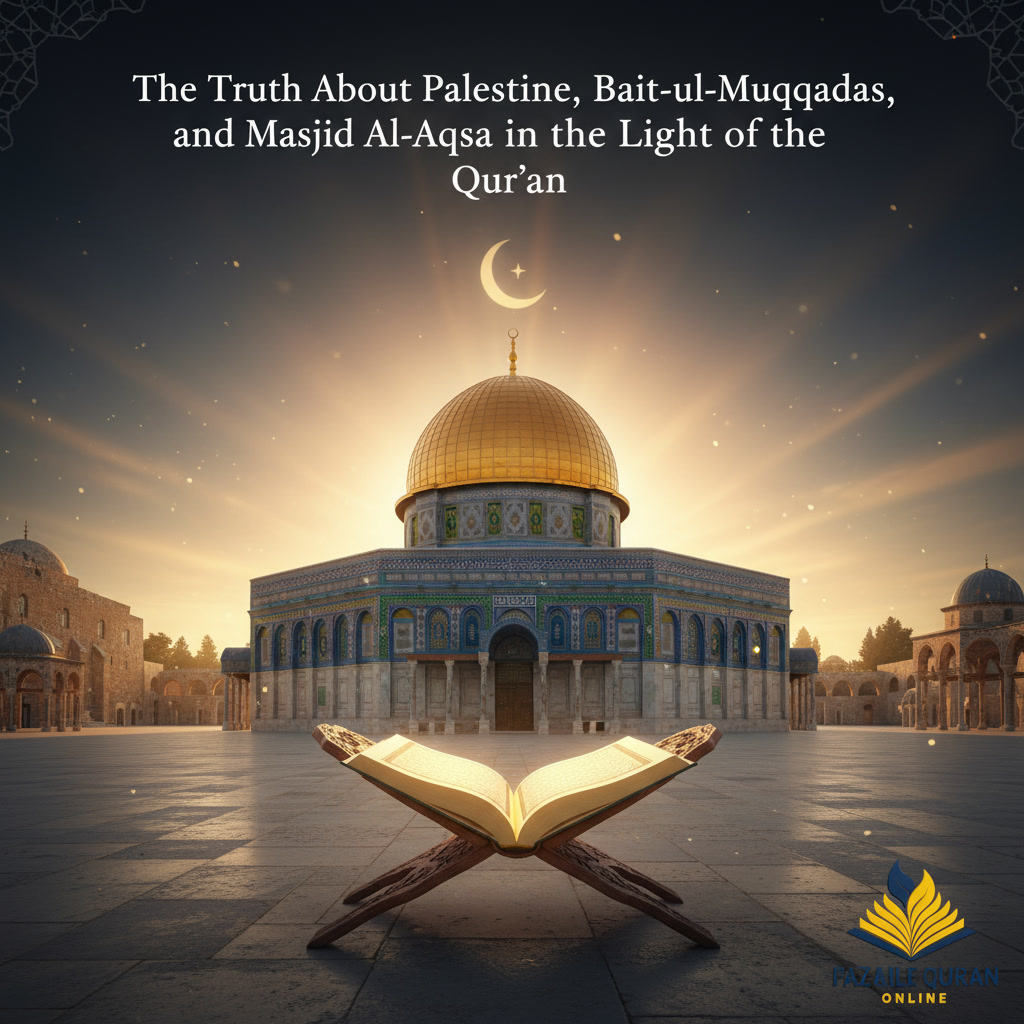
Bait ul Muqqadas & Masjid Al-Aqsa History in the Qur’an | The Truth About Palestine Bait ul Muqqadas The land of Palestine has always held a unique spiritual position in Islamic history. Long before modern borders and political debates existed, this region was known in the Qur’an as a blessed land chosen by Allah for His prophets. The sacred city of Jerusalem (Bait al-Maqdis), historically called Bait-ul-Muqqadas or Al-Quds, contains one of the most important mosques in Islam: Masjid Al-Aqsa. For Muslims around the world, understanding the history of Palestine, the meaning of Masjid Al-Aqsa, and the importance of this sacred land requires returning to authentic sources – especially the Qur’an.  The Blessed Land Mentioned in the Qur’an In several verses of the Qur’an, Allah refers to the land of Palestine as a blessed region chosen for prophets and guidance. Allah says: And We delivered him (Ibrahim) and Lut to the land which We had blessed for the worlds. Qur’an 21:71 Classical Islamic scholars such as Ibn Kathir explain that this blessed land refers to the region of Palestine, Jerusalem, and the surrounding areas. This indicates that the holiness of the land predates modern history and was recognized thousands of years ago through divine revelation. Another verse highlights the spiritual significance of this land: O my people, enter the Holy Land which Allah has assigned to you. (Qur’an 5:21 This verse refers to the Sacred Land (Al-Ard Al-Muqaddasa), which many scholars identify with the land of Palestine. Masjid Al-Aqsa: The First Qiblah in Islam One of the most important aspects of Islamic history is that Masjid Al-Aqsa was the first direction of prayer for Muslims before the Kaaba in Makkah became the permanent Qiblah. Early Muslims prayed toward Bait-ul-Muqqadas until Allah revealed the command to face the Kaaba: So turn your face toward Al-Masjid Al-Haram. Qur’an 2:144 This historical moment shows the deep connection between early Islam and the sacred mosque of Al-Aqsa. Because of this, Masjid Al-Aqsa is often referred to as Qibla-e-Awwal, meaning the first Qiblah of Islam. The Night Journey: Al-Isra wal-Mi’raj Perhaps the most famous Qur’anic reference to Masjid Al-Aqsa is found in Surah Al-Isra, which describes the miraculous night journey of Prophet Muhammad ﷺ. Allah says: Glory be to Him who took His servant by night from Masjid Al-Haram to Masjid Al-Aqsa whose surroundings We have blessed. Qur’an 17:1 This verse establishes three important facts: Masjid Al-Aqsa existed during the time of the Prophet ﷺ. Its surrounding land was already blessed by Allah. It was chosen as the meeting place where the Prophet ﷺ led many earlier prophets in prayer. This event permanently connected Masjid Al-Aqsa to Islamic belief and spirituality. Who Built Masjid Al-Aqsa? According to Islamic tradition, the foundations of Masjid Al-Aqsa date back to the earliest generations of humanity. Many scholars state that Prophet Adam (AS) established the first place of worship on that site, while later prophets rebuilt and expanded it. Prophet Sulaiman (Solomon, AS) is often associated with the reconstruction and beautification of the mosque. The Qur’an describes how Allah gave Prophet Sulaiman the ability to command workers who built magnificent structures: They made for him whatever he wished of sanctuaries, statues, basins like reservoirs, and cooking pots fixed in place. Qur’an 34:13 Islamic historians relate this verse to the architectural works carried out during his rule, including structures within Jerusalem. The Meaning of Masjid and Al-Aqsa Understanding the terminology also helps clarify Islamic teachings. The Arabic word Masjid comes from the root sajada, meaning to prostrate. A masjid is therefore a place where believers prostrate to Allah in prayer. The Qur’an emphasizes the sacred nature of mosques: The mosques of Allah are only to be maintained by those who believe in Allah and the Last Day. Qur’an 9:18 The name Al-Aqsa means the farthest. At the time of revelation, Masjid Al-Aqsa was the farthest sacred mosque known to Muslims from Makkah. Palestine in the History of the Prophets The land of Palestine has been associated with many prophets mentioned in the Qur’an. Among them are: Prophet Ibrahim (AS) Prophet Ishaq (AS) Prophet Yaqub (AS) Prophet Musa (AS) Prophet Dawud (AS) Prophet Sulaiman (AS) Prophet Zakariya (AS) Prophet Yahya (AS) Prophet Isa (AS) Because so many prophets lived, preached, or traveled through this region, Palestine became known historically as the Land of the Prophets. Gaza in Islamic History The region of Gaza is also historically connected to the broader land of Palestine. It has existed as an important city for thousands of years and has been mentioned in historical texts related to trade routes and civilizations in the Levant. Although the Qur’an does not specifically name Gaza, the region falls within the blessed land described in several verses, according to classical scholars of Qur’anic geography. Why Masjid Al-Aqsa Is One of the Holiest Sites in Islam In Islam, three mosques hold a special spiritual status: Masjid Al-Haram in Makkah Masjid An-Nabawi in Madinah Masjid Al-Aqsa in Jerusalem Because of its connection to the prophets, the first Qiblah, and the miracle of Al-Isra wal-Mi’raj, Masjid Al-Aqsa is regarded as the third holiest mosque in Islam. Muslims throughout history have traveled to Jerusalem to pray in this sacred place and reflect on its spiritual significance. Preserving the Knowledge of the Qur’an Understanding the importance of Palestine and Masjid Al-Aqsa requires a strong connection with the Qur’an itself. When Muslims study the Qur’an deeply – including tajweed, tafsir, and the history of revelation – they begin to understand the deeper meanings behind the verses that speak about blessed lands and sacred places. Institutions such as Fazaile Quran Online help students learn the Qur’an with proper recitation and understanding. Through online Qur’an classes, students from around the world can strengthen their connection with the message of the Qur’an and the history connected to places like Bait-ul-Muqqadas and Masjid Al-Aqsa. Conclusion The history of Palestine and Bait-ul-Muqqadas is deeply rooted in Islamic teachings and Qur’anic revelation. The Qur’an describes this land as blessed, connects

Scroll to Top